







Chocolate and strawberries. Everyone knows that one.
But chocolate and blue cheese? Black pepper? Olive oil?
Those sound weird until food scientists explain what’s happening. Turns out, some combinations work because they share the same aromatic molecules. Others succeed through contrast—opposing flavors that make each part taste more intense. A few trigger specific taste receptors in sequences that basically hijack the brain’s pleasure centers.
Not random. Chemistry.
Here’s what actually happens when certain foods meet chocolate, backed by research instead of Pinterest boards.
Blue Cheese: Fat Meets Funk
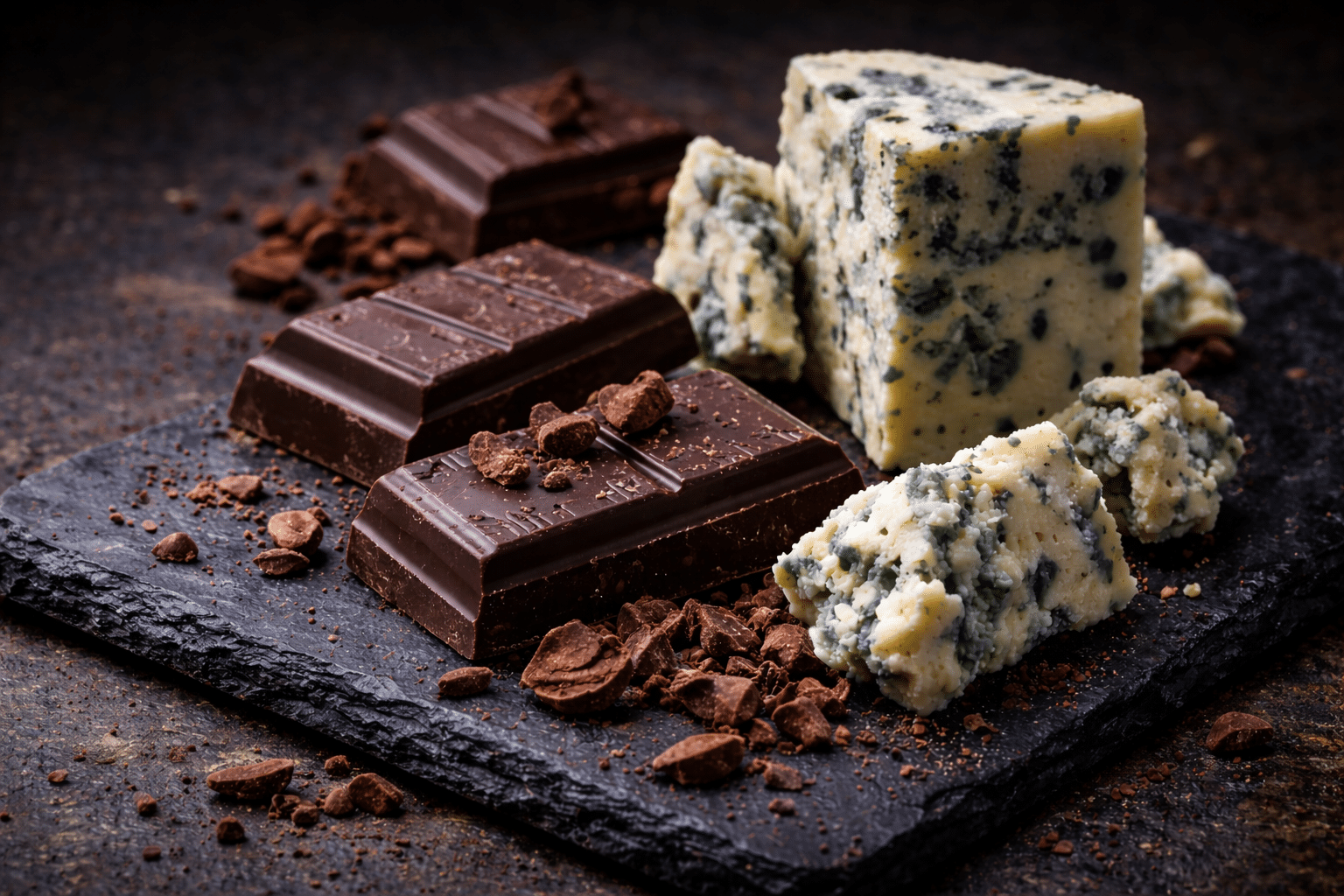
This pairing sounds completely wrong. Tastes completely right.
So blue cheese and dark chocolate both have these things called pyrazines. They’re nitrogen-based compounds. Create earthy, nutty notes. When someone bites into both at once, those shared molecules stack up. The brain recognizes the pattern, registers it as way more complex than either food delivers alone.
The fat matters here—like, really matters. Cocoa butter in chocolate? About 55-60% fat. Butterfat in cheese hits around 30%. These similar fats bind together. Coat the tongue. Trap flavor molecules longer than normal. Instead of a quick taste followed by nothing, the experience lingers. Keeps developing.
Blue cheese also breaks down proteins into amino acids through some enzymatic thing. Some of these—especially glutamate—activate umami receptors. Dark chocolate has trace glutamate too. Combined? They hit savory pathways neither food reaches alone.
Then there’s the mood chemistry, which gets interesting. The known chocolate’s mood-boosting benefits come partly from phenylethylamine and anandamide (compounds that sound made up but aren’t). Blue cheese has tyramine, another compound that messes with neurotransmitters. Together they create this subtle high that neither delivers separately. Not like getting drunk or anything. Just… nice.
Temperature affects everything here. Room-temperature cheese releases way more volatile compounds. Cold cheese? Mutes flavor while chocolate’s cocoa butter stays waxy and solid. Feels weird in the mouth.
Roquefort works. Stilton works. Pair either with 65-70% dark chocolate. Milk chocolate’s sugar clashes hard with salt and sour notes in the cheese. Doesn’t work.
Aged Balsamic Vinegar: When Acid Cuts Tannin
Real balsamic vinegar aged 12+ years (not the grocery store stuff) contains over 300 aromatic compounds. A bunch of these overlap with dark chocolate’s flavor—things like vanillin, guaiacol, phenolic acids.
The acid in balsamic cuts through chocolate’s astringency. Cocoa has tannins. Those bind to saliva proteins, creating that dry, puckering feeling. Acetic acid breaks those protein-tannin bonds. Literally resets the palate between bites.
pH chemistry explains it better. Chocolate sits somewhere around 5.5-6.5 on the pH scale. Balsamic comes in way lower at 2.5-3.0. That’s pretty acidic. The acid changes how taste receptors respond to cocoa’s bitter compounds by temporarily altering tongue surface proteins. Sounds technical but that’s what’s happening.
Aged balsamic concentrates sugars through evaporation. Up to 50% sugar in 25-year bottles (which cost a fortune, by the way). These complex sugars—glucose, fructose, maltose in all different ratios—interact differently than chocolate’s simple sucrose. The brain processes that layered sweetness as way more interesting. More depth.
The Maillard reaction products in aged balsamic mirror the ones in roasted cacao beans. Both develop these caramelized, slightly burnt notes through heat. When combined? Those shared flavors reinforce each other. Amplify.
Viscosity matters too. Syrupy aged balsamic coats the tongue differently than thin vinegar. Slows flavor release. Creates this gradual build instead of an immediate spike and crash.
Don’t use cheap balsamic for this. The caramel coloring and added sugars taste fake against real chocolate. Traditional stuff from Modena or Reggio Emilia works. Expensive but worth it for this pairing.
Extra Virgin Olive Oil: Fat Stacking
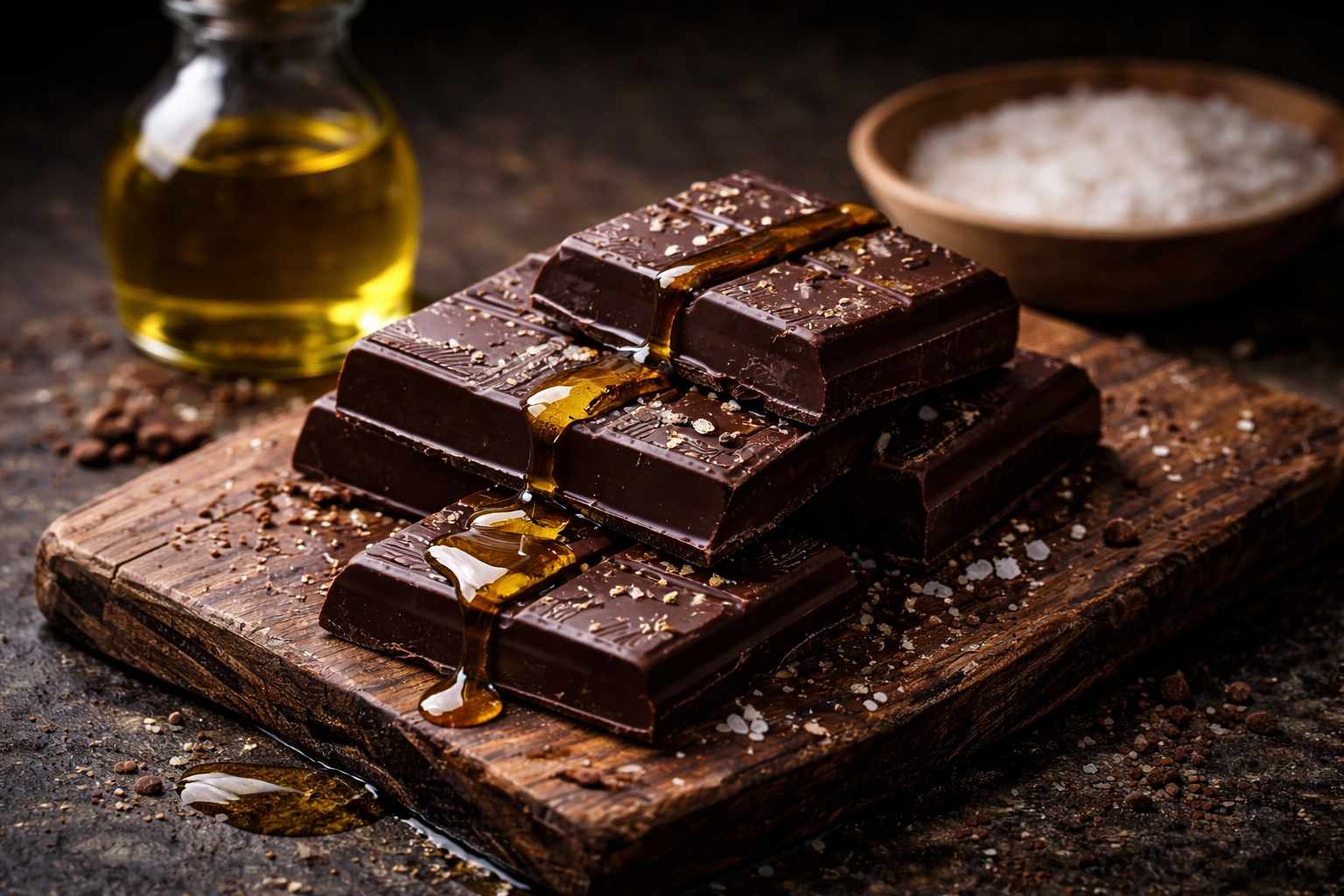
Drizzling olive oil on dark chocolate sounds completely insane until someone explains the chemistry.
Both contain oleic acid. It’s a monounsaturated fat. Chocolate has about 35% oleic acid in its cocoa butter. Extra virgin olive oil? Runs 55-83% depending on the variety. When mixed, these similar fats create this uniform medium that spreads flavor compounds evenly across the palate. Everything blends smoothly.
Olive oil’s polyphenols create that peppery throat sensation. You know that burn from good olive oil? That’s oleocanthal activating TRPA1 receptors. Same ones that respond to cinnamon and ginger. Dark chocolate activates these receptors too through theobromine. Double stimulation makes both foods taste more intense. More pronounced.
The volatile esters get really specific here. Quality olive oil contains hexanal, which creates grassy, green notes. Dark chocolate has similar aldehydes. These share molecular structures (both short-chain aliphatic compounds—don’t ask me to explain that further). Point is, they blend instead of competing.
This needs quality ingredients, or it fails. Refined olive oil has basically no flavor worth discussing. And below 70% cacao, sugar overwhelms the oil’s subtle notes. Doesn’t work.
White Miso: Umami Goes Wild
White miso contains glutamates from fermented soybeans. Around 400mg per 100g. Dark chocolate has trace glutamates from cacao fermentation. Not a lot, but some. Together? Umami synergy.
Amino acid stacking is what’s happening here. Miso brings free glutamic acid. Chocolate contributes small amounts of aspartic acid (another umami amino acid). Different amino acids trigger slightly different receptor areas. Simultaneous activation from multiple sources creates this way more powerful response than either alone. It’s like surround sound for taste buds.
Miso’s salt content (around 6%) affects how everything tastes. Sodium ions suppress bitter receptors while amplifying sweet and umami ones. Makes chocolate taste less astringent, more complex. No added sugar required, which is wild.
The fermentation products matter here. White miso ferments 1-3 months, creating these koji enzymes that break proteins into peptides. Some have kokumi properties. They don’t taste like anything themselves but amplify existing flavors. They literally make chocolate taste more chocolatey. More intense.
Texture contrast adds another dimension. Miso’s grainy paste creates friction against smooth chocolate. This mechanical stimulation activates additional touch receptors in the mouth, making the brain process everything as more complex. More interesting.
Black Pepper: Heat Changes Everything
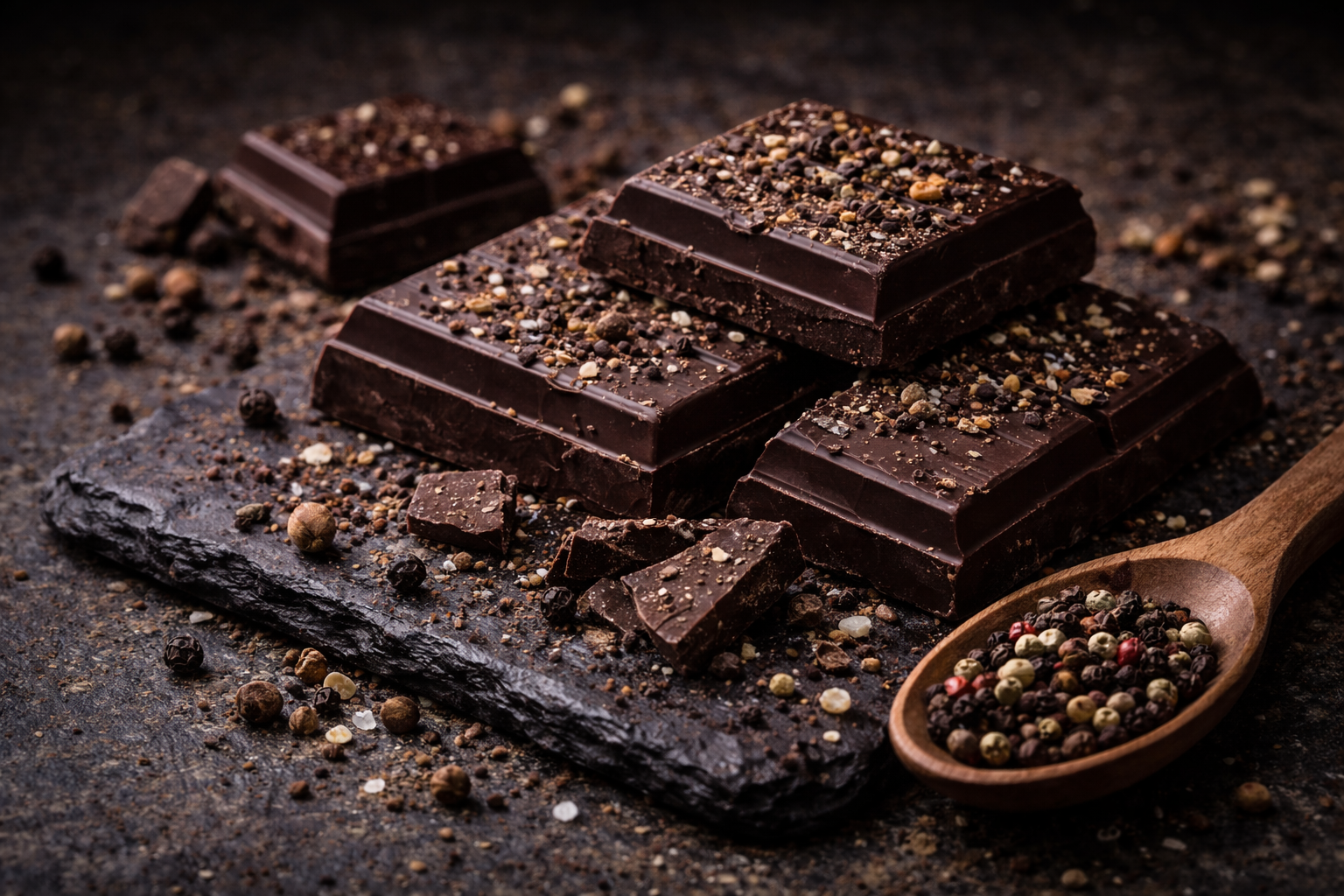
Black pepper has this compound called piperine. Triggers TRPV1 receptors—same ones that respond to actual heat. Creates a warming sensation that shifts how the brain processes chocolate’s flavor.
Piperine also increases bioavailability of other compounds. Studies show it enhances absorption of polyphenols by up to 2,000%. Chocolate contains polyphenolic flavanols. More absorption means stronger effects.
The molecular structure matters here. Piperine shares similarities with chocolate’s alkaloids—theobromine and caffeine. They interact smoothly instead of fighting each other.
Black pepper’s volatile oils create woody, citrus notes that complement chocolate’s roasted aromatics. Tiny amounts produce noticeable effects. Just 0.1% black pepper by weight changes chocolate’s aroma profile significantly.
Grind size affects everything. Coarse pepper provides bursts of spice as crystals break against teeth. Fine pepper distributes evenly. Different experiences entirely.
Fresh-ground pepper contains 5-10 times more piperine than pre-ground. The difference shows up within 15 minutes as volatile oils evaporate. Gone.
* * *
Each combination activates specific receptors, releases targeted compounds, or creates contrasts that make taste buds fire in completely new patterns. Understanding the science means someone can predict what’ll work instead of randomly trying things and hoping for the best.