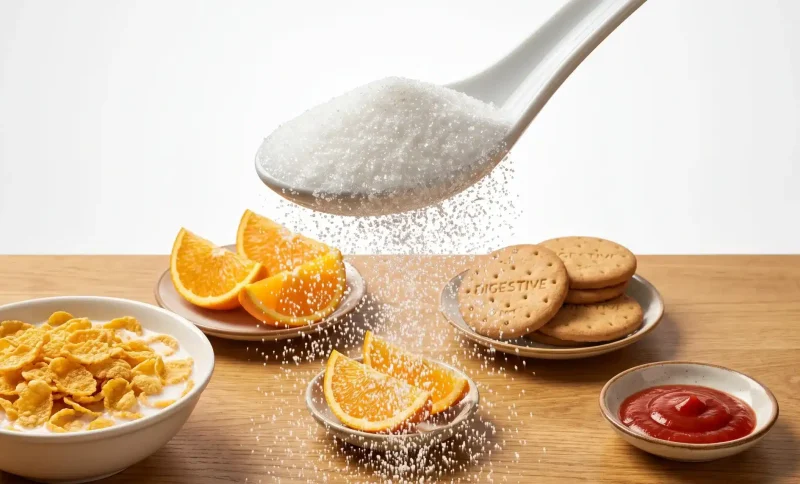
New research into everyday supermarket foods shows that what you think of as “normal” meals and snacks often carry more sugar, salt and saturated fat than you realise. You might start the day with cereal, grab a yoghurt on the go, or dip into a biscuit tin without giving much thought to what’s inside. These small choices build up quickly across the day, and sugar often hides in foods you don’t expect to be sweet. When you step back, your intake can rise without any obvious moment of overindulgence.
Hidden Sugars in Everyday Supermarket Foods
You often meet sugar where you least expect it. Tomato ketchup can contain around 67% of your daily sugar allowance per 100g, meaning just a few spoonfuls take up a large share of your day. Digestive biscuits add up quickly too, with around 55% of daily sugar per 100g, alongside almost half your saturated fat allowance. Even cornflakes and smooth orange juice add steady amounts that feel small on their own but build across the day. Mature cheddar also contributes in a different way, bringing around 30% of daily salt per 100g, showing how everyday staples still carry hidden nutritional weight.
Sugary Drinks and the Soft Drinks Industry Levy

You don’t just consume sugar through food, as drinks play a major role in daily intake. Fizzy drinks, flavoured waters and energy drinks deliver sugar quickly without filling you up, which makes it easier to consume more than you realise. The Soft Drinks Industry Levy has pushed many brands to reduce sugar, and you may notice reformulated products on shelves. However, some drinks still contain high levels, especially in larger sizes or budget ranges, so checking labels remains important.
Understanding food labels and “free sugars”
Food labels can make it harder to track sugar because it appears under names like glucose syrup, fructose and maltose. When you read a label, you need to look beyond total carbohydrates and focus on “of which sugars” to understand what you are actually eating. The NHS defines “free sugars” as those added during processing or naturally present in honey, syrups and juices. You make better choices when you compare similar products, as small differences per 100g add up over time.
UK Public Health Guidance and Reducing Sugar Intake in Daily Life
UK guidance focuses on small, realistic changes rather than strict restriction. You might switch sugary cereals for higher-fibre options or choose water instead of sweetened drinks to reduce intake without changing your routine. New research also highlights positives in some foods, with peanut butter standing out as an “unexpected super-food” due to its fibre and protein content.
Even everyday leisure moments can add up without you noticing. A simple evening with friends might include snacks while you play some arcade games, where small choices can quietly contribute to your overall intake. Awareness helps you see how these habits build across the week, so you can adjust without overhauling your diet.