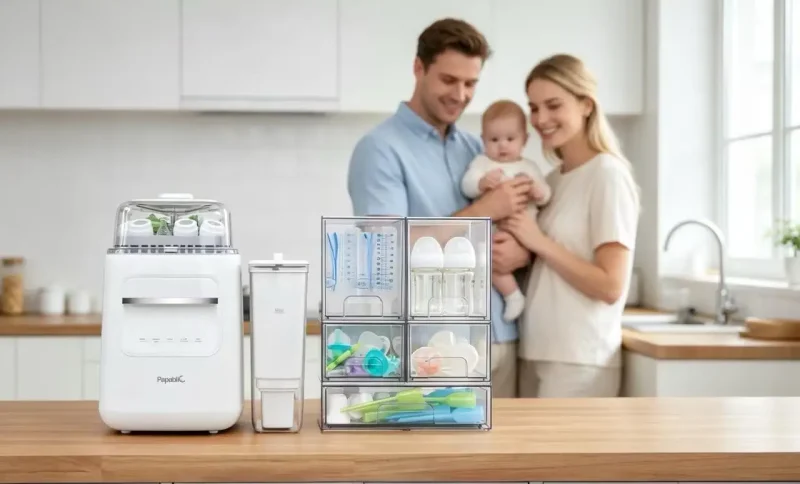
A new baby can change how a kitchen works almost overnight. Bottles, nipples, pump parts, drying racks, and cleaning supplies gradually take over the counter, leaving less room for meal prep and everyday tasks.
The solution isn’t necessarily buying more organizers. It’s creating a simple system that makes feeding supplies easy to clean, dry, store, and find when the next feeding rolls around.
Here are 5 practical ways to organize baby bottles and feeding supplies without turning your kitchen into a dedicated baby station.
1. Create a Dedicated Space for Baby Bottles
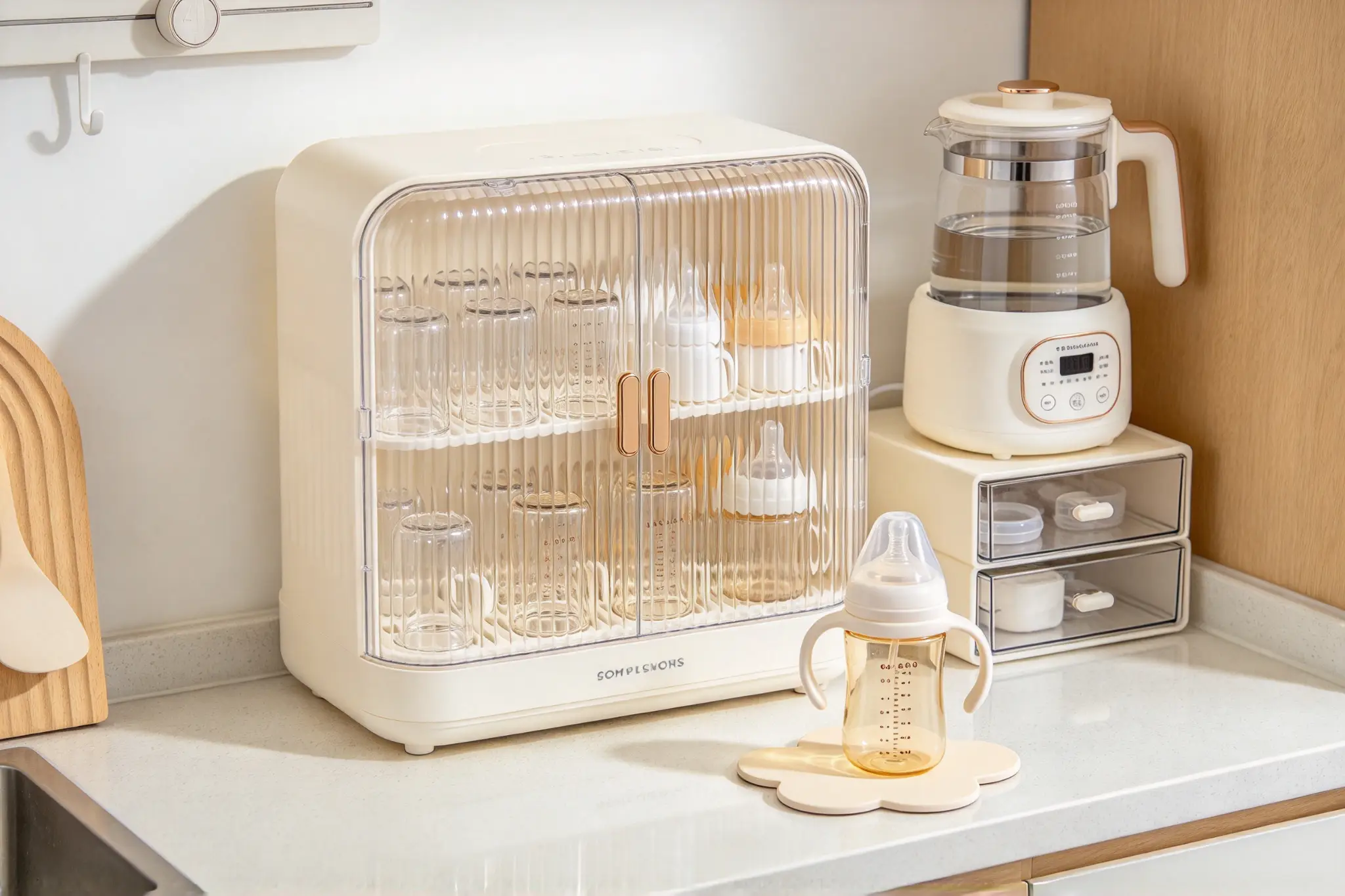
Start by choosing one area for feeding supplies. Depending on your kitchen, this might be a section of countertop, an accessible cabinet, or a drawer near the sink.
Keeping everything in one general area makes it easier to find what you need, especially during overnight feeds or busy mornings.
Before buying organizers, sort your supplies into a few groups:
- Bottles and nipples: Keep everyday feeding essentials together.
- Pump parts: Separate compatible components so they’re easier to identify and reassemble.
- Cleaning supplies: Store bottle brushes and other cleaning tools in an accessible, easy-to-clean spot.
- Small accessories: Use divided compartments for valves, caps, connectors, and other small pieces that are easy to misplace.
Keep used feeding items separate from clean ones. This simple distinction helps prevent clean supplies from getting mixed up with items waiting to be washed.
2. Choose a Setup That Fits Your Feeding Routine
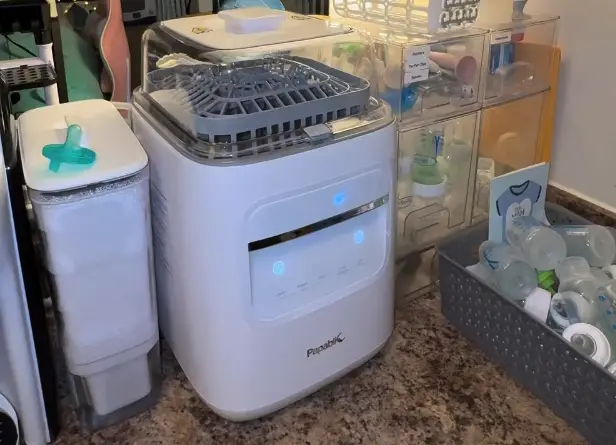
The best baby bottle storage setup depends on how many bottles you use each day, how often you pump, and how much counter space you have. Some families need a simple place to air-dry bottles, while others need a better way to manage the constant cycle of washing, drying, and putting feeding supplies away.
- Storage bins and drawer organizers keep clean, dry bottles and small accessories sorted and easy to find. They’re especially useful for making the most of cabinet and drawer space.
- A baby bottle drying rack gives washed bottles, nipples, and pump parts a dedicated place to air-dry. Choose one with enough room for your daily supplies and a design that’s easy to clean.
- An automatic baby bottle washer helps manage the cleaning workload itself, rather than just organizing items after they’re washed.
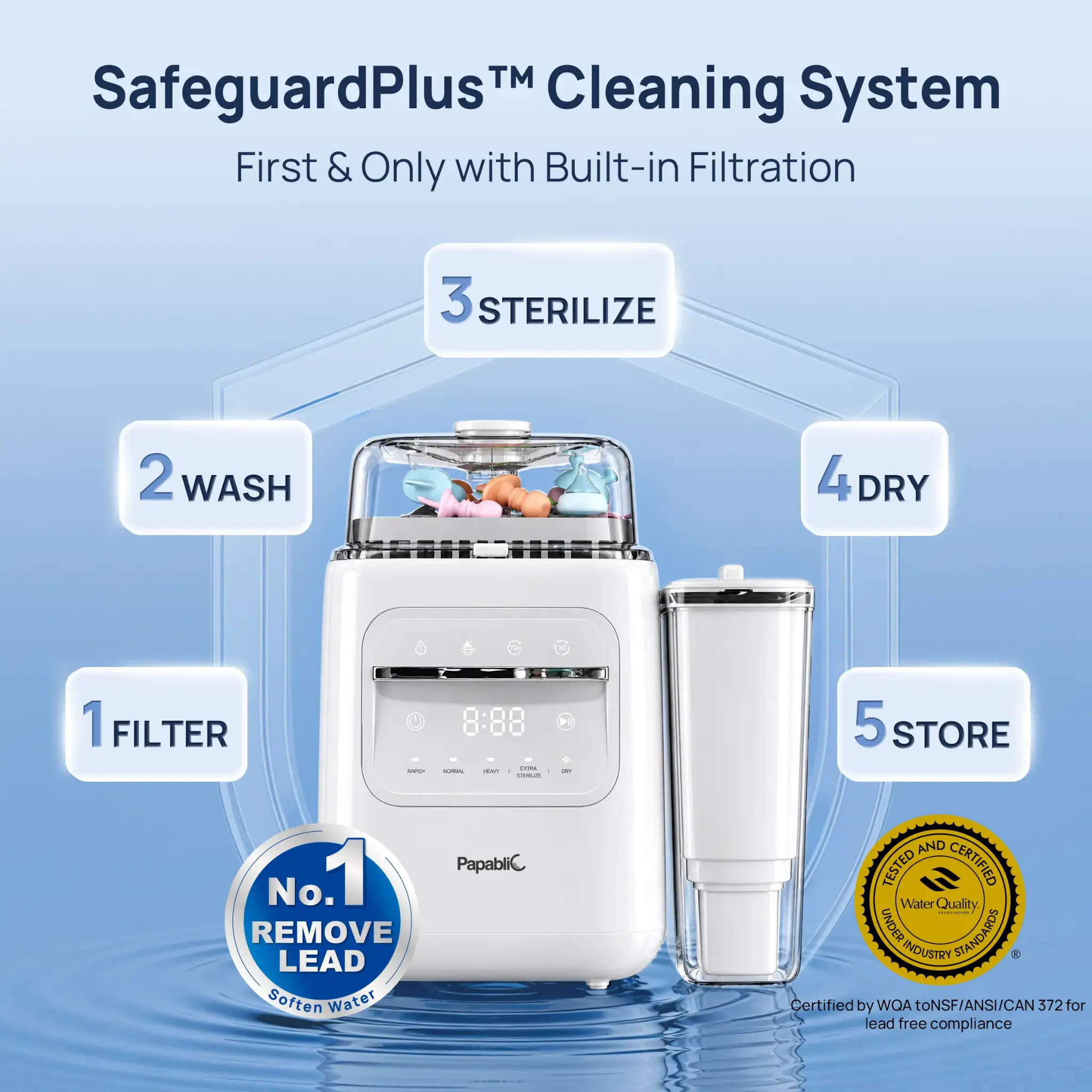
For families who go through multiple bottles and pump parts every day, the Papablic SafeguardPlus™ Baby Bottle Washer System (P8Plus) brings filtering, washing, steam sterilizing, drying, and storage together in one appliance. After the cycle, the system can dry and store items hygienically for up to 72 hours. That means fewer separate steps to manage feeding supplies when the next feeding comes around—without having to transfer everything between a washer, drying rack, and storage container.
Its large capacity accommodates up to 8 bottle sets or 2 pump parts and other accessories, helping parents handle more feeding essentials in one load instead of washing everything separately throughout the day.
3. Keep Bottles and Pump Parts Easy to Sort
Small accessories can be harder to organize than bottles themselves. Nipples, caps, valves, and pump connectors are easy to misplace when everything ends up in one container.
A few simple habits can make a difference:
- Use separate compartments. Group similar items together so you can find the right component without emptying a whole drawer.
- Keep sets together where practical. Store compatible components in the same section to make assembly easier.
- Avoid overcrowding. Containers that are too full make it harder to retrieve items and keep the area tidy.
- Prioritize accessibility. Put frequently used supplies within easy reach, and move occasional-use items to less accessible storage.
Make sure bottles and accessories are completely dry before putting them away in closed containers. A tidy arrangement should also support appropriate hygiene, rather than simply hiding everything from view.
If your kitchen has limited drawer or counter space, consider a compact setup that serves more than one purpose. The Papablic baby bottle washer helps reduce the need for separate equipment such as a sterilizer and a standalone drying rack.
4. Build a Simple Clean, Dry, and Store Routine
Good organization depends on what happens before items reach their storage spot. A clear routine helps prevent clean bottles from getting mixed up with used ones and keeps damp accessories from being put away too soon.
Step 1: Wash thoroughly. Disassemble bottles and feeding parts, then wash them with soap and water using a dedicated bottle brush. Pay special attention to nipples, valves, and other small components where milk residue can collect.
Step 2: Sanitize when needed. Sanitizing adds another layer of protection by reducing germs that may remain after washing. It’s especially important for young babies, including those younger than two months, premature infants, and babies with weakened immune systems.
Step 3: Air-dry completely. Place washed items on a clean drying rack and allow them to air-dry thoroughly. Avoid using a dish towel, which can transfer germs back onto clean feeding parts.
Step 4: Store clean, dry items. Once everything is completely dry, move bottles and accessories to a clean, protected storage area. Keep small parts organized so they’re easy to find when the next feeding is due.
For busy parents and sleep-deprived caregivers juggling feeds around the clock, managing every step separately can become another daily chore. The Papablic SafeguardPlus™ brings five functions—filtering, washing, steam sterilizing, drying, and storage—together in one appliance, helping simplify the routine with the push of a button.
5. Make Your Setup Work for Your Household
An organized feeding station should make daily life easier, not create another system to maintain.
If you share feeding duties with a partner or another caregiver, agree on where clean bottles go and where used ones should be placed. Consistent locations make handoffs easier, even when one person is rushing out the door or preparing a nighttime feed.
Review the setup after you’ve used it for a week or two. Are bottles piling up faster than they can dry? Are pump parts getting lost in a drawer? Is the drying rack taking up valuable prep space? These are signs that the system needs adjusting.
You may find that moving a rack, removing unused accessories, or switching to a more compact organizer solves the problem. Alternatively, if cleaning itself has become the daily bottleneck, an appliance that combines several cleaning-related functions may be worth considering.
Avoid buying organizers before identifying the problem. A well-placed basket can improve storage, but it won’t reduce the work of washing bottles. Choose solutions based on the part of the routine that needs the most help.
A More Manageable Feeding Station
The best baby bottle storage system isn’t necessarily the biggest or most elaborate. It’s one that keeps clean supplies organized, gives wet items room to dry, and makes the next feeding easier to prepare.
Start with a dedicated space, organize small parts, and establish a consistent clean-dry-store routine. If repeated bottle cleaning is taking up too much of your day, consider whether a tool designed to simplify that workload belongs in your setup.
A few thoughtful changes can help your kitchen stay functional while making the daily feeding routine easier to manage.
FAQs
What Is the Best Way to Store Baby Bottles?
Keep clean, fully dry bottles and feeding parts in a clean, designated storage area. A cabinet, drawer organizer, or dedicated container can help keep supplies sorted and accessible. The Papablic SafeguardPlus offers washing, sanitizing, drying and up to 72-hour hygienic storage in one appliance.
Do You Need a Baby Bottle Drying Rack?
A drying rack provides a dedicated place for bottles and small feeding parts to air-dry. It can be especially useful when you wash several items throughout the day. Choose one that’s easy to clean and has enough room for your supplies, and let items dry completely before storing them.
How Can You Organize Baby Bottles in A Small Kitchen?
Use vertical space, drawer dividers, or compact containers to separate bottles and accessories. Keep frequently used supplies near your feeding preparation area, and avoid storing damp items in closed containers. If cleaning multiple bottles and pump parts is the main bottleneck, an automatic bottle washer may help consolidate several steps.