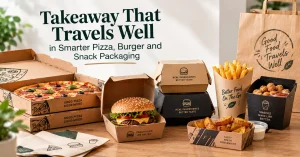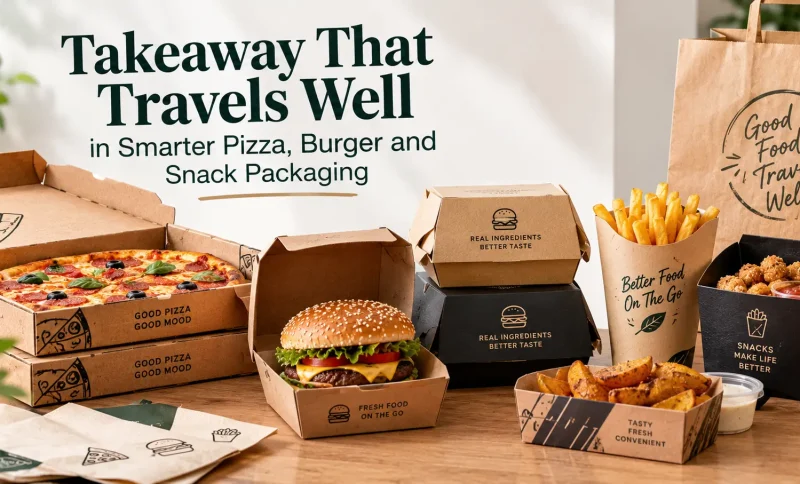
Everyone has opened a takeaway order that looked nothing like the photo. The pizza crust has gone soft and a little damp. The burger has slid sideways and lost half its sauce to the wrapper. The fries are fine, somehow, but the cookies that came as a little extra are in pieces at the bottom of the bag.
Most of that isn’t the cook’s fault. It’s the packaging. Food changes the moment it leaves the kitchen, steam keeps rising, grease keeps moving and anything loose keeps shifting with every turn the driver makes. The good news for small restaurants, food trucks and home bakers selling locally is that the fixes are simple and mostly cheap. It comes down to picking the right container for each kind of food rather than one box for everything.
Why Takeaway Food Goes Wrong on the Way Home
There are really only three things working against food in transit.
- Steam. Hot food releases moisture, and if it can’t escape it settles back onto crusts, buns and anything fried.
- Grease. Oil travels through thin paper and onto hands, car seats and the outside of the bag.
- Movement. A burger stack or a box of small treats will shift every time the bag tips, and the parts that move are the parts that break.
Every packaging choice below deals with one or more of those. Once you start looking at takeaway this way, it gets much easier to see why some orders arrive perfect and others don’t.
Pizza Needs to Breathe
Pizza is the classic example of steam doing damage. A fresh pie goes into a closed box at oven temperature, and within minutes the trapped moisture starts softening the crust from the top down. The longer the drive, the soggier the slice.
A proper pizza box handles this in two ways. The first is the board itself. Corrugated or fluted cardboard has air channels running through it, and those channels insulate, so the pizza stays hot without the box needing to be sealed tight. The second is ventilation. Small vent holes let steam escape while the heat mostly stays put, which is the difference between a crisp edge and a floppy one.
Grease is the other issue. A box with a grease-resistant surface stops oil soaking through the base and onto the passenger seat. If you’re printing your logo on the lid, ask for food-safe inks and coatings, since the inside of the box touches the food directly.
Sizing matters too. A 12 inch pizza rattling around in a 16 inch box will slide into a corner and pile its toppings up against one wall. Standard sizes run from 7 inches for personal pies up to 18 or 20 inches for family sizes, and most shops stock two or three that match their menu. Small pizzerias and trucks can order custom cardboard pizza boxes from around 100 units, with production usually taking 7 to 10 business days, so branded boxes aren’t only for the big chains.
Burgers Need Something to Hold Them Together
A burger has a different problem. It doesn’t need to breathe so much as it needs to stay in one piece. A double patty with sauce, pickles and melted cheese wants to slide apart the moment someone picks it up, and grease runs straight down onto the hand holding it.
For burgers eaten close to where they’re bought, at a market, in the car or on a park bench, a wrap and a sleeve often do better than a box. A printed paper band around the middle of the stack keeps everything square and catches the run-off where fingers grip. Staff can slide it in one motion, which helps during a rush.
The details are worth getting right. Printed burger sleeves work best when the band covers roughly the middle third of the burger, which on most builds means a strip somewhere between 40 and 70 mm tall. Uncoated kraft absorbs grease and darkens as you eat, which some people like for its handmade look. Laminated white board resists the grease and keeps the print clean through the whole meal. Runs usually start at 500 pieces per design, which a busy burger stand gets through in a couple of weeks.
There is one honest trade-off here. For long delivery routes, a closed clamshell keeps heat in better than a sleeve. Plenty of places use both, a sleeve for walk-up orders and a box for delivery.
Snacks and Sides That Need a Sturdier Home
Not everything on a takeaway menu is hot. Cookies, brownie bites, spiced nuts, popcorn, granola and loose-leaf tea all travel badly in thin paper bags. They crumble, go stale or spill, and they rarely make it home looking like something you’d want to post a photo of.
This is where a paper tube earns its place. The round shape is stronger than a thin folding carton, so it doesn’t crush when it ends up at the bottom of a bag, and a fitted lid keeps air and moisture out. That makes custom food tube packaging a good fit for dry snacks, sweets, spices and drink mixes that a café or bakery wants to sell as an add-on or a gift.
A couple of things to know before ordering. The food safety of a tube comes from the liner on the inside wall, not the cardboard, so nuts and confectionery want a greaseproof liner. Tubes also aren’t made for hot food, because steam pulls the liner away from the board. Leave about 10 percent headspace above the settled contents so the lid closes easily, and consider a heat-seal membrane under the lid if you want customers to see the pack hasn’t been opened. Typical turnaround for printed tubes runs about 6 to 10 business days.
Matching the Food to the Pack
Here is a quick way to think about which container suits which menu item.
|
Food |
Main risk in transit |
Packaging that helps |
Detail worth asking for |
|---|---|---|---|
|
Pizza |
Steam softening the crust |
Corrugated pizza box |
Vent holes and a grease-resistant surface |
|
Burgers eaten nearby |
Stack sliding and grease on hands |
Printed paper sleeve |
Laminated board for saucy builds |
|
Burgers on long delivery |
Heat loss |
Closed clamshell box |
Snug size so the burger can’t slide |
|
Cookies, nuts and dry snacks |
Crushing and going stale |
Lidded paper tube |
Greaseproof liner and a sealed lid |
None of these are exotic. They’re the standard tools of good takeaway, and the businesses that use them well tend to get fewer complaints and more repeat orders.
A Few Habits That Make Any Packaging Work Better
Even the right container can let you down if it’s packed in a hurry. These small habits help.
- Let fried food sit for 30 seconds before closing it in, so the worst of the steam escapes first.
- Pack hot and cold items in separate bags so the ice cream isn’t melting against the fries.
- Place flat boxes at the bottom of the bag and tubes or cups upright on top.
- Use the smallest container that fits, since empty space is where food slides around.
- Tape or sticker closed anything that could open if the bag tips over.
Packaging Is Part of the Meal
People judge takeaway the moment they open it, before they’ve tasted anything. A crisp pizza, a burger that’s still in one piece and cookies that arrive whole all tell the customer the place cares. For small food businesses that live on word of mouth and repeat orders, that first impression at the kitchen table is worth more than most of the marketing they could buy. Getting the packaging right is one of the easiest ways to earn it.