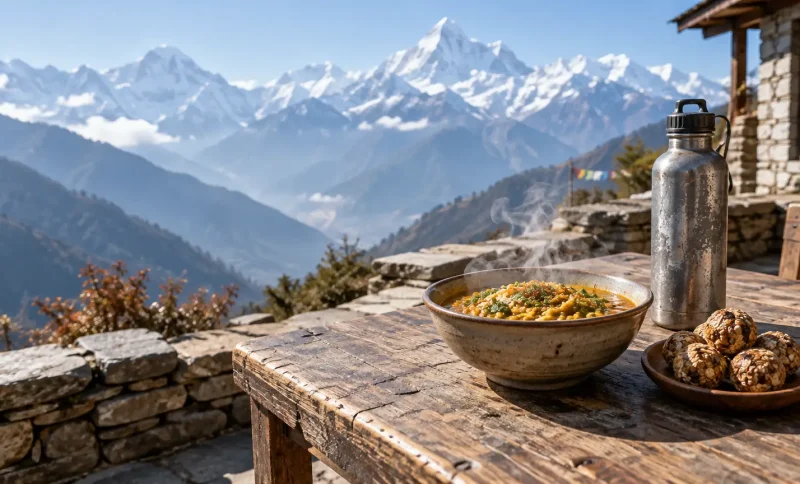
Hikers at high altitude do best on a carbohydrate-heavy plate, three to four liters of fluid a day, and a small snack every 60 to 90 minutes of walking. Appetite drops above 3,500 m while calorie burn climbs, so the plan is to eat by the clock instead of by hunger. Rice, lentils, potatoes, oats, soup and tea carry most trekkers through the Himalaya, and a bag of homemade energy bites fills the gaps between teahouses.
Key Takeaways
- A six-hour trekking day with a daypack burns roughly 3,000 to 4,500 calories.
- Aim for about 60 percent of calories from carbohydrate, which the body uses more efficiently when oxygen is scarce.
- Drink three to four liters of fluid a day and check that urine stays pale yellow.
- Teahouse food on the main Nepal routes costs about $25 to $40 a day, rising with altitude.
- Skip alcohol while gaining height, and skip meat above the last village with a road or airstrip.
- A batch of 12 no-bake energy bites weighs about 400 g and delivers about 145 calories apiece.
Why Does Altitude Change What the Body Needs?
Air pressure at 5,000 m is about half of what it is at sea level, so every breath carries less oxygen. The body responds by breathing faster, burning more energy at rest and sending less blood to the gut.
Three things follow for the plate. Hunger fades, digestion slows, and carbohydrate becomes the most useful fuel because it yields more energy per unit of oxygen than fat does.
How Many Calories Does a Trekking Day Burn?
A six-hour day on mountain trails with a daypack burns roughly 3,000 to 4,500 calories, depending on body weight, pack weight and total climb. Most trekkers eat less than that above 3,500 m, which is why steady weight loss is common on two-week routes.
The practical fix is small and frequent eating. A snack of 150 to 250 calories every 60 to 90 minutes keeps energy level and is easier to face than one large meal when appetite is low.
What Does a Day of Eating on the Trail Look Like?
A trekking day runs on three hot meals and three snacks. Walkers on an Everest Base Camp heli trek eat from near-identical teahouse menus for nine days on the way up, then fly back to Kathmandu on day ten instead of walking down.
|
Time |
What to Eat |
Why It Works |
|---|---|---|
|
6:30 am |
Porridge with honey, a boiled egg, ginger tea |
Slow carbohydrate before the first climb |
|
9:00 am |
One energy bite and 500 ml of water |
Tops up fuel before hunger arrives |
|
12:00 pm |
Dal bhat or vegetable fried rice |
The largest meal, eaten while digestion is strongest |
|
2:30 pm |
A handful of nuts and dried fruit, electrolyte drink |
Salt and sugar for the last hour of walking |
|
4:30 pm |
Garlic soup or thukpa (noodle soup) |
Warm fluid and salt on arrival |
|
6:30 pm |
Boiled potatoes or dal bhat with vegetables, hot lemon |
A lighter plate that will not disturb sleep |
Lunch deserves the biggest portion. Teahouse dal bhat comes with free refills of rice and lentils, and the midday stop leaves the whole afternoon to digest.
Which Snacks Are Worth Packing from Home?
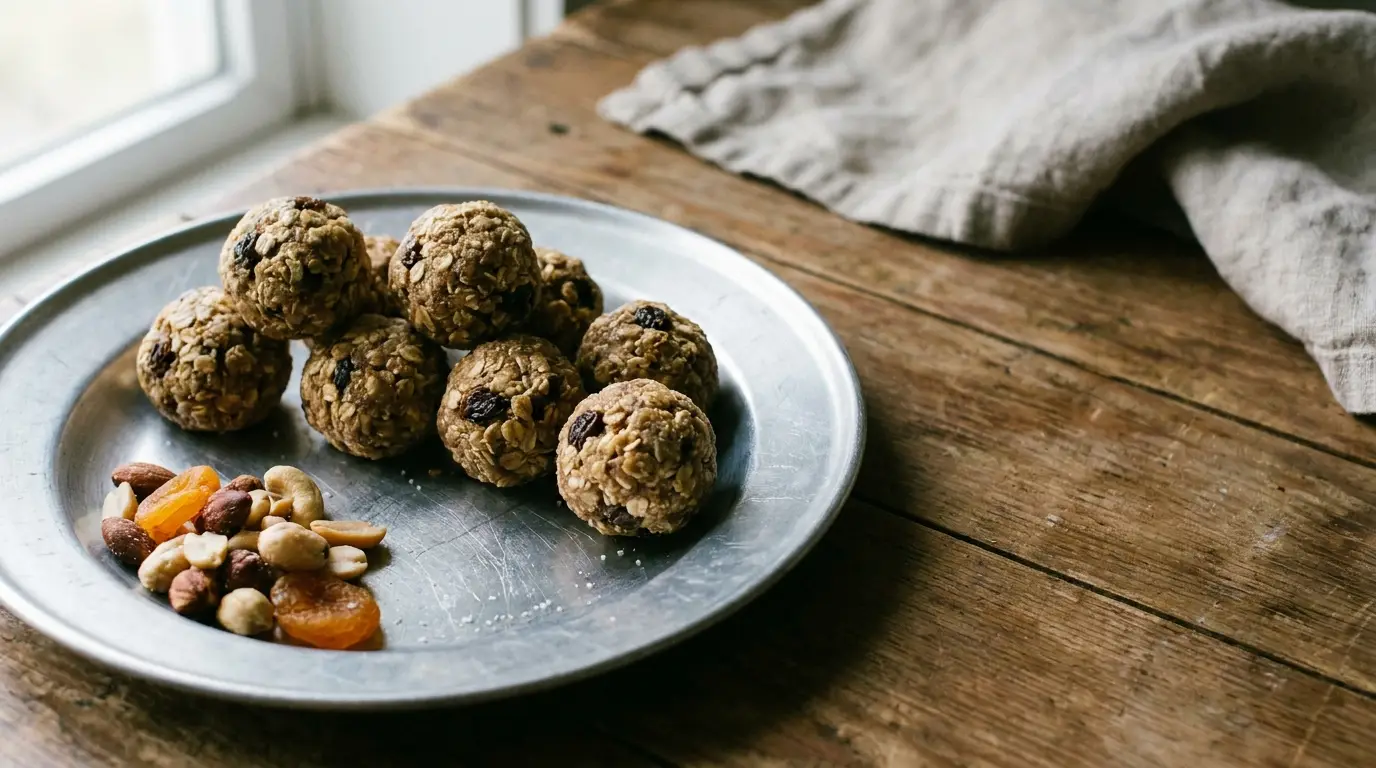
The best trail snacks are dense, dry and still appealing when nothing else is. A ten-day supply fits in a one-liter bag and weighs about 1.2 kg:
- 12 homemade energy bites (recipe below)
- 300 g of mixed salted nuts
- 200 g of dried mango, apricots or dates
- 5 granola or chocolate bars
- 10 electrolyte sachets
No-Bake Trail Energy Bites (Makes 12)
- 1 cup (90 g) rolled oats
- 1/2 cup (125 g) peanut butter
- 1/3 cup (110 g) honey
- 1/2 cup (75 g) raisins or chopped dates
- 2 tablespoons sesame seeds
- A pinch of salt
- Stir everything together in a bowl until no dry oats remain.
- Chill the mixture for 20 minutes so it firms up.
- Roll into 12 balls with damp hands and pack them in a sealed bag.
Each bite provides about 145 calories. Any runny honey works in the mix, and a jar of Nepal’s own rhododendron honey, gathered from wild cliff hives in the Himalayan foothills, gives the batch a darker, slightly bitter edge. Honey hardens in the cold, so the day’s portion rides best in an inside jacket pocket.
How Much Water Is Enough at Altitude?
Three to four liters of fluid a day covers most trekkers, counting water, tea and soup. Dry mountain air and faster breathing pull moisture out of the body with every exhale, long before thirst shows up.
A simple routine removes the guesswork:
- Drink 500 ml with each of the three meals.
- Sip one liter across the morning walk and one across the afternoon.
- Add an electrolyte sachet to one bottle a day.
- Check that urine stays pale yellow.
All water needs treatment. Teahouses sell boiled water by the liter, and purification tablets or a filter bottle handle tap and stream water for a fraction of the cost.
How Much Does Food Cost on a Himalayan Trek?
Food and drink on Nepal’s main teahouse routes cost about $25 to $40 a day when bought meal by meal. Prices climb with height because everything above the road is carried in.
|
Altitude |
Dal Bhat (NPR) |
Boiled Water, 1 Liter (NPR) |
Cup of Tea (NPR) |
|---|---|---|---|
|
Below 2,500 m |
500 to 700 |
50 to 100 |
80 to 120 |
|
2,500 to 4,000 m |
700 to 900 |
100 to 200 |
120 to 200 |
|
Above 4,000 m |
900 to 1,200 |
200 to 400 |
200 to 350 |
Kitchens along a Manaslu Circuit trek Nepal itinerary are supplied by mule train, so menus shrink above Samagaun (3,530 m) and prices rise at each stop. Guided packages that include three meals a day leave drinks and snacks as the only daily spend.
Which Foods and Drinks Should Be Avoided at Altitude?
Four items cause most stomach and sleep trouble on the trail:
- Alcohol: it dehydrates and disturbs sleep, and a hangover feels the same as early altitude sickness.
- Meat above the last road or airstrip: it is carried uphill for days without refrigeration.
- Raw salad and unpeeled fruit: both are rinsed in untreated water.
- Heavy fried or cheese-laden dinners above 4,000 m: rich food sits in a slow stomach all night.
Coffee is fine in normal amounts. Regular drinkers who quit on the trail risk a withdrawal headache that is easy to mistake for an altitude symptom.
How Should Eating Change in the Weeks Before a Trek?
Preparation at home is about practice, not a special diet. Four habits pay off:
- Eat during training hikes to learn which snacks stay appealing after three hours of walking.
- Keep iron-rich foods such as lentils, spinach, beans and red meat on the weekly menu, since the body builds extra red blood cells at altitude.
- Test the energy bite recipe and every packaged snack before packing it.
- Arrive rested and well fed; the week before departure is the wrong time to cut calories.
Conclusion
Eating well at altitude comes down to a short list: carbohydrate at every meal, three to four liters of fluid, a snack every 60 to 90 minutes, and no alcohol on the way up. Dal bhat at lunch, soup on arrival and a bag of energy bites in the jacket pocket will carry a walker to 5,000 m and back. Food supports acclimatization but does not replace it, and a headache with nausea or dizziness that keeps getting worse calls for rest and descent.
Frequently Asked Questions
Does Garlic Soup Prevent Altitude Sickness?
No study has shown that garlic soup prevents altitude sickness. It remains a smart order because it is hot, salty and mostly water, which helps with hydration and appetite at the end of a cold day.
Can Vegetarians and Vegans Eat Well on a Himalayan Trek?
Vegetarian trekkers have the easiest time of all, since dal bhat, vegetable momo, thukpa, fried rice and potato dishes are on every teahouse menu. Vegan trekkers should ask for dal bhat cooked without ghee and skip the milk tea.
Is It Normal to Lose Appetite at High Altitude?
A weaker appetite above 3,500 m is a normal response to thin air. Eating by the clock, choosing soups and soft carbohydrates, and keeping snacks within reach will cover the gap.
How Much Money is Needed for Snacks and Drinks Each Day?
About $20 to $30 a day covers boiled water, tea, a soft drink and an extra snack when meals are already included in a package. Cash in Nepali rupees is essential, because ATMs are scarce beyond the first few villages.