Wellness can become surprisingly exhausting when every part of the day starts asking to be measured.
Meals get logged. Water gets counted. Weight gets checked. Medication dates live in the calendar. Notes about appetite or how you felt end up somewhere else. Before long, “staying on top of things” can feel like managing a small administrative department.
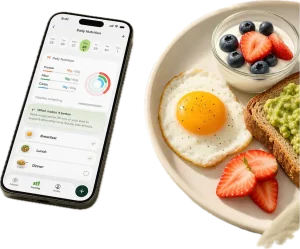
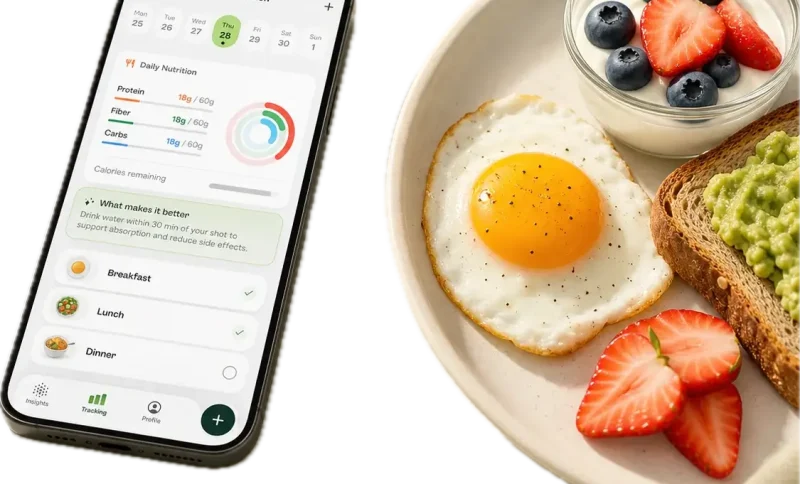
For women using GLP-1 medications, a GLP-1 tracker app can make that routine easier to organize by keeping medication records, food, hydration, weight, activity, and personal notes in one place.
But tracking does not need to mean monitoring yourself constantly. The most useful system is often the one that helps you remember what matters without making you feel as though every day needs a perfect score.
The Goal Is Context, Not Perfection
There is a difference between keeping useful records and trying to document your life flawlessly.
Real routines are inconsistent.
You may cook at home one day and order dinner the next. You might remember to log breakfast but forget lunch. Travel, work, periods, social plans, family responsibilities, and simple tiredness can all disrupt whatever routine looked manageable on Monday morning.
That does not make the rest of your tracking useless.
Instead of asking whether you recorded everything perfectly, it can be more helpful to ask whether the information you did capture helps you understand your own routine.
A few useful entries over several weeks can often tell you more than three days of extremely detailed logging followed by complete burnout.
Start With What You Actually Want to Remember
Not everyone needs to track the same things.
Before downloading another app or creating another spreadsheet, think about what currently gets lost.
Maybe you keep forgetting when you last recorded your medication.
Perhaps you want a clearer picture of what you have been eating because your meals feel different from week to week.
You may want to remember questions for your healthcare professional instead of trying to recall them during an appointment.
Some people choose to keep track of:
- medication records;
- meals;
- hydration;
- protein or other nutrition information;
- weight;
- activity;
- appetite;
- how they felt during the day;
- questions for their healthcare team.
You do not need to begin with all of them.
Starting with two or three pieces of information that are genuinely useful can make the routine easier to maintain.
Food Tracking Does Not Need to Turn Every Meal Into Numbers
Food is often the first thing people think about when they hear “tracking.”
That can quickly become stressful if every meal starts feeling like something that needs to be calculated, categorized, and judged.
A food record can be much simpler.
You might want to remember what you ate, roughly when you ate it, whether the meal felt comfortable, or whether your appetite was noticeably different that day.
That kind of context can be useful later without requiring you to weigh every ingredient.
Home cooking makes this particularly obvious.
A bowl of soup may contain whatever vegetables were available. A curry recipe changes slightly every time. A shared family dinner is not always easy to divide into perfectly measured portions.
Food tracking should be flexible enough to accommodate the way people actually eat.
Protein Can Be Recorded Without Becoming the Main Character
Protein is frequently discussed in nutrition conversations around weight management, and some people may choose to track it as part of their routine.
That does not mean every meal needs to be reduced to a protein number.
Meals also contain vegetables, carbohydrates, fats, fruit, dairy, sauces, flavours, and the foods that make eating enjoyable.
If you have discussed a nutrition goal with your healthcare professional or dietitian, tracking can help you see how your own meals fit around that plan.
Individual needs vary, so an app or an online article should not prescribe the same protein target for everyone.
The record supports your plan. It does not replace personalized advice.
Hydration Is One of Those Things That Is Easy to Forget
Water seems simple until the day gets busy.
You leave the house early, sit through meetings, run errands, and suddenly realize you have barely thought about drinking anything.
Keeping hydration near the rest of your daily records can make it easier to look back at what actually happened.
The benefit is not creating another number you need to “win.”
It is simply having a clearer picture of your routine.
Hydration needs differ between individuals and can be affected by health, activity, climate, and other factors. If you need guidance about an appropriate amount for you, speak with a healthcare professional rather than relying on a generic target.
Daily Notes Can Explain What Numbers Cannot
A number rarely tells the full story of a day.
Imagine looking back at a meal log that seems very different from the rest of your week.
Without context, you might wonder what happened.
A short note could immediately explain it:
You were travelling.
You had dinner at a friend’s house.
Work ran late.
You were not very hungry at lunchtime.
You felt uncomfortable after eating and wanted to remember it.
These details can make a record far more understandable later.
They can also help you remember what you wanted to mention during a healthcare appointment.
The note does not need to interpret the situation medically. It simply preserves the context while it is still fresh.
Keep Medication Tracking and Medication Advice Separate
It can be convenient to keep medication information beside the rest of your routine.
That way, you are not searching one calendar for medication dates, another app for meals, and your notes folder for everything else.
A GLP-1 companion app such as Glowise brings medication tracking together with food, hydration, weight, activity, and daily notes so users can review those records in one place.
But there is an important boundary.
Recording medication is not the same as making medication decisions.
A tracker should not be used to decide whether to increase or decrease a dose, skip a medication, stop treatment, or change a prescription.
Those decisions belong with the healthcare professional managing your care.
Think of the app as the notebook, not the prescriber.
Weight Is One Data Point, Not a Daily Verdict
It is easy for weight tracking to become emotionally louder than everything else in the app.
One number changes, and suddenly the entire day feels different.
But weight can fluctuate for many reasons, and a single measurement offers limited context.
If you choose to track it, looking at longer-term records may be more useful than reacting to every individual entry.
It can also help to keep weight beside the rest of your routine rather than treating it as the only result that matters.
Meals, hydration, activity, daily notes, and questions for your healthcare professional can all be part of the broader picture.
A tracking tool should help you observe your history, not turn your body into a daily report card.
Low-Effort Logging Matters More Than Fancy Features
The most sophisticated tracker in the world is not particularly useful if entering information feels so tedious that you stop using it.
That is why low-friction logging matters.
Glowise, for example, includes ways to record food using voice input, food photos, barcode or nutrition-label scanning, and menu scanning.
The point of features like these is not to encourage more obsessive logging.
Ideally, they reduce the amount of typing needed to capture information you already decided was worth remembering.
Convenience can be a health-tool feature in its own right.
If logging lunch takes a few seconds, it is much easier to keep the routine going than if every meal requires filling in a form.
Review the Week Instead of Constantly Checking the Day
Tracking becomes more useful when you occasionally look back at the information.
That does not mean refreshing the app after every meal.
A simple weekly review may be enough.
You might notice:
- which meals were easiest to fit into your schedule;
- days when your routine changed;
- information you regularly forget to record;
- questions you want to discuss with your healthcare professional;
- parts of the app you use frequently;
- fields you are recording but never actually reviewing.
That last point is especially useful.
Tracking can become lighter over time.
If something adds effort but provides no meaningful information, you may decide it does not need to be part of your routine.
Be Careful About Turning Patterns Into Diagnoses
Tracking makes patterns easier to notice, but noticing a pattern is not the same as knowing what caused it.
You might see that a certain meal and a symptom appear on the same day.
That can be worth remembering.
It does not automatically mean one caused the other.
Similarly, an app cannot determine whether a symptom is normal, medication-related, food-related, or caused by something else.
Use the record to help you describe what happened.
Let a qualified healthcare professional help with medical interpretation.
If a symptom is severe, persistent, worsening, or concerning, seek appropriate medical advice rather than waiting for more data to accumulate in the app.
Your Tracker Should Fit Into Your Life, Not Become Your Life
Health tracking is supposed to reduce uncertainty.
If it starts creating more stress than clarity, the system may need simplifying.
You do not need to record every meal perfectly.
You do not need to have a flawless water streak.
You do not need to turn every change in weight into a conclusion.
And you do not need to collect information simply because an app gives you a place to enter it.
Choose the records that genuinely help you remember, review, or prepare for conversations with your healthcare team.
Ignore the rest.
A Simple Routine Can Be Enough
A practical tracking routine might be very small.
During the day, record meals and hydration when convenient.
Keep medication information with the rest of your records.
Add a short note when something feels worth remembering.
At the end of the week, look back for a few minutes and write down any questions you want to keep for later.
That is already a useful system.
It does not need to become a full-time wellness project.
Final Thoughts
Health apps often promise more data, more insights, and more control.
Sometimes what people actually need is less fragmentation.
Keeping meals in one place, water in another, medication information in a calendar, weight in a separate app, and questions in your notes can make a simple routine feel unnecessarily complicated.
Bringing those records together can make them easier to review without requiring you to monitor yourself all day.
The point of a GLP-1 tracking routine is not to be the most disciplined person in the room.
It is to have enough context to understand your own records, remember what matters, and have better information available when you need to speak with your healthcare professional.