Tripling the chillies in a recipe does not simply make it three times hotter. It changes how heat builds in the mouth, how other flavors come through, and how the dish behaves in the pot. Cooks who scale up spice without understanding this end up with food that tastes like pain rather than flavor. A little chemistry explains why, and it also explains how to fix a pot that has gone too far.
Capsaicin Is the Whole Story (Almost)
The burn in a chilli comes from a family of compounds called capsaicinoids. Food scientists have identified more than 22 of them, with capsaicin and dihydrocapsaicin usually present in the highest amounts. These molecules bind to pain receptors in the mouth, the same ones that respond to physical heat, which is why a hot pepper feels like it is literally burning.
Capsaicin is oily rather than watery. It does not dissolve well in water, which is why a glass of water barely helps and why heat clings to the tongue and spreads around a dish that contains fat. That oil-loving nature shapes nearly everything that happens when you add more chillies.
Why Chillies Became Shorthand for Intensity
Few ingredients carry as much cultural weight. Chilli-eating contests fill county fairs and video channels, hot sauce makers compete to print the most alarming flames on their labels, and restaurant menus still mark dishes with one, two, or three little red peppers as a warning.
That symbolism has spread well beyond the kitchen. Chillies show up on festival posters, novelty socks, and even in social gaming, where titles like the 3 super hot chillies slots game use glowing red peppers to stand in for pure excitement. The pop-culture shorthand gets one thing right: people associate chillies with a thrill. In cooking, though, the thrill only works when the heat is balanced, and that starts with understanding how heat behaves as you add more.
Why Heat Does Not Scale in a Straight Line
The Scoville scale makes heat look neat and linear. In the original test, a chilli extract was diluted until a panel of tasters could no longer detect any burn, and each unit of dilution became a Scoville Heat Unit. Modern labs measure capsaicinoids more precisely with high-performance liquid chromatography, a method New Mexico State University’s extension researchers call the most accurate way to measure chilli heat; their program has analyzed more than 5,000 samples this way.
Measurement is one thing. Perception is another. Human senses rarely respond in proportion to the strength of a stimulus, and burn adds a second twist: it accumulates. Each bite lands on receptors that are still firing from the previous one, so a triple-chilli curry can feel tolerable on the first spoonful and fierce by the fifth. At low levels the extra heat reads as warmth and brightness. Past a certain point, it overwhelms everything else on the plate.
That is the real cost of tripling. You do not lose the dish because it is hotter. You lose it because garlic, cumin, tomato, and herbs disappear behind the burn.
Where the Heat Lives Inside a Chilli
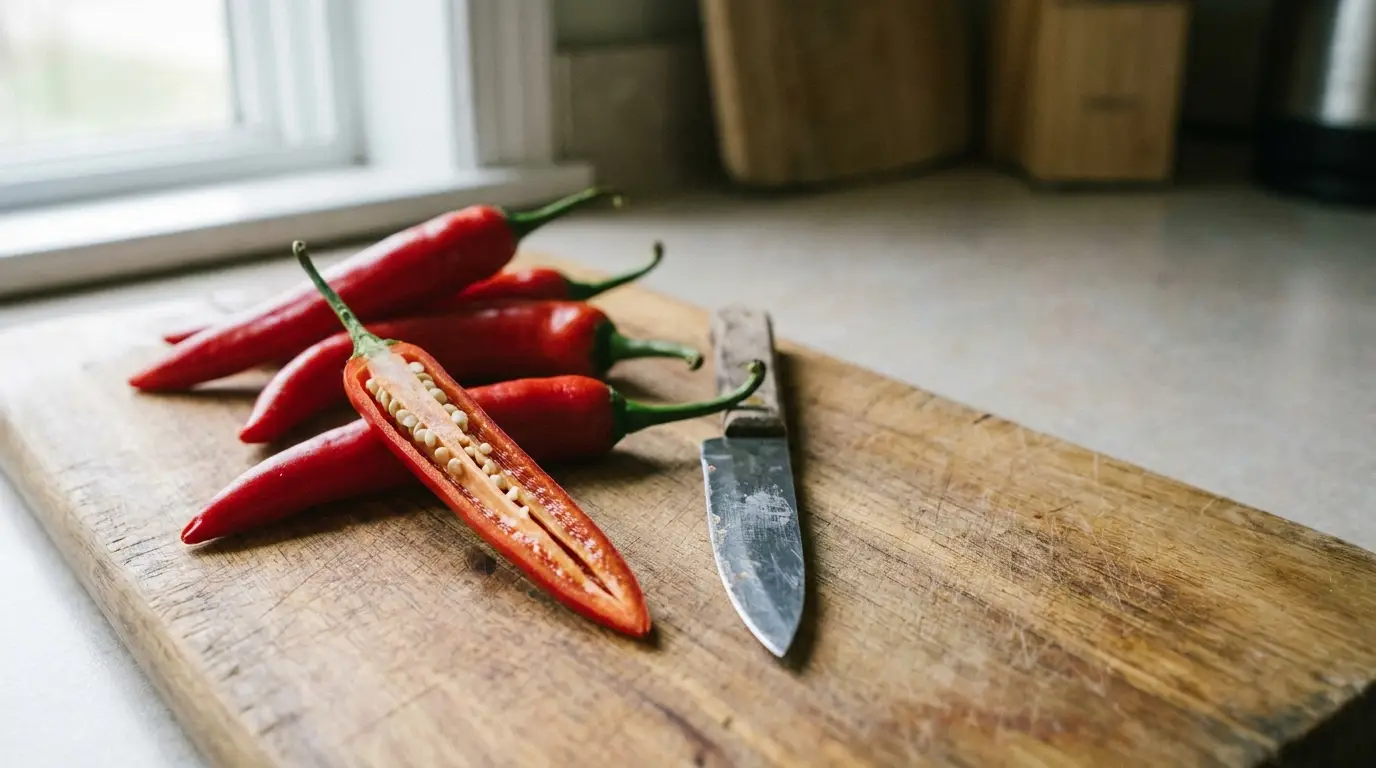
Not every part of the pepper carries the same punch. Much of the capsaicin sits in the pale interior tissue that holds the seeds rather than in the outer flesh. Removing that inner membrane cools a chilli far more than most people expect.
How you cut a chilli matters too. Saveur’s test kitchen found that seeding habaneros before chopping still left too much heat from leftover membrane, while stewing them whole delivered too little flavor. Their winning method was to slit each pepper lengthwise from stem to tip and simmer it in the pot, which let out the fruit’s floral sweetness along with a measured burn. For anyone scaling up a recipe, that kind of control is more useful than simply adding or removing whole peppers.
Balancing Dairy, Acid, and Sugar
When a dish runs too hot, the fix is rarely more water. It is chemistry.
Dairy. Milk contains casein, a protein that helps break capsaicin’s grip on the tongue, which is one reason raita sits beside so many fiery curries. Interestingly, a 2019 study found skim milk worked about as well as whole milk, so the protein seems to matter more than the fat. Plant milks lack casein and help less.
Sugar. A little sweetness distracts the palate and softens the edges of the burn. Palm sugar in Thai cooking and honey in barbecue sauces both do this job.
Acid. Lime juice, vinegar, or tamarind brightens flavors that heat has flattened. Acid does not neutralize capsaicin, but it gives the other ingredients a way back to the front.
Bulk. The most reliable fix is to add more of everything except chillies. Doubling the beans, tomatoes, or stock dilutes capsaicin directly, which is exactly how the Scoville test works.
The best spicy recipes use several of these at once. If you want to see how different cuisines balance intense chilli with sweetness, fermentation, and oil, this guide to Asian spicy sauce recipes shows gochujang, chili oil, and Szechuan blends working in very different ways.
Practical Rules for Scaling Spice
If you plan to increase the heat in a favorite recipe, a few habits prevent disaster:
- Increase gradually. Go from one chilli to two before jumping to three. Taste after each addition and wait a minute for the burn to settle.
- Add heat early or late, on purpose. Chillies cooked from the start mellow and spread through the dish. Chillies stirred in at the end stay sharp and bright.
- Use different forms. Fresh, dried, smoked, and fermented chillies each bring heat with a different character. Combining them builds depth instead of just intensity.
- Mind the oil. In stir-fries and curries with a lot of oil, heat spreads fast. Start lower than you think.
- Taste with the whole meal. Rice, bread, and cooling sides change how hot a dish feels, so judge the heat as it will actually be served.
The Third Chilli Is a Flavor Decision
Tripling the chillies is not a mistake in itself. Plenty of cuisines run hot by design, from Sichuan mala dishes to Caribbean pepper sauces. What separates a great hot dish from a painful one is intention: knowing where the capsaicin sits, how the burn builds over a meal, and which ingredients will hold the other flavors up. Treat that third chilli as a decision about the whole recipe, and you get heat that tastes like something.