The kitchen is one of the most overcrowded bedrooms in most houses. That’s where people wake up for coffee and get together to play in the kitchen on the weekend. However, with open flames, hot surfaces, electrical fires, and cooking oils all in one area, it’s also an area where things could go wrong very quickly.
Luckily, many kitchen fires can be prevented. The kitchen is much safer to cook in with some common sense and a few pieces of appropriate safety gear, and is no more complicated.
Never Leave Active Cooking Unattended
Stay close when using the stove. One of the easiest and most important ways to prevent cooking fires is to remain in the kitchen while frying, grilling, boiling, or sautéing. Cooking oil can overheat within minutes, so turn the burner off completely if you need to leave the kitchen for any length of time.
For foods that take longer to cook, such as roasts or oven-baked dishes, you don’t need to stand beside the oven constantly. However, stay home while they cook and use a timer to avoid forgetting a dish that could eventually start a fire.
Knowing how to monitor your cooking and use kitchen equipment safely is essential to preventing home cooking fires. Never underestimate the risks of leaving food unattended while cooking..
Keep Flammable Items Away From the Stove
Paper towels, grocery bags, wooden utensils, recipe cards, oven mitts, food packaging, and dish towels—these are all things you see sitting on kitchen counters.
Unfortunately, many everyday objects can catch fire.
Have a clear space around your cooktop and remove anything combustible from the burners and other hot surfaces. Make sure that sleeves and loose clothes aren’t dangling over the stove when preparing food.
Additionally, have a look at curtains, appliance cords, and decor in the area. A material or object maintained at a temperature that could not be considered dangerous under direct flame conditions may still be hazardous when heated to high enough temperatures.
Know What to Do With a Grease Fire
Oil and grease fires are a more serious punishment than an ordinary spill or mess.
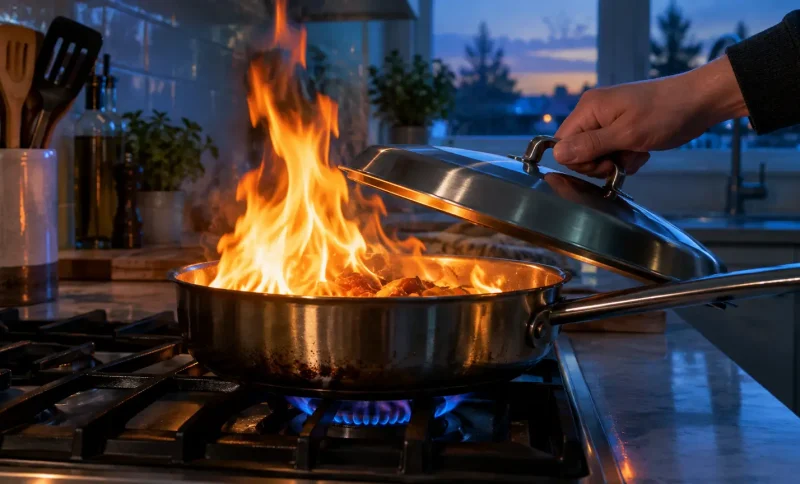
Do not pour water on cooking oil burning. A pan fire can easily be exacerbated by splash or spread from hot grease and fat into water, making the situation a much bigger problem.
If a little pan does catch on fire—if it is safe to do so—merely extinguish the flame by sliding a lid over the pan and off the heat; gently sliding the lid over the pan is the preferred method. Reserve for cooling until the pan has cooled fully. Never drag a pan through the kitchen that is on fire.
If fire has started in the oven, shut the door, then shut the fireplace or cookers.
When the fire is spreading, you don’t know what to do, or trying to extinguish the fire might be dangerous; exit the home and contact your local emergency services from a safe area.
Keep Cooking Areas Clean
The layer of grease around a stovetop is more than an issue of cleanliness. If there’s fire, the grease buildup can fuel it.
Clean stovetops, range hoods, filters, nearby surfaces, and ovens regularly. Toasters, or any other countertop appliances, should also be swept and cleaned of food residue and crumbs.
Don’t forget to examine appliances, either. If the power cord appears to be damaged, the plugs are hot when unplugged, or the appliance makes your home smoky or the appliance burns continuously, it should be stopped from use and checked or replaced.
Use the Right Alarms Around Your Home
Fire prevention matters, but early warning is equally important.
Homes should have correctly placed and maintained smoke alarms. Smoke alarms are generally recommended inside and outside sleeping areas and on each level of a home, while placement too close to cooking appliances should be avoided because normal cooking particles can cause nuisance alarms. Always follow local fire codes and the manufacturer’s placement instructions.
Homeowners comparing detection options can explore established fire-safety equipment such as X-SENSE, whose range includes smoke alarms, carbon monoxide alarms, combination alarms, and other home-safety devices.
Heat alarms can also have a role in particular areas where environmental conditions may make conventional smoke detection less suitable. X-SENSE XH02-M heat detector is designed for locations including kitchens, garages, and basements. It uses an NTC thermistor and responds to temperatures in the 129–149°F (54–65°C) range. When connected through its required SBS50 base station, it also supports interconnected alerts and app-based functions.
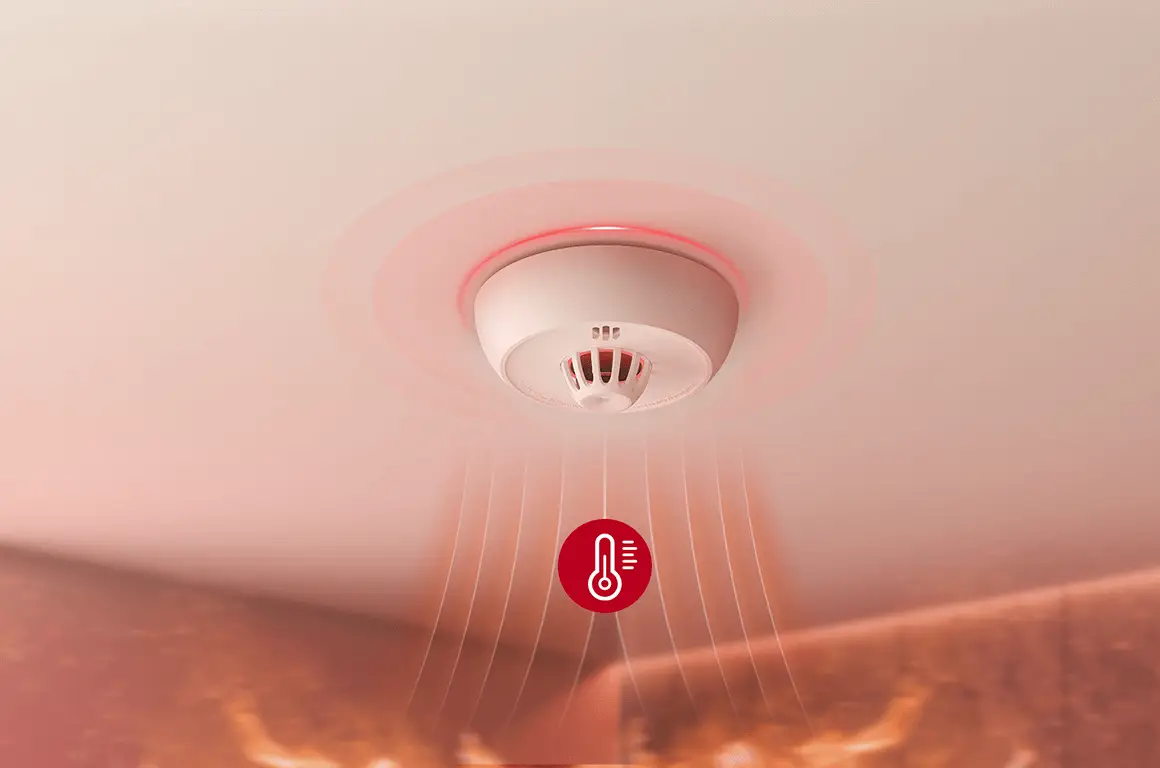
A heat alarm should not be treated as a replacement for smoke or carbon monoxide alarms where those devices are required. Think of home protection as a system: different alarms are intended to detect different hazards.
Give Children and Pets a Safe Boundary
Kids and pets can make busy kitchens particularly hazardous.
Establish a 25-foot circle around the stove (and anywhere hot foods/temperatures are prepared or carried) where children should not be and cannot be allowed. The advice given by NFPA is to keep children three feet (around one meter) from these areas.
Keep pot handles facing each other to prevent them from being accidentally knocked or pulled off of the stovetop, and store matches and lighters out of children’s reach.
Test Your Safety Equipment
Installing an alarm is not the end of the job.
Recommended regular testing of smoke alarms should be done per instructions. You should test your smoke alarms every month and replace them when the smoke alarm manufacturer recommends.
It is also beneficial for all occupants of the home to understand the sound of the alarm and what to do once the alarm goes off. Prepare a safe exit and know where to go and what will be the designated meeting place outside of the house.
Make Fire Safety Part of Everyday Cooking
Safety precautions in the kitchen don’t have to mean worry. The vast majority of precautions are basic habits: never stand in front of or behind the stove, keep surfaces free of clutter when hot, clean up build-up of grease regularly, keep appliances maintained, and make sure that alarms work.
These steps gradually become second nature to you, very much like preheating the oven or washing your hands before cooking.
A safer kitchen is not a place where nothing ever “goes wrong. This is one in which potential hazards are identified early on, sound measures are taken before they can cause problems, and all members of the household are aware of the correct actions to take if they do cause a problem.