


Your Convotherm combi oven turns on, the fan starts running, and everything seems okay until you switch to steam mode only to find out that there’s little to no steam produced. Any kitchen depends on great cooking results, and with vegetables and meat coming out dry, this means a drop in performance, revenue, and possibly customer trust. There is, however, a good chance you can narrow down or even fix the issue yourself, or at least look at a malfunction that is affordable to address, with reasonably-priced Convotherm parts available for purchase online.
Let’s look at four areas that commonly affect steam production. We’ve put them in the order you should check them, from the simplest potential issues like a closed valve to the more technical, which may mean a failing sensor or other component.
1. Start With Water Supply
It might sound all too basic, but something as simple as a closed valve that someone may have shut off during maintenance and forgotten to reopen, or low water pressure may be exactly why a Convotherm stops producing steam. Sediment, a kinked hose, a clogged water treatment cartridge, and similar issues can reduce the flow reaching the oven.
If water pressure is at normal PSI but steam still isn’t working, it’s time to look at the components that control water flow.
2. Check the Water Inlet Valve and Filters
Convotherm combi ovens rely on inlet strainers or sediment filters to keep dirt and debris from entering the water system, located in the supply line or at the solenoid valve inlet. In areas with hard water or in older plumbing systems, the screen can clog with mineral deposits and debris and restrict the water flow. Cleaning out a screen may solve the problem.
Another issue may be a solenoid valve that opens and closes to regulate water flow. The valve can stay closed and never open (particularly when an electrical coil burns out) or not fully open. Mineral buildup from hard water may coat valve components and eventually lead to sticking.
A technician will check whether sufficient water is reaching the valve and test the valve itself electrically. If the valve receives the correct voltage but doesn’t work properly, the coil or valve mechanism may be defective. If there’s no electrical command, the problem could instead involve wiring, a sensor, an interlock, or the control system.
3. Steam Generation and Heating Parts
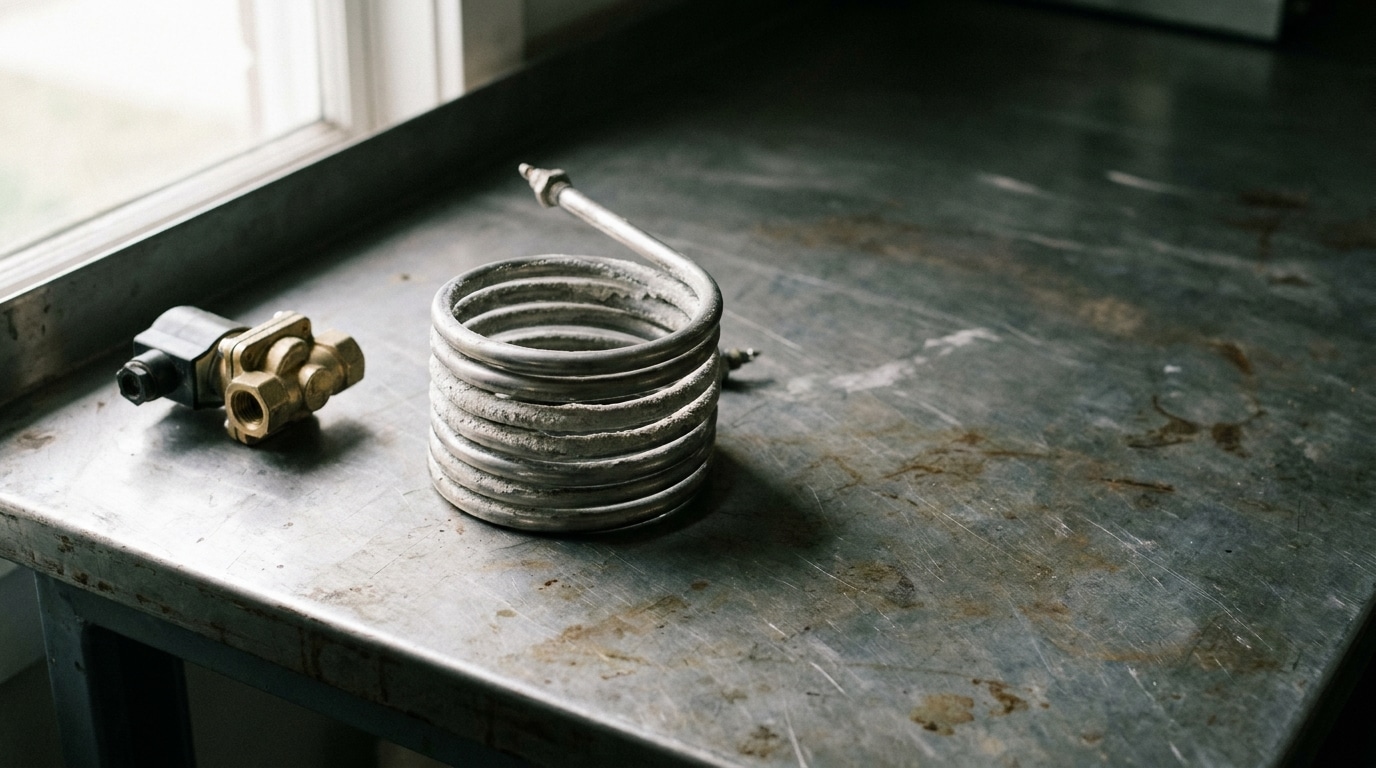
If water is making it into the oven, it’s time to check the functionality of the steam system itself. Your Convotherm oven uses either of the two system types:
- Boiler (generator) systems heat water in a dedicated internal reservoir. The boiler itself needs periodic descaling and the heating elements inside it can fail just like in any other system using these elements. A defective contactor, solid-state relay, or safety device may also interrupt power to the heating elements. Heating issues on gas-fed models can be caused by burner ignition failures and flame-sensing problems, among other faults.
- Direct-injection systems spray water directly onto a heating element or into the cooking chamber, generating steam on demand without a separate boiler. These systems are mechanically simpler and have less standing water to maintain, but they’re more sensitive to water quality. Mineral buildup can affect steam production. A technician should verify that the injection valve operates correctly, the nozzle is clear, and the chamber reaches the required temperature.
Either way, problems in this area require a technician to troubleshoot, who’ll perform the testing with the right equipment.
4. Sensors and Electronic Controls
Here’s a frustrating scenario: the water supply is fine, the heating components appear to be working, but your steam mode isn’t working. The problem might be with a component that tells the oven when to fill, heat, or stop operating.
Water-Level Sensor
On steam-generator models, water-level sensors help the controls determine whether the boiler contains enough water. If this sensor fails or gives a false reading (a conductivity probe coated in scale is a possible reason), the control board may hold off on activating the steam system entirely.
A technician can inspect the probe and its connections, try to remove deposits and test again. A sensor that’s physically damaged or still provides incorrect readings after cleaning and testing may need replacement.
Temperature Sensor
It monitors conditions inside the boiler or cooking chamber. A sensor that’s reading inaccurately can cause the oven to think target conditions are already met, so it never triggers additional steam generation. What you might notice is that steam mode stops unexpectedly or the oven reports a temperature-related fault.
Electronic Control Board or Relay Problems
The control system coordinates water delivery, heating, and sensor feedback and failures in this area ruin the signal path entirely, even though other components involved are fully functional. A technician needs to verify the incoming power, sensor signals, wiring, safety circuits, and relevant outputs to verify it’s a control board that needs replacement.
A note on error codes: modern Convotherm units will often display an error code when a sensor or control fault is detected. For instance, some Convotherm 4 models use E01.x for insufficient water, E10 for a water filter fault, and E34.0 for a boiler pump fault, but the codes may vary depending on the model.
Conclusion
A Convotherm combi oven not steaming doesn’t always mean you’re facing a major repair. Sometimes, restoring the water supply or removing restriction is enough. Other times, a failed solenoid valve, heating element, sensor, or electronic control needs replacing. Once new Convotherm parts are installed and your oven is running properly again, stay on top of water treatment, routine maintenance, and regular cleaning. Keeping mineral buildup under control and catching small problems early will help your Convotherm keep producing steam through those busy service hours.