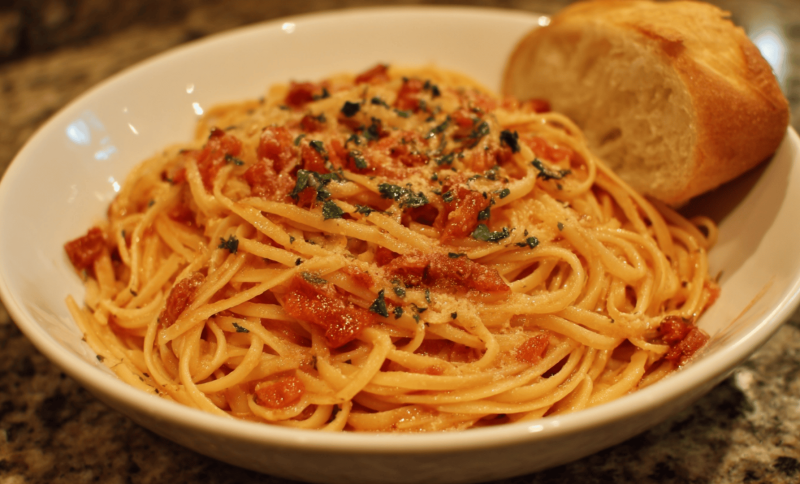
I used to think pasta was foolproof. Boil water, drop noodles, wait, drain, done.
After ruining more dinners than I’d like to admit (mushy spaghetti, bland penne, sauce sliding right off), I learned the hard way that knowing how to boil pasta is less forgiving than it looks.
After cooking pasta professionally and at home for years, I’ve found that great pasta isn’t about fancy ingredients; it’s about a few small decisions made at the right moments.
How salty the water is. When you pull it off the heat. If you drain it completely or let it finish cooking in the sauce.
Once you understand why these steps matter, pasta stops being a gamble and starts becoming reliable, repeatable, and genuinely better than what most people make at home.
How to Boil Pasta With Al Dente Basics
Begin with a large pot filled with plenty of water, using about four to six quarts for every pound of pasta. More water gives the noodles room to move and cook evenly.
Bring the water to a rolling boil over high heat, with bubbles rising quickly and evenly across the surface.
Once the water is boiling, add salt and stir, then add the pasta all at once to prevent sticking. Let it cook at a steady boil and start testing it a minute or two before the package time.
After cooking pasta for years, one mistake shows up more than any other: letting it cook too long before it ever meets the sauce.
Al dente means “to the tooth,” when pasta feels tender but still offers slight resistance—never hard, chalky, or mushy.
Why This Works
As pasta cooks, starches on the surface soften and release into the water. Stirring the noodles early helps prevent clumping and cooks them evenly.
That same starch is why reserved pasta water helps sauces cling. When added to the sauce, it helps fat and liquid combine into a smooth, glossy coating instead of separating.
Ingredients You’ll NeedMain Ingredients
Optional Additions
|
How to Cook Pasta for Sauced Dishes
Follow these easy steps to achieve a rich, balanced, and perfectly coated taste every single time.
Step 1: Cook to Al Dente

Boil the it in salted water until it’s just al dente, meaning tender with a slight bite in the center. Avoid overcooking, as the will continue to cook when added to the sauce.
This step ensures the noodles stay firm and absorb flavors beautifully when finished together.
Step 2: Save Leftover Water

Before draining the it, reserve ½ to 1 cup of water using a heat-safe cup.
This starchy, salty liquid is the secret to creamy, cohesive sauces. It acts as a natural thickener, helping the sauce stick to the while balancing flavor and texture without needing extra oil or cream.
Step 3: Mix with Sauce

Transfer the hot directly into your prepared sauce using tongs or a slotted spoon. Skip rinsing; the starch left on the helps the sauce cling perfectly.
Toss the it gently to coat every strand, ensuring the flavors combine evenly and the texture stays silky and rich.
Tip: You can use sauces like tomato basil, creamy Alfredo, garlic butter, or pesto for the best flavor and smooth coatin
Step 4: Simmer for One to Two Minutes

Let the pasta and sauce simmer together over low to medium heat for about 1 to 2 minutes. Stir occasionally so the noodles absorb flavor evenly.
This brief simmer allows the sauce to thicken naturally, creating a smooth, glossy coating on every piece.
Step 5: Adjust with Water

Gradually add small splashes of the reserved water to reach your desired consistency. The starch in the water binds with the sauce, giving it a glossy, velvety texture.
Keep stirring until the it is evenly coated, flavorful, and perfectly balanced, neither too dry nor too watery.
Al Dente Pasta Cooking Chart
Use this quick chart to find the perfect cooking time for different types and achieve that ideal al dente texture every time.
| Pasta Type | Typical Cooking Time | Al Dente Time | Notes |
|---|---|---|---|
| Spaghetti / Linguine | 8-12 min | 8-9 min | Start testing early |
| Penne / Rigatoni | 10-12 min | 9-10 min | Ideal for creamy sauces |
| Fusilli / Farfalle | 10-13 min | 9-11 min | Great for salads |
| Elbow Macaroni | 7-9 min | 6-8 min | Popular for mac and cheese |
| Rotini | 8-10 min | 6-8 min | Holds sauce well |
| Angel Hair | 4-6 min | 3-4 min | Very delicate, cooks fast |
| Fettuccine | 10-12 min | 9-11 min | Works well with Alfredo |
| Fresh Pasta | 2-5 min | 2-3 min | Cooks much faster |
| Whole Wheat | 9-12 min | 8-10 min | Slightly firmer texture |
Note: Always check package directions and taste test frequently.
How to Cook it for Salad

Pasta salad requires a different approach:
- Cook 1 to 2 minutes longer than al dente for a softer texture
- Drain in a colander immediately when done
- Rinse under cold water to stop the cooking process
- Toss with a small amount of olive oil to prevent sticking
- Let cool completely before adding dressing and ingredients
Short shapes work best for salads, such as fusilli, penne, farfalle, rotini, and shells, which all hold dressing well.
Pasta Troubleshooting (Quick Fixes)
Even with the right technique, things can go sideways. These quick fixes are for those moments when the pasta is already cooked, and something doesn’t look or taste quite right.
- Water stops boiling after adding pasta: Cover the pot for 30–60 seconds to return it to a boil, then uncover and keep it at a strong simmer.
- Sauce tastes thin or watery: Add 2–3 tablespoons of reserved pasta water and toss until the sauce turns glossy and coats the pasta.
- Sauce looks oily or separated: Lower the heat, add a splash of pasta water, and stir or toss until it comes back together.
- Pasta clumps after draining: Return it to the warm pot, add a spoonful of sauce or a little pasta water, and toss to loosen.
- Pasta dries out before serving: Add a small splash of hot water or pasta water, cover for 30 seconds, then toss again.
- Dish tastes too salty: Add more sauce or a splash of unsalted water and let it simmer briefly to rebalance.
These fixes won’t replace good technique, but they can save a dish in real time. Once you know how to correct small problems as they happen, pasta becomes far more forgiving and easier to handle with confidence.
Tips for Consistent Results
Small changes make a big difference. Follow these quick tips to cook a flavorful, firm, and perfectly coated dish every time.
- Use a wide pot with plenty of water: It gives the pasta room to move, so it cooks evenly and sticks less.
- Wait for a true rolling boil: Strong bubbling prevents clumping and keeps cooking consistent.
- Stir immediately, then occasionally: The first minute matters most; after that, a few stirs are enough.
- Salt the water until it tastes pleasantly salty: This is where the pasta gets seasoned, not just the sauce.
- Drain 1 minute early for sauced dishes: Let it finish in the sauce so it stays firm and absorbs flavor.
- Use pasta water in small splashes: Toss until glossy and coated, smooth, not watery or greasy.
- Skip the oil in the boiling water: It’s a common myth that does more harm than good.
Master these simple habits, and you will always turn out perfectly cooked and delicious.
How to Store Cooked One
For short-term storage, toss cooked pasta with a little olive oil to prevent sticking and keep it in an airtight container in the refrigerator for up to three days.
Reheat by adding it to your sauce or microwaving it with a splash of water.
For longer storage, slightly undercook before freezing it in sealed bags or containers for up to two months.
Thaw overnight and reheat in hot water or sauce. For salad, store it in the fridge and keep the dressing separate until serving.
Wrapping It Up
Perfect pasta comes down to three key elements: proper timing, adequately salted water, and frequent stirring, especially in the first two minutes, when sticking starts.
The real difference between a good dish and a great one happens after draining: finishing the pasta in the sauce with a splash of starchy cooking water is what makes everything cling and taste complete.
Experiment with sauces, cooking times, and textures to match what you enjoy. Once that slight bite becomes familiar, boiling pasta stops feeling like guesswork and becomes automatic.
Ready to go further? Try a simple homemade sauce or fresh shapes for a noticeable change in flavor and texture.
Frequently Asked Questions
How can I Keep Pasta from Sticking After Cooking?
Toss it with a little olive oil and stir while cooling to prevent clumping.
What Type of Salt is Best for Pasta Water?
Use coarse sea salt or kosher salt for a richer flavor and more even seasoning.
Can I Cook Pasta Ahead of Time for Guests?
Yes, slightly undercook it, toss with oil, and reheat briefly in the sauce before serving.
How do I Fix Overcooked Pasta?
Sauté it in a hot pan with sauce to firm it slightly and add flavor.
What’s the Best Way to Add Pasta to The Sauce?
Transfer it straight from the pot into warm sauce and mix while still hot.