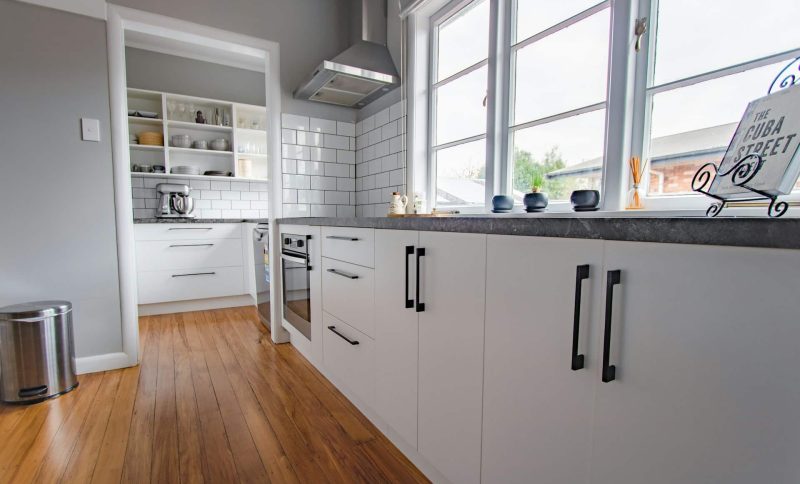
Compact kitchens often limit where you put your belongings. Appliances can scatter across your counter, leaving no room to prep. Entering the space can feel overwhelming. However, by rethinking nearby zones, like understairs storage or hallway space, you prevent the kitchen from carrying the full load. Moving extras out of your primary work triangle transforms the room from a cluttered cubby into a functional workshop.
The Psychology of Space
Perceived spaciousness determines whether a place feels small. Clear lines of sight, empty surfaces, and consistent colours help your brain register calm rather than congestion. Subtle changes matter because your eyes naturally scan for obstacles. If your gaze hits a wall of cereal boxes, your brain signals the room is full.
You encourage breathing room by paying attention to visual breaks. Storing snack jars in a hallway pantry instead of above the fridge prevents your gaze from landing on competing labels. The kitchen feels more settled, supporting cooking rather than constant tidying. Audit your line of sight from the doorway to identify the biggest visual anchors making the room feel heavy.
Relocate the Bulk to Reclaim Your Worktops
Many kitchens have space-hungry items that rarely earn their daily place. Slow cookers, bread machines, and large cases of food often sit out because cupboards cannot accommodate them. Moving these to an alcove, shelving unit, or utility nook immediately reduces visual density. You stop treating prime real estate like a warehouse for gadgets you only use on Sundays.
You regain the freedom to prepare food without shifting heavy objects first, reducing the friction of starting a meal. You support daily living rather than storing every device you own in a five-foot radius. Apply a Four-Week Rule: move any appliance you haven’t touched in a month to storage in a different room.
Utilise Vertical Real Estate

Wall height offers more flexibility than floor space. Using it thoughtfully lets you stretch the room upwards. Open shelves keep essentials within reach without swallowing worktops or boxing the room in with heavy doors. Treating the vertical plane as active space reduces the need for deep cabinets that dominate the room and cast shadows.
Items like mugs or spices often clutter counters. A simple rail with hooks lifts them off the surface while keeping them in your cooking flow. This creates a cleaner line across the lower half of the room, helping the kitchen feel taller. Install a magnetic knife strip on the wall to retire your bulky knife block and free up counter space.
Leverage Reflective Surfaces and Light
Light influences how you interpret size. Reflective finishes bounce brightness, brightening shadows that make a kitchen feel cramped. You don’t need a remodel; small additions like a polished kettle or stainless steel containers catch light in dim corners.
Glass-front cabinets soften the weight of solid doors and create depth. A mirrored splashback can double the sense of space by reflecting the room. If your window faces shade, warm under-cabinet lighting lifts the gloom. Each adjustment ensures the room stays inviting. Swap standard cool-white bulbs for warm-white LEDs ($3000K$) to give the room a glow that feels expansive rather than clinical.
The Power of Uniformity

Consistency acts as a quiet organiser. Matching colours with neutral textiles stops your eye from bouncing between competing tones and makes interiors look cohesive. The room settles into a steady rhythm, making it feel more spacious. When you eliminate visual noise, you allow the architecture of the kitchen to breathe.
Consider a cupboard where you decant dry goods into tidy containers. It gives a clearer overview and reduces the mental load of hunting for ingredients. Uniformity also encourages better habits because you naturally keep items organised when they look intentional. Decant frequently used pasta and grains into identical glass jars to create a streamlined look on open shelves.
Direct the Eye with Flooring
The floor is the largest uninterrupted surface in your kitchen; how you treat it dictates the perceived width. Small, busy rugs or dark mats break up the floor, making the room look like disconnected patches. Choosing a single, long runner rug can draw the eye toward the far wall, creating an illusion of length that stretches the boundaries.
Long stripes or planks running parallel to the longest wall guide the viewer’s gaze and emphasise distance. This prevents the floor from feeling like a cramped square and turns it into a corridor of movement. Choose a long floor runner with vertical stripes to lead the eye toward the window or exit, lengthening the floor plan.
Edit Your Tool Collection
We often cling to unitaskers – gadgets that only serve one purpose, like avocado slicers. These items migrate to the front of drawers and spill onto counters, stealing space from essential tools. By prioritising multi-purpose equipment, you reduce the volume of stuff your kitchen must hold. A high-quality chef’s knife does the job of multiple plastic gadgets while taking up less space.
When you audit your tools, you realise you likely use a small percentage of your inventory for 90% of your meals. Clearing out excess creates negative space. You feel more capable when you can open a drawer without it jamming against a potato masher. Donate duplicate utensils or single-use gadgets to a charity shop to instantly declutter your primary prep drawer.