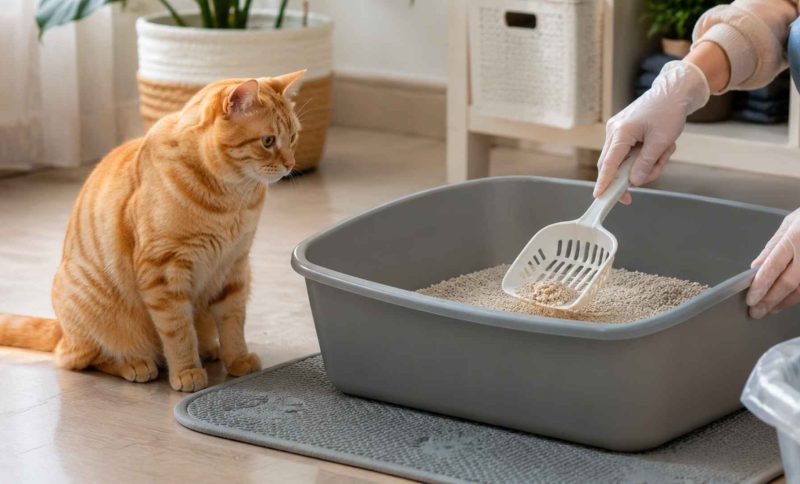
Cleaning a litter box is a crucial task for every cat owner. Knowing how to clean a litter box properly helps prevent bad smells and keeps your cat healthier and happier.
Cats are very clean animals and prefer using a fresh, clean bathroom. Regular cleaning helps keep your home smelling fresh and gives your cat a hygienic place to go.
The cleaning process is simple and takes only a few minutes each day. Daily scooping removes waste quickly, while deep cleaning should be done once a week.
A clean litter box prevents health problems and encourages your cat to use it properly. Good litter box care benefits both you and your pet.
Why Cleaning the Litter Box Matters
A clean litter box is essential for your cat’s health and happiness. Cats have a strong sense of smell, and dirty litter boxes greatly bother them.
If the box stays dirty, your cat might refuse to use it and have accidents around your house.
Bacteria and germs grow quickly in dirty litter, which can cause urinary infections and other health problems for your cat.
The smell from an unclean litter box spreads throughout your home, making the rooms unpleasant.
Regular cleaning also helps you notice changes in your cat’s bathroom habits. These changes can be early warning signs of illness.
How Often to Clean the Litter Box
Clean your cat’s litter box at least once a day to keep it fresh and healthy. Scoop out clumps and solid waste every morning or evening using a litter scoop.
This daily cleaning stops bad smells and keeps your cat happy to use the box.
Once a week, dump out all the old litter and wash the box with mild soap and warm water.
Dry it completely before adding fresh litter.
Cats like clean spaces and may refuse to use a dirty box. Regular cleaning also helps you notice any health problems early.
Tools & Supplies Needed
|
Step-by-Step Guide
Follow these simple steps to clean your cat’s litter box properly. Regular cleaning keeps your cat healthy and your home smelling fresh.
Step 1: Remove Waste and Old Litter
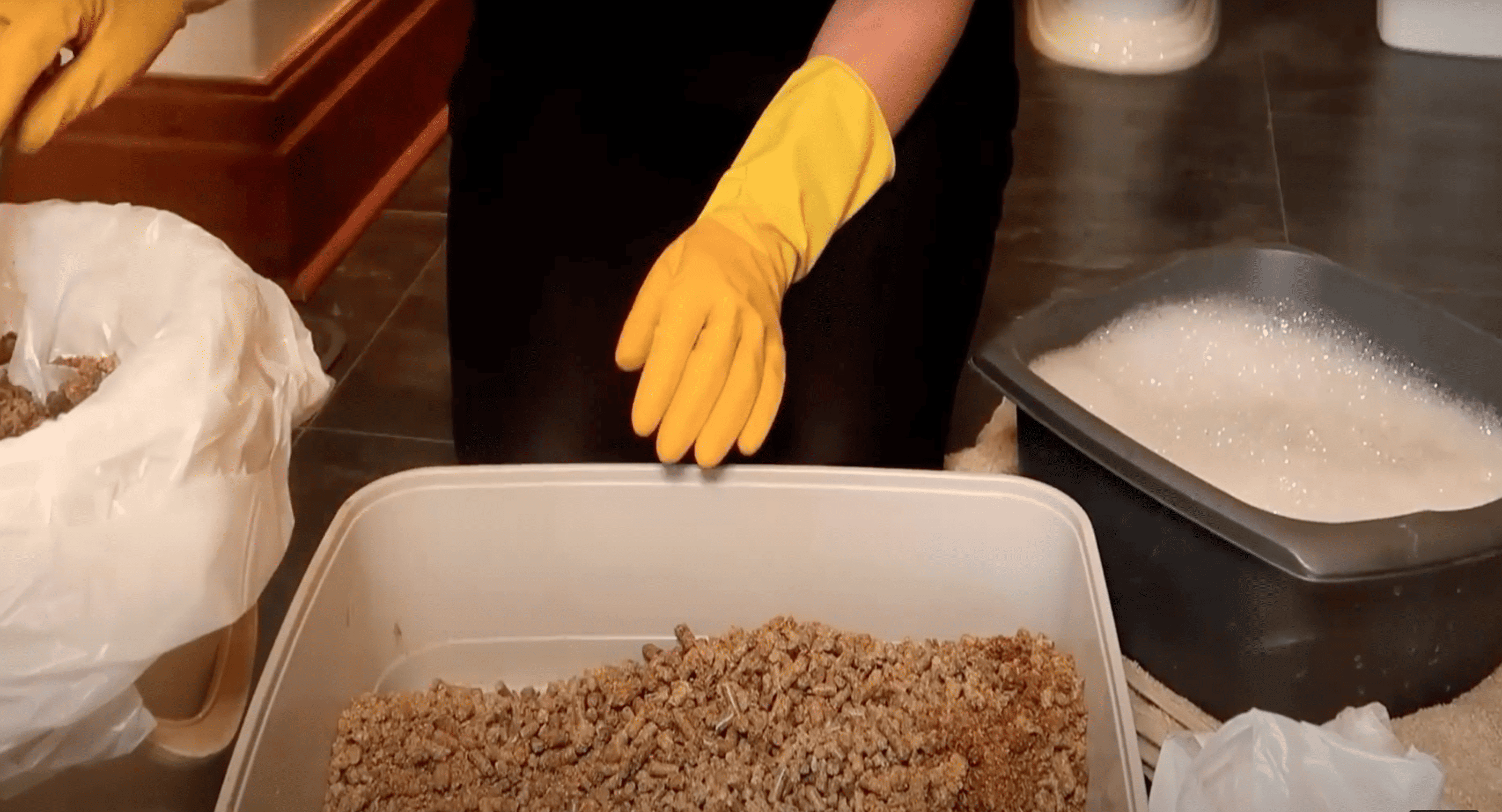
Start by scooping out poop, clumps, and any wet or dirty litter. Scoop from top to bottom so you do not miss waste buried underneath. Be sure to scrape along the sides and corners, where litter often sticks.
Once the waste is removed, empty the remaining old litter into a trash bag so the tray is fully clear and ready to wash.
Step 2: Wash the Litter Tray
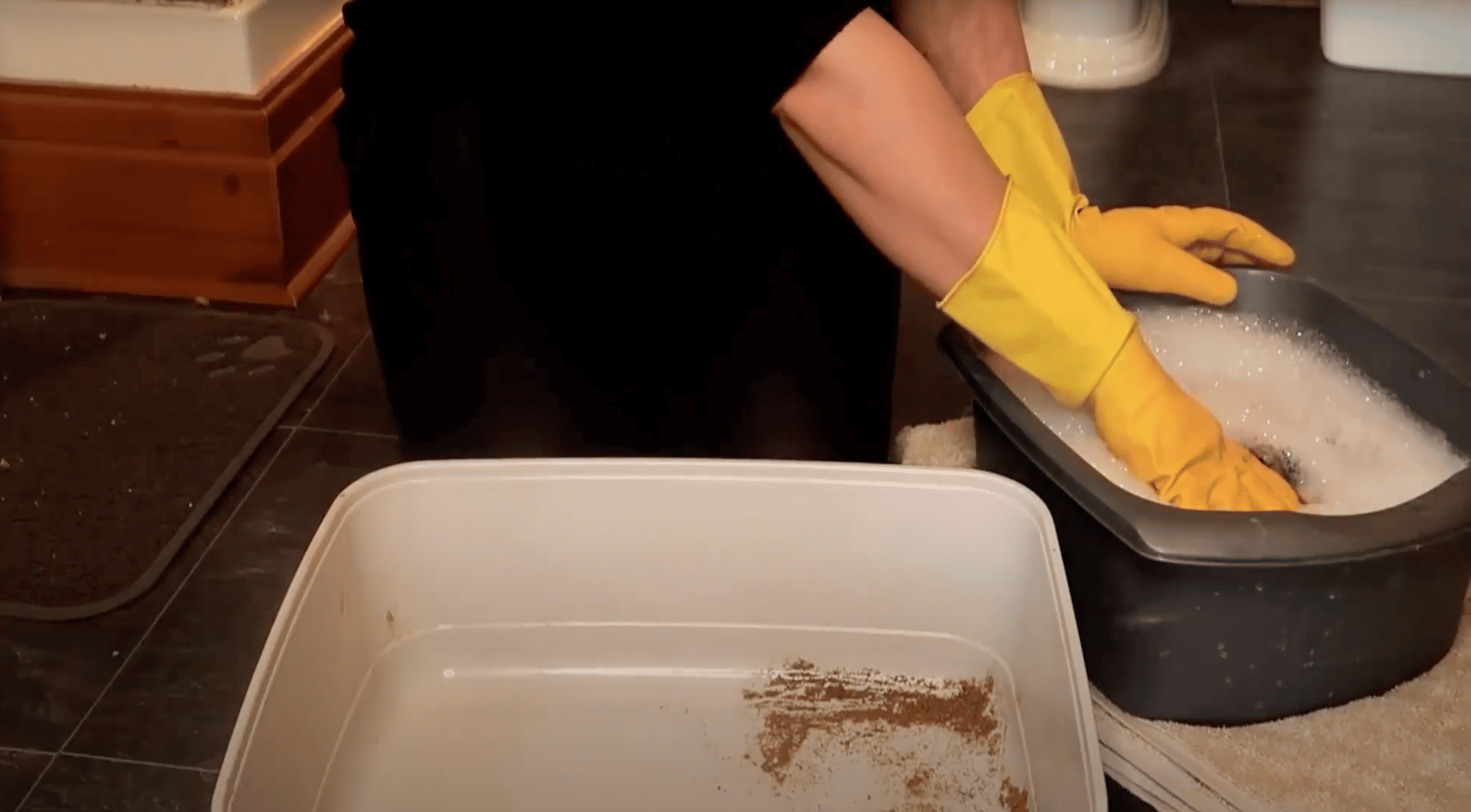
Take the empty litter tray to a sink, tub, or outdoor wash area. Rinse it first, then use hot water and mild soap to clean it.
Dip a sponge into the soapy water and scrub the tray carefully, including the base, corners, and edges. This helps remove stuck-on residue, odor, and bacteria, leaving the tray much cleaner and safer for your cat.
Step 3: Rinse and Dry Completely
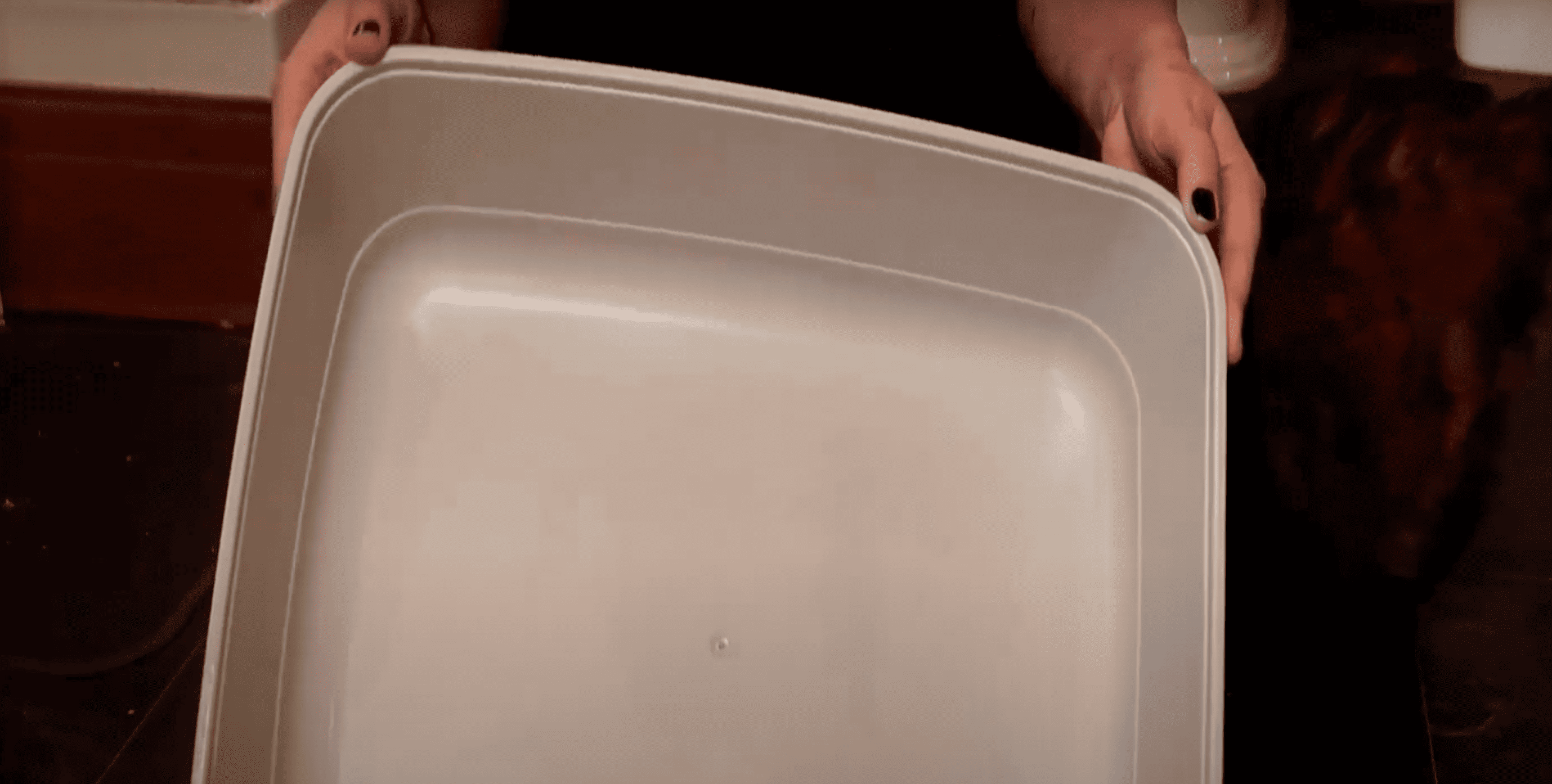
After washing, rinse all soap residue away. Then let the tray dry completely before you refill it. You can air-dry it or wipe it with a clean towel.
A dry tray helps keep the new litter fresh and prevents clumping too soon. This step also helps control odor and gives your cat a more comfortable space to use.
Step 4: Add Fresh Litter and Odor Control
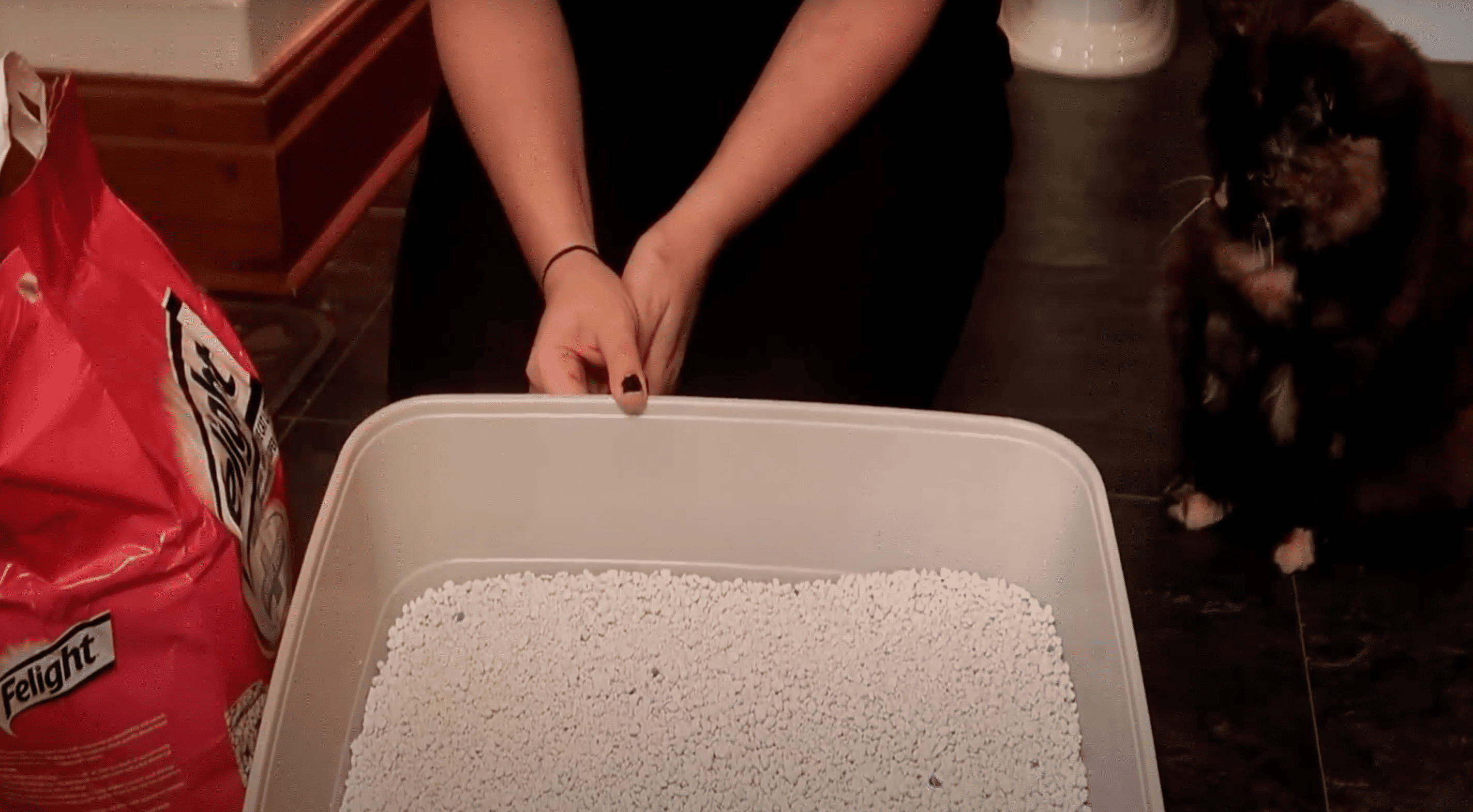
Fill the dry tray with fresh cat litter. Sprinkle baking soda evenly over the litter to control odors.
Cat litter deodorizers, such as Arm & Hammer Cat Litter Deodorizer, help eliminate odors on contact and keep the box smelling fresh for longer.
Video Guide
Special thanks to For Pet Lovers for providing valuable insights in their video, which I referenced while creating this guide.
Tips for Small Apartments
Living in a small apartment requires smart strategies to keep the litter box area clean and odor-free:
- Control Odors Naturally – Sprinkle baking soda in the litter or use charcoal filters near the box.
- Improve Air Quality – Place a small air purifier close to the litter area and open windows regularly.
- Choose Space-Saving Designs – Use covered boxes, corner boxes, or hidden cabinets to save floor space.
- Use Two Boxes – Rotate between two boxes so one can dry while your cat uses the other.
- Reduce Litter Scatter – Place a mat around the box to catch loose litter from your cat’s paws.
- Avoid Scented Sprays – Skip perfumed air fresheners, as strong scents can bother cats and cause them to avoid the box.
How Many Litter Boxes Do You Need?
The general rule is a simple one box per cat, plus one extra. So if you have one cat, you need two boxes. Two cats? Three boxes. It sounds like a lot, but it genuinely makes a difference.
Cats can be territorial. Even if yours seem to get along just fine, they may not want to share a box. Having an extra one gives each cat a clean option at all times and reduces the chance of accidents outside the box.
And if you live in an apartment, spread the boxes across different spots rather than tucking them all in one corner. It keeps odors from concentrating in one area and helps your cat feel much more at ease.
Maintaining a Healthy Litter Box Routine
Keeping your cat’s litter box clean goes beyond daily scooping and weekly washes. Establishing a consistent routine makes it easier to manage odors, keeps litter fresh longer, and supports your cat’s health.
- Scoop multiple times a day if needed: Some cats produce clumps more frequently, especially kittens or senior cats. Scooping more often prevents odors and keeps the box inviting.
- Top off litter regularly: Add a small amount of fresh litter to maintain the proper depth and texture for your cat.
- Check for unusual changes: Look for differences in urine color, frequency, or stool consistency. Noticing these early can help you catch potential health issues.
- Rotate litter brands gradually: If you change litter, mix it slowly with the old type over several days to prevent your cat from rejecting the box.
- Keep the area clean: Wipe the surrounding floor, mats, and scoop regularly to minimize mess and lingering smells.
Following these small daily habits keeps the litter box inviting for your cat and helps prevent problems before they start.
Common Litter Box Cleaning Mistakes to Avoid
Even with the best intentions, it’s easy to slip into habits that make things worse for you and your cat. Here are five mistakes that are more common than you’d think.
- Skipping daily scooping: One day without scooping can put your cat off the box entirely. And once that happens, cleaning up after them gets a whole lot harder.
- Using strong-scented cleaners: Your cat’s nose is sensitive. Heavily scented products can make the box smell “wrong” to them, so they’ll simply refuse to use it.
- Flushing litter down the toilet: It seems convenient, but most litter expands in water and can seriously damage your plumbing.
- Switching litter brands suddenly: Cats hate abrupt changes. Swap litter gradually, mix the new litter in slowly over a week.
- Ignoring a persistent smell: If the odor lingers even after cleaning, the box itself needs replacing. Old plastic holds onto bacteria no matter how well you scrub.
Small mistakes add up fast, and most of them are easy to miss because they just become habit over time. But the good news is they’re just as easy to fix once you’re aware of them.
The Bottom Line
Cleaning a litter box is a simple task when you follow the right steps. Regular scooping and weekly deep cleaning help keep your home fresh and protect your cat’s health.
In small apartments, understanding how to clean a litter box becomes even more important for controlling odors and keeping the space comfortable.
Use safe cleaning products, avoid common mistakes, and maintain good ventilation to ensure a safe and effective cleaning experience.
A clean litter box prevents health problems and encourages cats to use it properly. Daily scooping, weekly washing, and replacing old boxes are the foundation of good litter box care.
These simple methods create a cleaner, more comfortable living space for everyone in the home.
Frequently Asked Questions
How Can I Control Litter Box Odor in a Small Apartment?
Use baking soda, small air purifiers, and well-ventilated spaces. Clean frequently to prevent odor buildup in confined areas.
Are Covered Litter Boxes Better for Apartments?
Covered boxes save space and contain litter scatter, but ensure proper airflow so odors don’t build up for your cat.
Can I Place Litter Boxes in Shared Living Areas?
Yes, but choose discreet spots, keep boxes clean, and use odor control methods to maintain a comfortable apartment environment.
How Many Boxes Are Practical for Apartment Living?
Follow one box per cat plus one extra. Spread boxes across rooms to reduce odor concentration and improve accessibility.