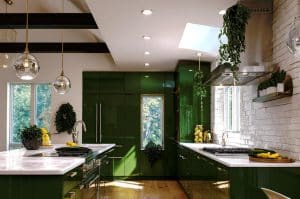








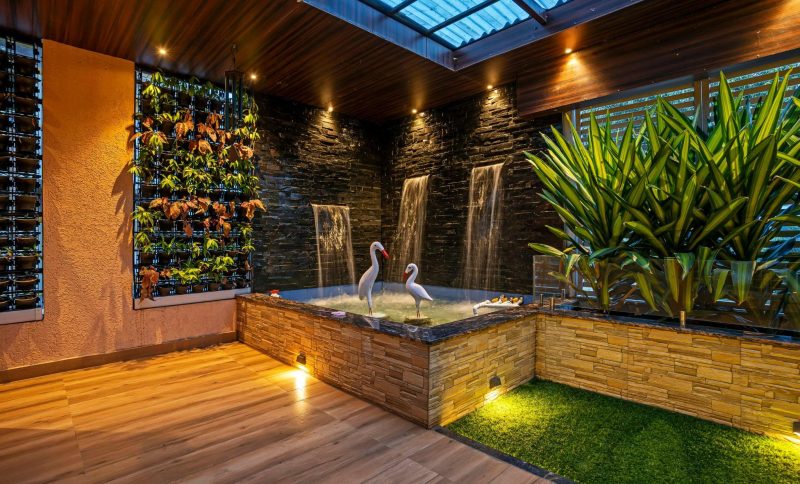
When people say a home “brings the garden indoors,” they’re not talking about adding one more slider to the backyard. They’re talking about a plan that makes plants part of your everyday interior life.
You see leaves while you make coffee. You catch a patch of green as you walk to the bedroom. You can actually keep those plants alive because the plan quietly supports the boring stuff too, like watering, drainage, and airflow.
That’s the difference between a house that merely opens to the outside and a house that feels like it has a small living landscape built into it.
The good news is you don’t need a giant footprint to get there. You need a few smart layout moves that pull daylight inward, give plants a true home, and make the “garden” feel like a room you already occupy.
1. Put a Light Well on Your Daily Path
A light well is a pocket of open space that pulls daylight into the middle of the house. It is usually open to the sky, so it is outdoor air, just wrapped by your rooms. Picture a small square of planting framed by interior windows, like a tiny courtyard you notice as you move through the day.
To make it feel like an indoor garden, it has to be reachable. If you cannot step up to it, you will not prune, water, or replant. Plan a raised bed, a simple stepping strip, and a surface that can handle splash. A slim tree in a contained planter, plus shade-tolerant plants at the base, gives you layers of green instead of one pot in a corner.
2. Turn That Light Well Into an Atrium You Can Use Year-round
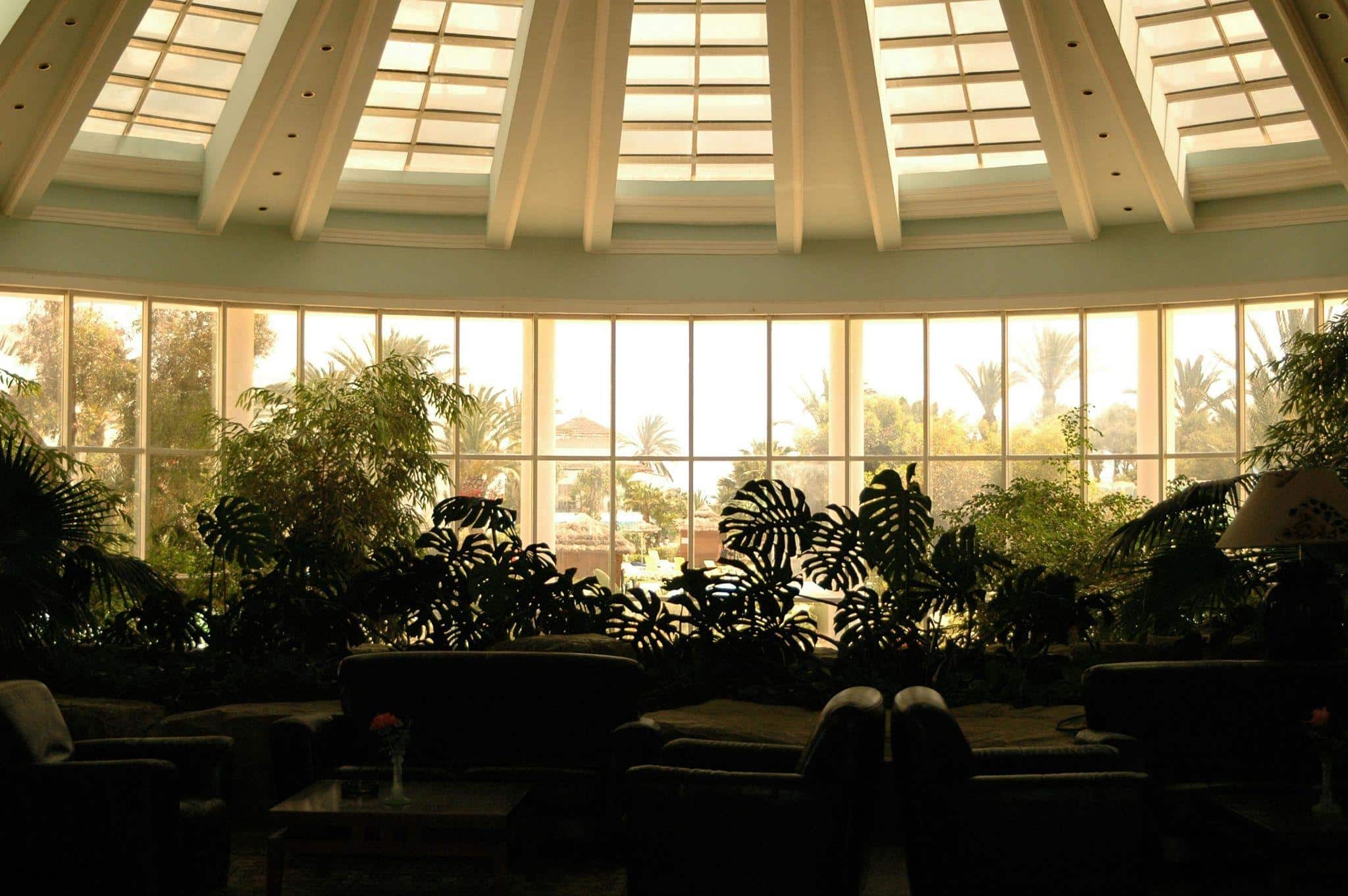
An atrium is different because it is roofed with glass. You still get skylight, but you stay dry, and the planting reads as a real room. Place it between spaces you use constantly, like the kitchen and living room, so the plants are always in view.
If you want it to feel fresh, an opening skylight or roof vent can let warm air escape. Operable glass needs careful detailing so it stays watertight, and it often costs more than fixed glazing. Plan a floor drain and choose finishes that tolerate water, like tile or stone.
Source: Pexels
3. Build a Planted Spine Through the Home
A planted spine is a long, built-in planter along a hallway or between zones, acting like a low green wall. Instead of walking past drywall, you move alongside leaves.
Place it beside real daylight, not deep in the shadows. Line the planter properly and include a slim ledge where you can set tools. Choose plants that handle typical indoor air and do not demand direct sun, like pothos, snake plants, philodendrons, or tough palms. If you want herbs, keep them right at a bright window, or they will get leggy and weak.
4. Make the Stair Landing a Bright Plant Nook, Not a Heat Trap
Source: Pexels
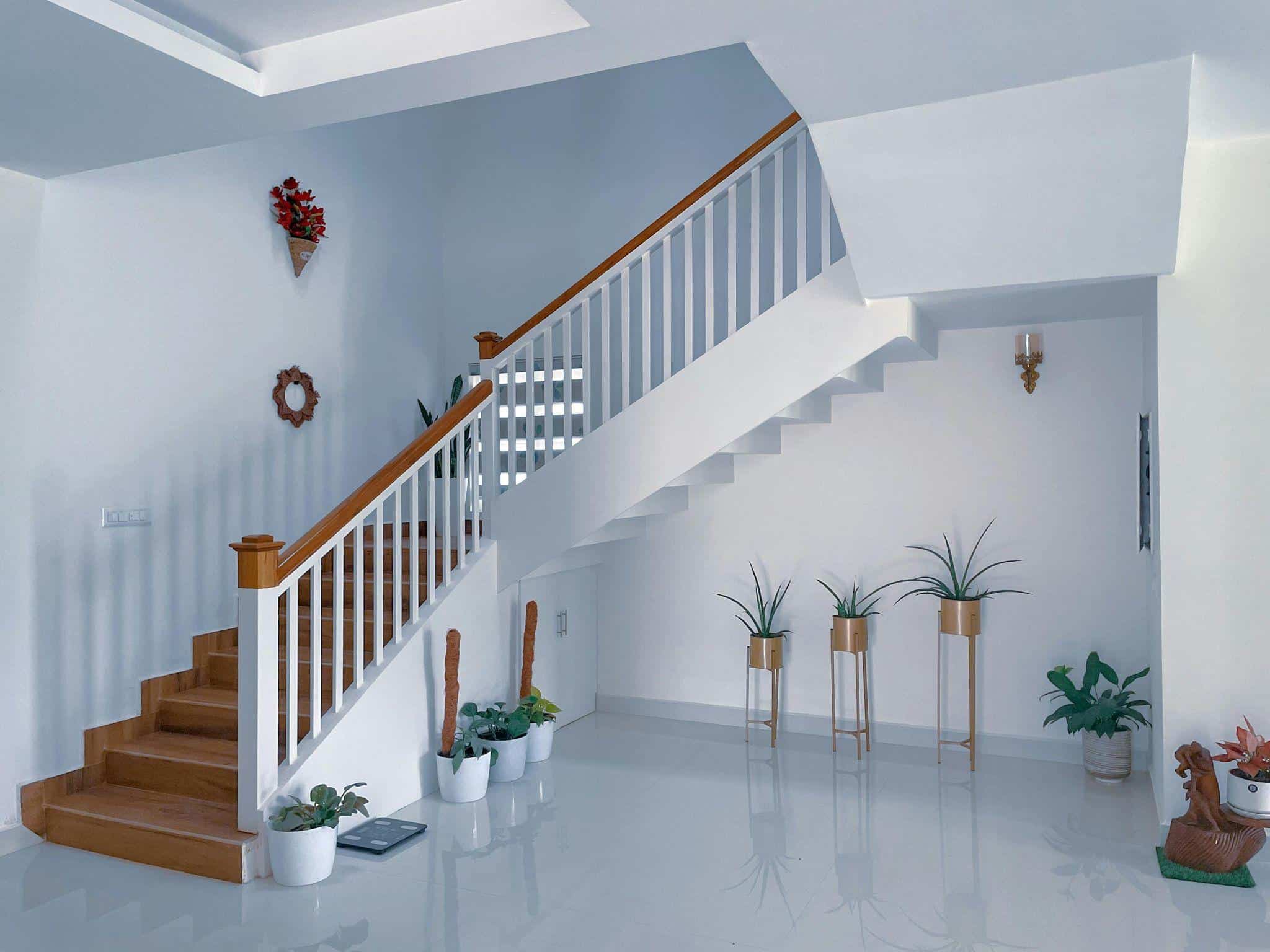
If your stair sits by an exterior wall, widen the landing and treat it like a small indoor garden stop. A built-in planter at railing height and a simple bench can turn a pass-through into a pause.
This only works if you control the heat. Morning or midday light is easier to live with than harsh late-afternoon sun. Add an opening window near the top so hot air can escape, and plan for shade if the glass faces strong sun.
5. Give Your Indoor Garden a Sink and a Forgiving Care Route
Indoor gardens fail when care feels inconvenient. Put a small utility sink near the planted zone, in a mudroom, laundry, or pantry that connects easily. That sink is where you fill cans, rinse soil off tools, and handle drips without stress.
Keep the path between sink and plants simple, with a tough floor surface and a spot to stash supplies. When care is easy, plants stay healthy, and the garden actually feels like part of your home.
6. Use Pocket Doors to Manage Humidity
Plants like a bit of humidity. You might not want the whole house to feel damp. Pocket doors help by letting you open a planted room to the rest of the home, then close it when you need warmth or moisture control.
Place that roofed plant room beside a space you already use, like the dining area. Open the doors, and the garden joins meals. Close them, and the plants keep their comfort zone. Venting the space and not overwatering still matter.
7. Create an Enclosed Garden Court Inside the Home’s Footprint
Design a small planted court inside the house footprint, then cover it with high glazing. You can walk up to it in socks, open a door to it, and still feel inside. The planting is not a backyard feature. It is a core room made of light and leaves.
You see this in Mansion floor plans because deep footprints need daylight at the center. The same idea works in smaller homes if you keep the court compact and surround it with rooms that borrow its light. Because this is a glazed roof, treat it like an atrium. Plan drainage, think about summer heat, and add shading so it stays comfortable.
8. Make the Sunroom Part of the Main Plan
A sunroom only counts as an indoor garden when it sits on your main route. If it is tacked onto the back, it becomes storage with a few struggling pots. Anchor it between the kitchen and the living room, or make it a widened section of the main hallway so you pass through it daily.
Insulate it, add a fan, and mix window heights so short and tall plants both get light.
9. Add a Green Anchor to Soften Big Open Rooms
A green anchor is a built-in planter that gives a big space a living focal point, like a planter that wraps a column or a planted island between the living and dining. Keep the edge wide enough that it can double as casual seating.
If you love the broad volume of Shouse floor plans, a green anchor adds warmth without chopping the layout into smaller rooms. Be honest about light. If the room is deep, plan taller windows, a skylight, or a dedicated grow light so the planting stays healthy.
Conclusion
A true indoor garden works when the plan supports it: steady light, air that can move, water access, and surfaces that can take a little splash. Get those right, and greenery stops feeling “outside somewhere” and starts living with you.