







Japanese joinery bed frames have been extremely popular in recent years. Such ones are liked because they are quiet, powerful and plainly designed. Two names often come up in this space. One is Thuma, a well-known brand with a higher price tag. The other is FlexiSpot, especially its Kana japanese joinery bed frame, which offers a similar idea at a lower cost. This article explains how both beds compare, what they do well, and where they differ.
Why Japanese Joinery Bed Frames Are So Popular
Japanese joinery is an old method of woodworking. Rather than using metal screws or bolts, wood components are connected by fitting into one another. This creates a tight fit that stays strong over time. In the case of bed frames, it means less shaking, decreased noise, and a firmer touch when sleeping or moving. This is a method employed by both Thuma and FlexiSpot, hence their frequent comparison.
Overview of the Two Beds
The thuma bed is known for its clean look, quiet sleep, and long warranty. It comes at a higher price and offers several sizes and color choices. The FlexiSpot Kana Japanese Joinery Bed Frame follows the same core idea. It uses solid wood, interlocking joints, and a tool-free setup for the main frame. The big difference is cost and a few design choices that focus on daily use.
Build Method and Overall Stability
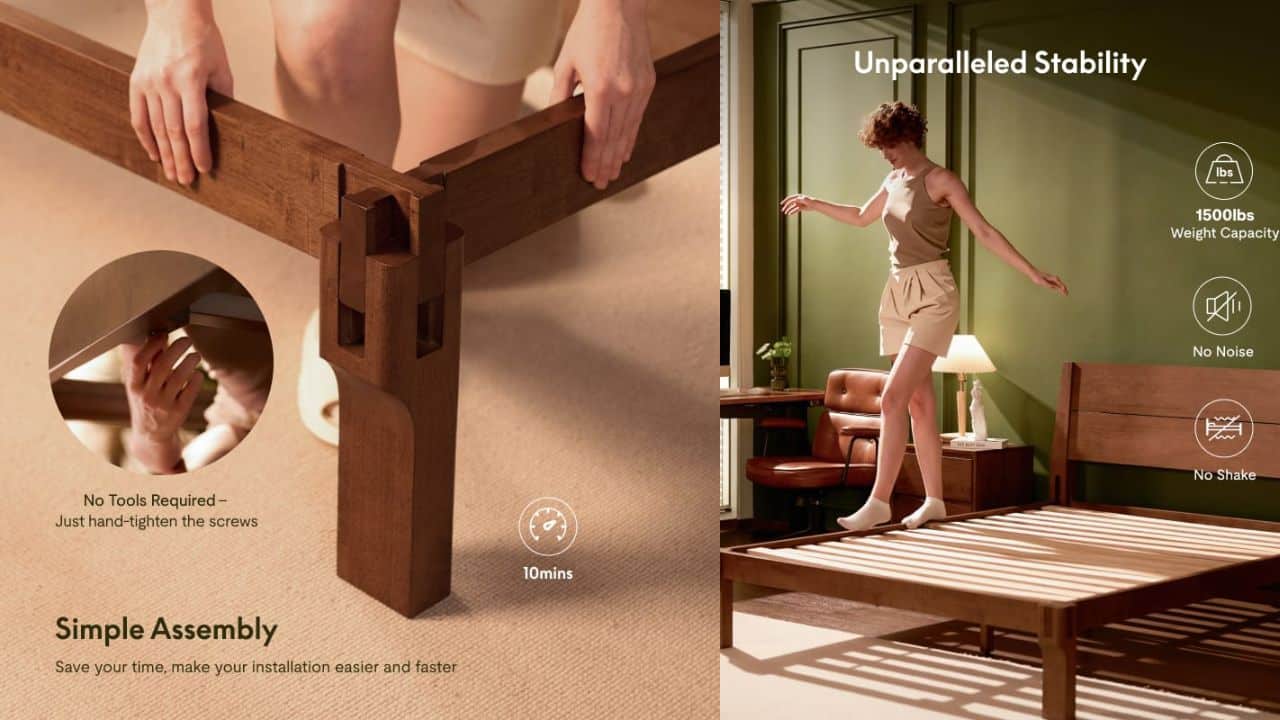
Both beds rely on Japanese joinery, so the base strength is similar. The wooden parts slide and lock together firmly. This helps prevent wobbling and keeps the bed steady. The FlexiSpot Kana Bed adds cross-beam reinforcement under the frame. These beams help spread the weight evenly and reduce movement during the night. It uses thick, solid wood legs that contact the floor. Like Thuma, FlexiSpot supports up to 1500 pounds, enough for most sleepers. Thuma also offers strong support with solid rubberwood and a simple design with fewer visible parts. Both beds are sturdy, but FlexiSpot emphasizes extra support features in the frame.
Noise Control and Sleep Experience
Quiet sleep is one of the primary motives of people selecting such beds. Nobody sleeps on a squeaky bed. Thuma reduces noise with eco-friendly felt pads that absorb sound and eliminate wood rubbing. FlexiSpot uses Velcro to secure slats, preventing shifting and noise. Both methods provide a silent sleep experience. Their way of addressing this purpose is the key goal.
Assembly Time and Ease
Neither bed is hard to assemble, especially compared to traditional metal frames. The FlexiSpot Kana Bed takes about 10 minutes. The main bed frame does not need tools. The wooden pieces slide into place easily. The headboard, if chosen, is installed by hand-tightening screws without needing any additional tools. Thuma usually takes around 15 minutes to assemble. It is also simple and mostly tool-free. Both are good options for people who do not enjoy long setup processes, but FlexiSpot is slightly faster for the base frame.
Fit Against the Wall and Room Layout
The space arrangement is important, particularly in small bedrooms. The Kana Bed by FlexiSpot has inward-recessed legs that recess into the frame, enabling it to fit flat against the walls and around the baseboard to save space and give a cleaner appearance. The design of Thuma does not focus on recessed legs, so it might not fit as well against walls and baseboards, which is important when maximizing space.
Underbed Storage and Bed Height
The boxes or drawers can be stored in the underbed area, where they can be easily cleaned. There is 10.2 inches gap under the bed in the FlexiSpot Kana Bed. This additional height facilitates the placement of items under. Other optional underbed drawers are sold by FlexiSpot, as well. Thuma provides about 9 inches of underbed clearance. While still usable, it offers slightly less space. For people who rely on underbed storage, this difference can be important.
Headboard Options and Comfort
Thuma keeps things simple with its pillow board. It is soft, removable, and designed mainly for light back support. FlexiSpot offers more headboard choices with the Kana Bed. You can choose no headboard, a standard wooden, adjustable, or upholstered one. A standout feature is the 96-degree tilted headboard. This angle provides gentle back support, which helps read or sit up in bed. People who want more choice in comfort and style may appreciate FlexiSpot’s approach.
Materials and Finish Choices
The frame of both brands is made of rubberwood. Rubberwood is powerful, tough and can be regarded as a responsible choice of wood. Thuma has a greater range of colors, including walnut, natural, espresso and grey. This gives buyers more ways to match their room style. FlexiSpot keeps it simpler with walnut and oak finishes. While the color range is smaller, the look still fits well with modern and minimal bedrooms.
Price and Overall Value
Price is where the biggest difference appears. Thuma beds typically cost $800 to $2000, depending on the size and the additional features. The prices of FlexiSpot Kana Bed are usually between 600 and 1260 dollars. The two brands have a lifetime warranty and a 100-day trial. This makes FlexiSpot a cheaper alternative to achieving the same concept of joinery, solid support and sleep without noise. Thuma still appeals to people who want a longer list of finishes and strong brand recognition.
Who Should Choose Which Bed
The Thuma Bed and the FlexiSpot Japanese Joinery Bed Frame are both capable, powerful, and silent bed frames that are constructed on the proven Japanese joinery technique. They are both supportive of heavy loads, noisy, and offer substantial sleep support. The variations reduce to price, ease of installation, underbed area and design options such as headboards. For many people, the FlexiSpot Kana Japanese Joinery Bed is an intelligent choice due to its lower price, quicker assembly, a little higher storage, and the sensation of a high-quality product. You get what you want in a durable wood bed frame without paying extra for brand names or extras.
Conclusion
The Thuma Bed and FlexiSpot Kana Japanese Joinery Bed Frame are all constructed using the same concept. The key points of divergence concern price, design specifications and flexibility. FlexiSpot keeps the joinery foundation and adds features that make everyday use easier, all while keeping the cost lower. For many shoppers, that balance makes FlexiSpot Kana a sensible alternative worth serious consideration.