








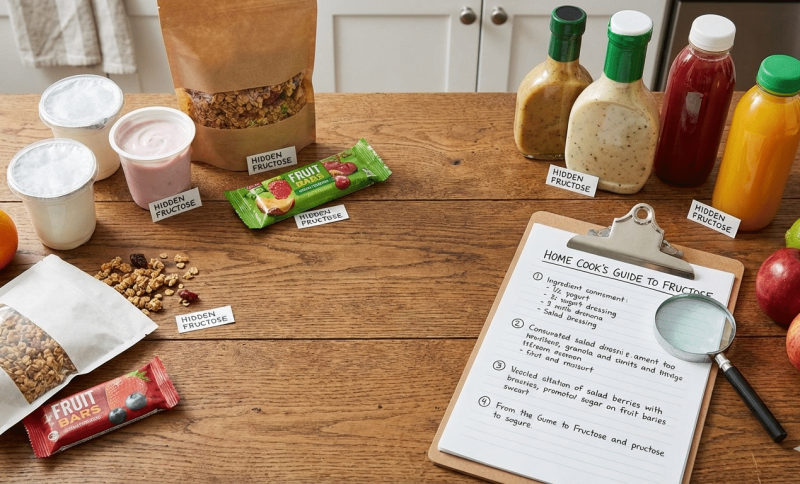
Most people think they’ve “cut sugar” because they stopped buying soda.
Then they double down on smoothies, drizzle honey over Greek yogurt, swap ketchup for “organic agave,” and pour fresh orange juice next to dinner.
It feels clean. It feels intentional. It feels metabolically responsible.
But here’s the nuance most home cooks miss:
Fructose isn’t just in junk food.
It’s embedded in many foods we label as healthy.
The difference isn’t moral. It’s metabolic.
Let’s unpack what actually matters.
Fructose in Fruit vs. High-Fructose Syrups: Same Molecule, Different Metabolic Context
Fructose is a simple sugar. Your liver is its primary processing center.
But fructose doesn’t arrive alone.
When you eat whole fruit, fructose comes packaged with:
- Fiber
- Water
- Polyphenols
- Micronutrients
- Physical structure that slows digestion
When you consume high-fructose corn syrup or fruit juice concentrates, you remove most of that structure. What’s left is rapid absorption.
This distinction matters because:
• Fiber slows gastric emptying
• Protein and fat blunt glycemic response
• Polyphenols influence how the liver handles incoming carbohydrate
Fructose itself isn’t the villain.
Unbuffered fructose load is the problem.
That’s why 12 grams of fructose from whole raspberries behaves differently than 30 grams from apple juice.
Metabolic context > ingredient isolation.
Smoothies & Juices: The Health Halo Trap
Blending fruit feels like a nutritional upgrade.
Mechanically, it isn’t always.
When you juice fruit, you remove fiber entirely.
When you blend fruit, you partially disrupt fiber structure and make sugar easier to absorb.
Now add:
- Banana
- Mango
- Dates
- Honey
- Fruit juice base
And suddenly your “healthy” smoothie carries 40–70 grams of sugar — much of it fructose.
That doesn’t make smoothies bad.
It means formulation matters.
A metabolically intelligent smoothie:
• Prioritizes protein
• Includes intact fiber
• Limits high-fructose fruits
• Avoids liquid sugar bases
We’ll build one properly below.
Portion & Pairing: The Real Skill of the Modern Home Cook
The body doesn’t experience food in isolation. It experiences meals.
Fructose load per sitting matters more than fructose purity.
Three practical guardrails:
1. Anchor fruit to protein.
Greek yogurt, cottage cheese, eggs, or collagen-rich foods slow absorption.
2. Add viscous fiber.
Chia seeds, ground flax, oats, legumes — these change metabolic kinetics.
3. Avoid stacking liquid sugars.
Fruit juice + sweet dressing + sweet glaze + dessert = cumulative liver load.
The goal isn’t elimination.
It’s metabolic pacing.
Practical Recipes: Balanced, Real, and Metabolically Thoughtful
Below are four recipes designed for intelligent fructose handling — not restriction culture.
Each one balances fiber and protein to support stable energy regulation.
Tart Cherry & Greek Yogurt Protein Bowl
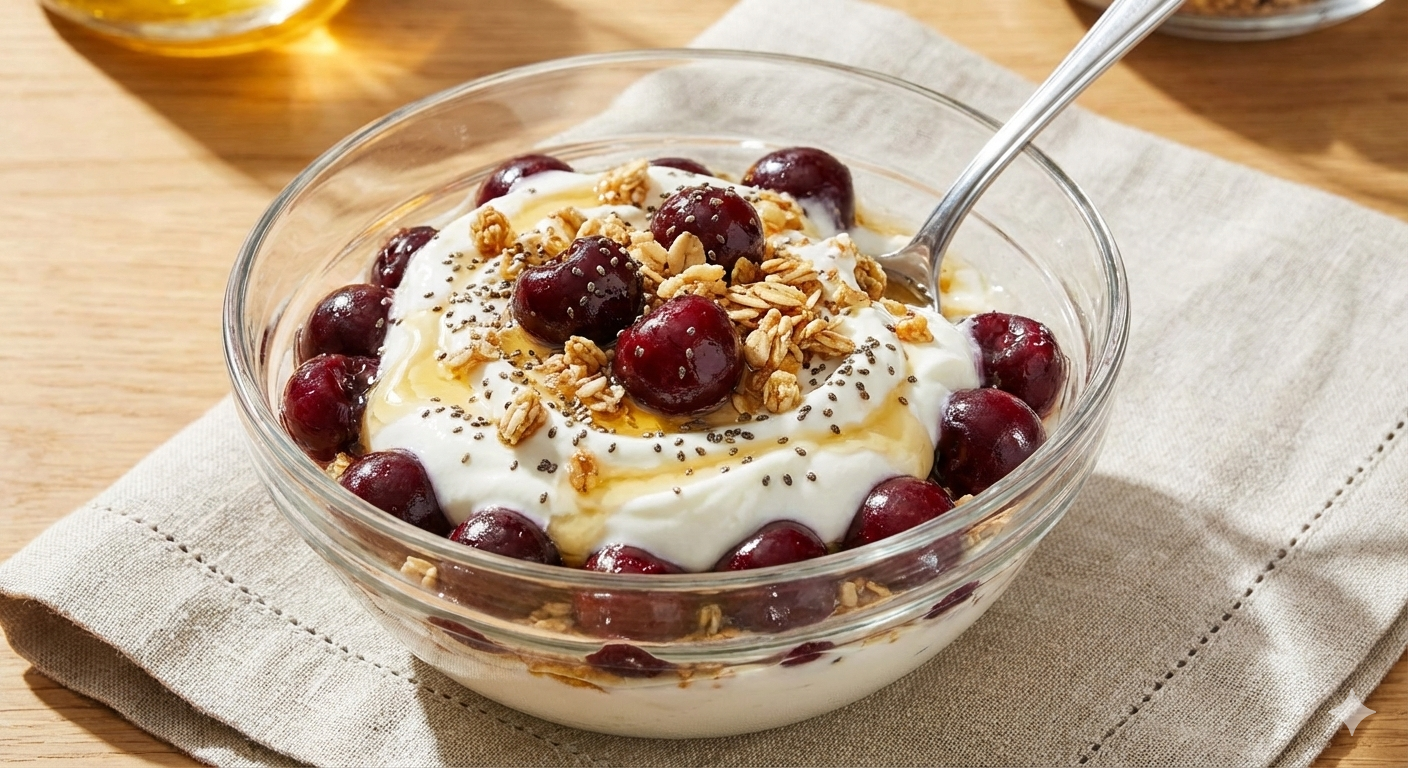
A strategic way to enjoy fruit without a sugar spike.
Ingredients
- 1 cup plain 2% Greek yogurt
- ½ cup frozen tart cherries
- 1 tbsp chia seeds
- 1 tbsp crushed walnuts
- ½ tsp cinnamon
Nutrition (Approx.)
Calories: 310
Protein: 27g
Fiber: 6g
Total Sugar: 14g
Added Sugar: 0g
Why This Works
Tart cherries contain polyphenols that may support oxidative balance. Greek yogurt delivers slow-digesting casein protein. Chia adds viscous fiber, slowing carbohydrate absorption.
Protein + fiber buffer fructose entry into circulation.
This is metabolic design, not restriction.
Savory Herb Chicken with Tarragon Citrus Glaze
A low-fructose dinner that still uses citrus intelligently.
Ingredients
- 5 oz chicken breast
- Juice of ¼ orange
- 1 tbsp fresh lemon juice
- 1 tsp olive oil
- Fresh tarragon
- Garlic, salt, pepper
Serve with roasted Brussels sprouts and quinoa.
Nutrition (Approx. per serving with sides)
Calories: 480
Protein: 42g
Fiber: 8g
Total Sugar: 6g
Why This Works
Citrus is used as an acid accent, not a syrup base. The protein-rich chicken and fiber-dense vegetables slow digestion. The meal spreads carbohydrate across a mixed macronutrient context.
You get flavor without fructose stacking.
Low-Fructose Berry Chia Parfait
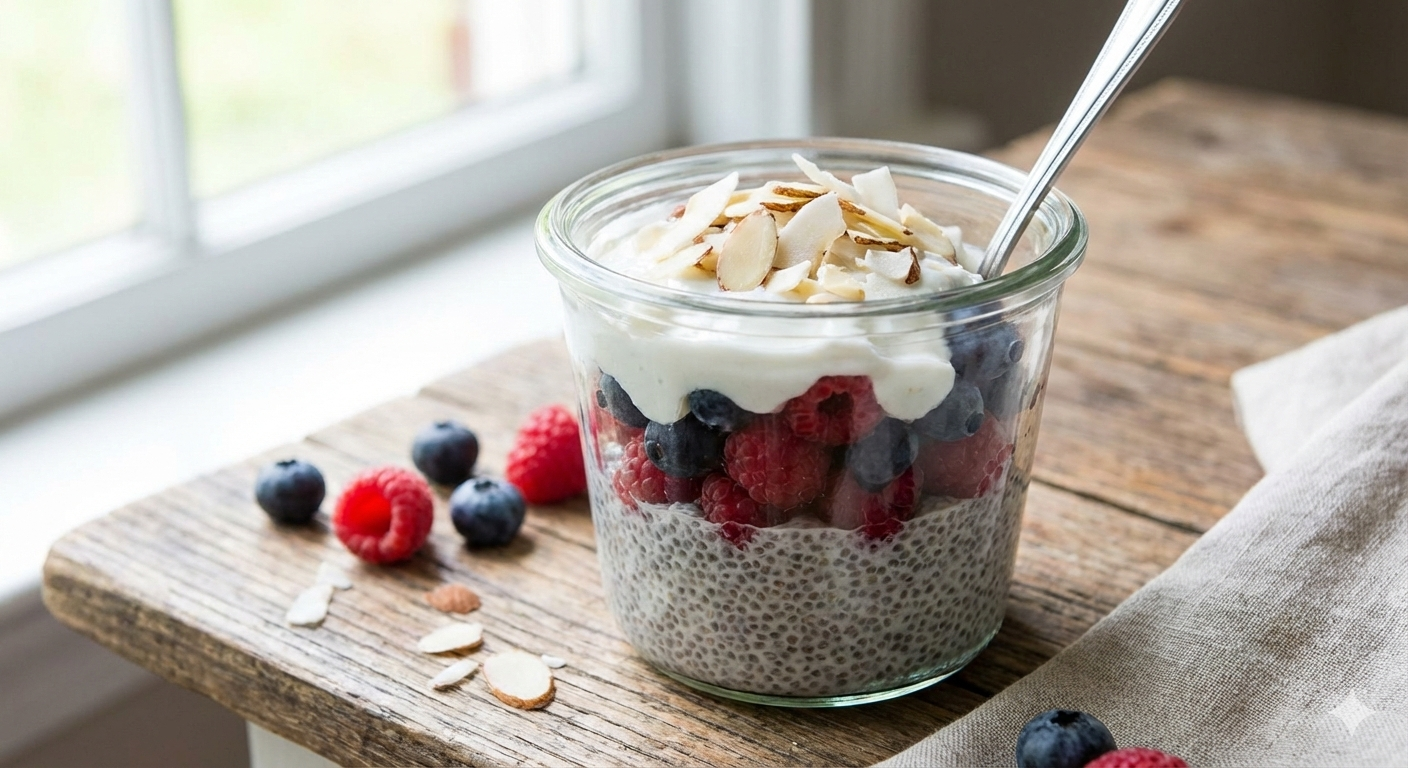
Built for satiety and blood sugar stability.
Ingredients
- ¾ cup plain Greek yogurt
- ¼ cup raspberries
- 1 tbsp ground flax
- 1 tbsp almond butter
- Dash vanilla extract
Nutrition (Approx.)
Calories: 295
Protein: 23g
Fiber: 9g
Total Sugar: 9g
Why This Works
Raspberries are lower in fructose relative to many tropical fruits and high in fiber. Flax and almond butter add fat and soluble fiber, modulating absorption.
Pairing matters more than avoidance.
Balanced Smoothie (Fiber + Protein Forward)
This is how to build a smoothie intelligently.
Ingredients
- 1 scoop unsweetened whey or plant protein
- ½ cup frozen blueberries
- 1 tbsp chia seeds
- 1 tbsp peanut butter
- 1 handful spinach
- 1 cup unsweetened almond milk
- Ice
Nutrition (Approx.)
Calories: 340
Protein: 28g
Fiber: 8g
Total Sugar: 10g
Why This Works
Protein leads. Fiber is deliberate. Fruit portion is controlled. No juice base. No added sweeteners.
This creates a slower glucose curve and reduces rapid hepatic fructose load.
Formulation is everything.
The Polyphenol Conversation Most People Skip
Not all fruits behave identically.
Polyphenols — plant compounds responsible for color and bitterness — may influence carbohydrate metabolism.
Research suggests certain polyphenols:
• Support healthy insulin signaling
• Influence glucose transport
• Help regulate oxidative stress pathways
• Support normal liver metabolic function
Berries, tart cherries, citrus peel, and dark leafy greens are rich sources.
This is why whole fruit behaves differently than refined syrup.
It isn’t just sugar content.
It’s biochemical context.
So Should You Avoid Fructose?
No.
But you should stop pretending that all “natural sugars” are metabolically neutral.
Fructose tolerance varies by:
- Activity level
- Muscle mass
- Overall dietary pattern
- Total load per sitting
For metabolically sedentary individuals, large liquid fructose doses are rarely helpful.
For active individuals, whole fruit within mixed meals is typically well tolerated.
The sophistication is in the pairing.
Where Targeted Support May Fit
Dietary structure should always come first.
However, certain plant-derived compounds and structured micronutrients are being studied for their role in:
• Supporting healthy glucose metabolism
• Supporting liver energy pathways
• Helping maintain metabolic flexibility
When formulated appropriately, these ingredients may complement — not replace — foundational nutrition habits.
“The priority remains: whole food, fiber-forward, protein-anchored meals. Supplements, when used, should align with that strategy — not serve as permission to ignore it”, says Chris Merans, a Metabolic Researcher and Founder of Liv3 Health.
The Takeaway for Home Cooks
Fructose isn’t the enemy. Unstructured sugar load is.
You don’t need
fear. You need formulation.
Think in meals, not ingredients.
Pair fruit with protein. Favor fiber-rich sources. Respect portion size.
Use sweetness as an accent, not base.
That’s how you cook for metabolic intelligence — without sacrificing flavor, joy, or sanity.