









Glyphosate has emerged as the world’s most used weed killer since 1974, serving as the active ingredient in Roundup and more than 750 other herbicide products across the United States. Farmers, gardeners, and groundskeepers have sprayed roughly 6.1 billion kilograms of this powerful herbicide globally in the past decade alone. The chemical’s effectiveness as a nonselective, postemergent herbicide helps control more than 150 different weed species. The World Health Organization’s International Agency for Research on Cancer raises serious concerns by classifying glyphosate as “probably carcinogenic to humans”.
The chemical’s persistence and reach create additional worries. Scientists originally believed glyphosate would quickly become inactive after spraying, but it can persist in soil for up to 6 months, depending on climate and soil conditions. The chemical shows up in 36% of water samples from Midwestern U.S. states where corn farmers use it heavily. FDA testing found glyphosate residues in 59% of the corn and soy samples tested. A 2019 University of Washington study found that high exposure levels increased the risk of non-Hodgkin lymphoma by 41%. This piece explores glyphosate’s molecular mechanisms, its environmental effects, and the ongoing debate over its safety for humans and ecosystems.
What is Glyphosate and How Does It Work?
The chemical N-(phosphonomethyl)glycine, better known as glyphosate, disrupts plant biology through a complex process. Let’s take a closer look at glyphosate’s chemical properties and its interactions with plant systems.
Glyphosate as a Non-Selective Herbicide
This non-selective systemic herbicide kills almost any plant it touches instead of targeting specific weeds. Its broad-spectrum action controls more than 150 weed species, including annual broadleaf weeds and grasses. Plants absorb glyphosate through their leaves and stems, and it moves to growing points. The herbicide only affects growing plants, so it doesn’t work on dormant seeds or inactive growth.
Shikimic Acid Pathway Disruption
Glyphosate’s molecular action blocks the shikimic acid pathway – a metabolic sequence that exists in plants, fungi, and some microorganisms but not in mammals. The herbicide stops the enzyme 5-enolpyruvylshikimate-3-phosphate synthase (EPSPS) from working. This enzyme helps produce three vital aromatic amino acids: tyrosine, tryptophan, and phenylalanine.
The herbicide binds to this enzyme and prevents shikimate-3-phosphate (S3P) from becoming 5-enolpyruvyl-shikimate-3-phosphate (EPSP). This causes shikimate to build up in plant tissues while amino acid production stops. Plants stop growing within hours because they lack these protein-building blocks.
How Fast Does Glyphosate Work on Weeds?
Plants react to glyphosate right away, but you won’t see results immediately. Most plants show their first signs of damage through wilting and yellowing 2-6 hours after application. Annual weeds usually die completely in 7-14 days. Larger, 4-week-old weeds or perennials with big root systems might take up to 4 weeks to die.
Several factors influence glyphosate’s effectiveness:
- Weather conditions: Weed control works better on warm, sunny days above 60°F
- Application timing: Treatment works best between 9 a.m. and 6 p.m.
- Rainfall: Plants need at least 30 minutes without rain; bigger weeds need several hours
Plants die because they spend their energy dealing with metabolic disruption instead of normal growth, which leads to complete system failure.
Routes of Exposure and Environmental Spread
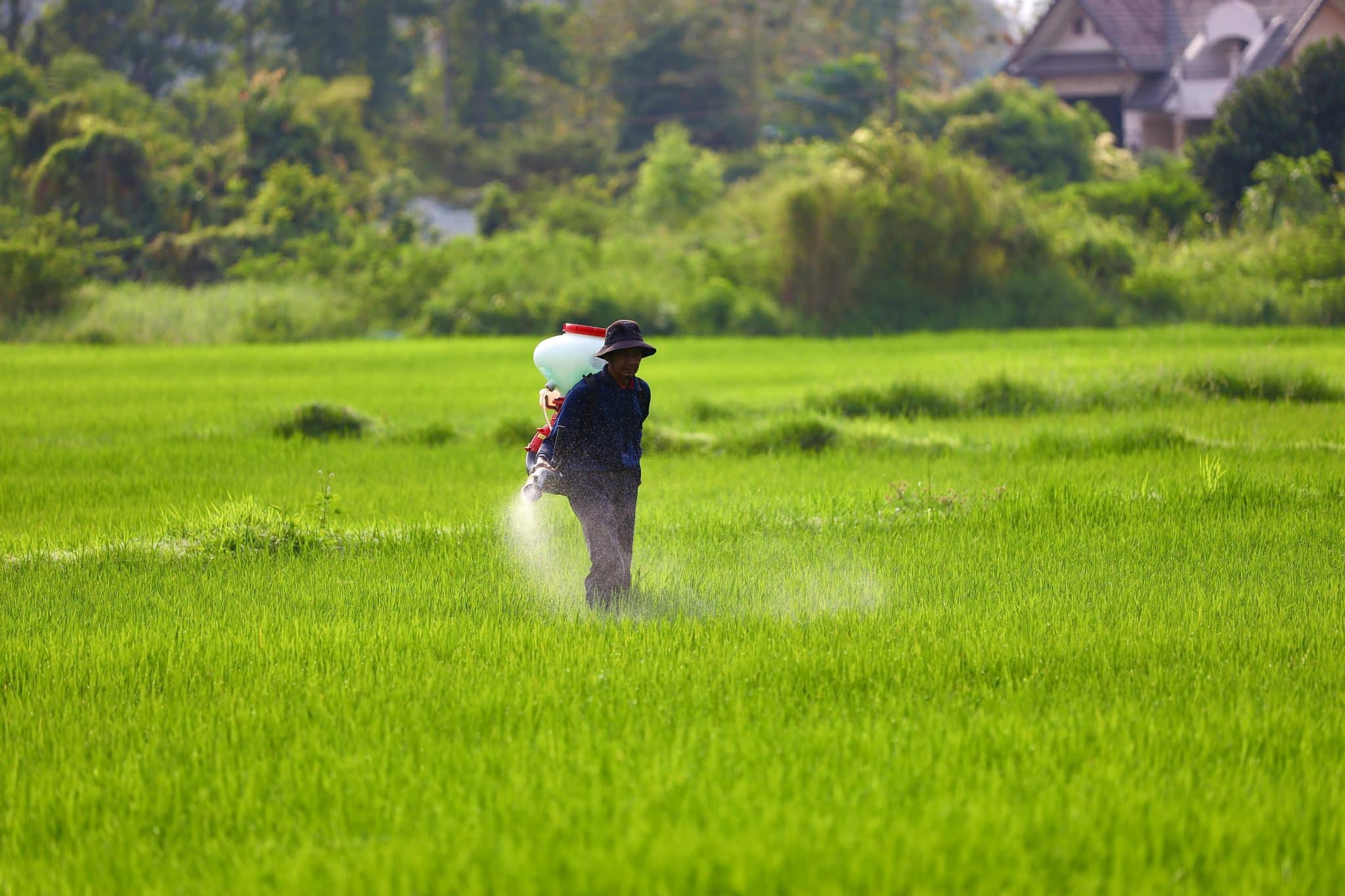
Glyphosate moves through several environmental pathways after application. The herbicide often reaches beyond its intended targets, and its journey through ecosystems reveals broader environmental impacts.
Spray Drift and Foliar Wash-Off
Wind can carry glyphosate to unintended areas during aerial spraying. Swedish railway studies showed the herbicide’s concentration dropped faster with distance. The amount fell from 1800 g/ha at the spray point to just 5 g/ha at 1 m away. Even these small amounts can damage 5% of plant species. Weather plays a big role in drift patterns. Ground sprayers that work at low pressure create less drift than aerial spraying methods.
Rain or irrigation can wash glyphosate off plants right after spraying. Most products need at least 30 minutes without rain. Larger weeds might need several hours of dry conditions. This runoff can contaminate soil and pollute water sources.
Glyphosate in Soil, Water, and Food Crops
The herbicide usually stays in soil for about 30 days in temperate climates. Soil type and weather affect how long it lasts. It can move down to 40 cm in soil, which lets non-target plants absorb it through their roots.
Tests found glyphosate in 66 out of 70 U.S. waterways. Its breakdown product AMPA showed up even more – in 80% of samples across 84% of sites. FDA testing revealed glyphosate in 63% of corn and 67% of soybean samples.
Root Uptake and Translocation in Plants
Plants take in glyphosate through their roots and move it throughout their structure. Research shows that roots contain about 12% of the applied glyphosate after eight days. The chemical travels through the plant’s vascular system, mainly through phloem to sink organs. This movement leads to higher concentrations in reproductive parts like bolls and squares.
Health and Safety Concerns in Humans and Animals
Scientists and regulators across the globe remain divided about glyphosate’s safety profile. Their contradictory findings have sparked heated debates about its health effects.
Is Glyphosate Harmful to Humans?
The U.S. Environmental Protection Agency and other regulatory bodies disagree about glyphosate’s risks to human health. EPA’s stance shows “no risks of concern to human health from current uses of glyphosate”. The World Health Organization’s International Agency for Research on Cancer (IARC) took a different view in 2015 and labeled glyphosate as “probably carcinogenic to humans”. These opposing views stem from their different approaches. IARC looked at fewer but public studies, while EPA examined a broader dataset that included industry submissions.
Roundup Lawsuit and Carcinogenicity Debate
Bayer has faced heavy Roundup litigation since buying Monsanto in 2018. ConsumerShield notes that a California jury awarded $289 million to a school groundskeeper with non-Hodgkin lymphoma in 2018, and a separate California case awarded a couple $2.055 billion, though the award was later reduced. By 2020, Bayer was facing around 125,000 cases, which led to $10 billion in settlements
Glyphosate Side Effects from Short-Term Exposure
People exposed to glyphosate for short periods typically experience mild symptoms. The effects range from skin irritation and eye damage to breathing difficulties when they inhale spray mist. Those who accidentally swallow it might experience stomach problems, including nausea, vomiting, and diarrhea.
Toxicity of Co-formulants like POEA
Scientists have found that polyethoxylated tallow amine (POEA), a surfactant used in many glyphosate products, raises serious toxicity concerns. Lab tests show that POEA and commercial products like RangerPro are more toxic to cells than pure glyphosate alone. Studies on amphibian tadpoles further prove that POEA, not glyphosate, causes most of the harmful effects.
Ecological and Agricultural Impacts
Glyphosate does more than just kill weeds. It creates lasting ripple effects throughout soil ecosystems and agricultural systems that continue long after farmers spray it.
Soil Microbial Disruption and AMPA Accumulation
Microbes in the soil break down glyphosate into aminomethylphosphonic acid (AMPA), its main metabolite. When glyphosate binds to clay and organic matter particles, both compounds last longer than scientists first thought. The time for 90% dissipation can stretch beyond 1,000 days based on soil type. AMPA’s breakdown varies dramatically – some soils break it down in weeks, while others see it build up over time. The soil microbiome shows mixed reactions. Some studies show glyphosate boosts microbial activity, but others reveal it harms beneficial microflora. The herbicide changes nitrogen cycling by reducing nitrification and denitrification genes.
Impact on Earthworms and Soil Fauna
Earthworms play a vital role in soil health, with populations reaching up to 1000 individuals and 300g biomass per square meter. These creatures take a big hit from glyphosate exposure. Research shows their reproduction rates drop sharply – hatching rates fall from 43% to 17% for L. terrestris and from 71% to 32% for A. caliginosa after herbicide treatment. Pure glyphosate causes earthworms to lose 14.8-25.9% of their body mass. They also survive stress tests for 22.2-33.3% less time. Pesticides cut soil fauna species richness by 21%, with specific group declines ranging from 17% to 55%. Native species struggle more than introduced ones to survive.
Crop Disease Susceptibility and Yield Loss
Plants become more vulnerable to diseases when exposed to glyphosate. The herbicide disrupts the shikimate pathway, which stops plants from making defense compounds. This makes them easy targets for pathogens like Fusarium and Rhizoctonia. Non-glyphosate-resistant corn yields drop by 49-54% when sprayed. Studies in Martinique revealed that even glyphosate-resistant crops get hit harder by diseases. Root biomass shrinks regardless of cutting intensity, limiting carbon storage and weakening plant resilience. When glyphosate drifts onto nearby crops, it reduces leaf nitrogen by 7-16% and seed oil by 18-23%.
Conclusion
Glyphosate remains one of the most debated agricultural chemicals in modern farming. This piece dives into the complex science behind this accessible herbicide. The chemical disrupts the shikimic acid pathway in plants. While this kills plants effectively, it raises serious questions about collateral damage.
The biggest problem with glyphosate is its persistence in the environment. The chemical remains active in soils for weeks to months, which contradicts earlier safety claims. On top of that, it shows up in water systems, food crops, and human testing studies. This proves it spreads well beyond where it’s sprayed.
Major regulatory bodies can’t agree on health risks. The EPA considers the risk to human health minimal. The World Health Organization labels it as “probably carcinogenic.” This stark divide has triggered thousands of lawsuits that link Roundup exposure to non-Hodgkin lymphoma.
The ecological effects go way beyond just killing weeds. The chemical disrupts soil microbiomes. Beneficial creatures like earthworms see their numbers drop. Even crops we want to protect become more vulnerable to diseases. These chain reactions could hurt the very farm productivity glyphosate wants to boost.
The evidence keeps growing that products with glyphosate – not just the pure chemical – might be riskier because of added substances like POEA. This difference helps explain why research findings often clash and explains why we need to test complete formulations.
The science of glyphosate tells a complex story of effectiveness mixed with substantial risks. Farmers, gardeners, and policymakers now face tough choices. They must balance farming needs against mounting evidence of environmental and health risks. Without doubt, farming methods must change as we learn more about this common herbicide.