





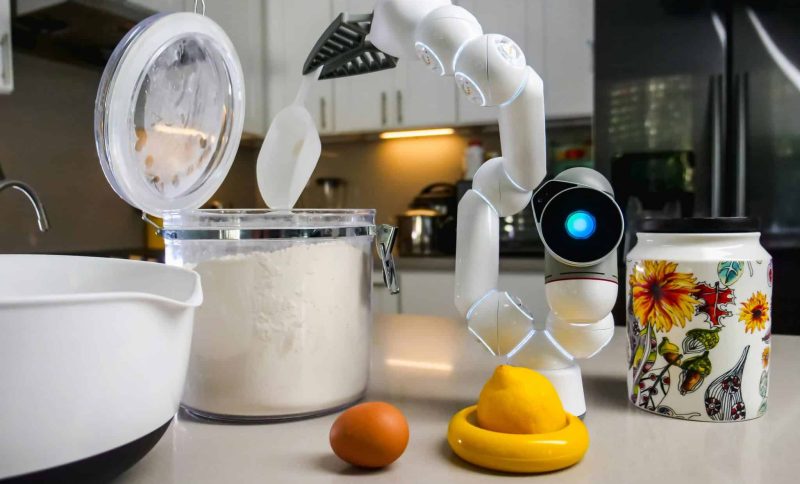
Smart kitchen equipment is a growing category of connected, sensor-driven cooking tools that help people cook with more control, more consistency, and less guesswork.
That shift matters a lot for food bloggers, because recipe testing is not just cooking for pleasure. It is a repeatable content process that must produce the same result more than once, often under time pressure, with changing lighting and constant note-taking.
A blogger may test the same cake three times for crumb texture, oven spring, and bake time.
The old method relied on instinct and handwritten adjustments. The new method adds temperature probes, app-based timers, guided cook cycles, and digital scales that remember exactly what happened.
This article explains what smart kitchen equipment is, why it matters in recipe development, which tools are most useful, where the gains are real, where the limits still exist, and how the engineering inside these appliances is quietly changing the standard for recipe accuracy.
What Is Smart Kitchen Equipment?
Smart kitchen equipment is a group of appliances and tools that use sensors, software, connectivity, or automation to make cooking more precise and easier to monitor.
In the context of food blogging, that matters because recipe testing depends on repeatable inputs. If the oven runs hot, the scale drifts, or the timer is ignored, the recipe can fail for readers even when it seemed fine in one trial.
A smart tool reduces that variability by measuring, adjusting, and recording what happens during prep and cooking.
That is why the category has moved beyond novelty. For creators, it is becoming part of a practical test kitchen workflow.
Main characteristics of smart kitchen equipment include:
- App connectivity for remote monitoring
- Precision controls for temperature, time, and weight
- Automation for repetitive cooking steps
- Data feedback that helps refine recipes faster
Why Do Food Bloggers Need Smart Tools for Recipe Testing?
Food bloggers need smart tools because readers expect recipes to work in real kitchens, not just look good in photos.
A recipe post is a promise. The ingredient list, the bake time, the internal temperature, the yield, and the texture notes all need to match what a reader can realistically reproduce. That is difficult when testing depends only on instinct.
As blogs grow, the kitchen setup often starts to resemble a restaurant equipment checklist more than a casual home counter.
The creator is no longer making dinner once. The creator is standardizing a process, checking edge cases, photographing stages, and writing instructions that survive reader substitution and timing mistakes.
Smart equipment helps close the gap between one successful attempt and a publishable recipe that holds up across repeat tests.
What Types of Smart Kitchen Equipment Are Most Useful for Food Bloggers?
Smart kitchen tools form a broad category, but the most useful ones for bloggers usually solve four practical problems: heat control, measurement accuracy, timing, and automation.
Those four functions are responsible for most recipe failures. Cakes collapse when temperatures drift. Bread changes when the weights are off by a few grams. Sauces split when time and heat are not watched closely. Meat dries out when the internal temperature is estimated rather than measured.
That is why the most valuable devices are not always the flashiest ones.
The best tools are the ones that remove uncertainty from the moments where recipes usually break.
Smart Ovens
Smart ovens are cooking machines that use sensors, programmed modes, and digital controls to maintain more stable heat than a basic home oven.
For food bloggers, that stability matters most in baking and roasting, where uneven heat can change browning, rise, and moisture loss. Many creators who test at higher volume look to the consistency standards of commercial convection ovens because airflow and temperature recovery make a visible difference in cookies, pastries, and sheet-pan meals.
A smart oven can also log settings, suggest cook times, and reduce the need to keep opening the door to check progress.
Smart Thermometers
Smart thermometers are connected temperature devices that track internal food temperature in real time and often send updates to a phone.
That makes them extremely useful for proteins, custards, syrups, and enriched breads, where a few degrees can change texture or food safety. A blogger testing roast chicken, for example, can track doneness without repeated probing and heat loss.
The big advantage is clarity.
Instead of writing “cook until done,” the blogger can publish a more reliable instruction tied to an exact internal range and a real testing result.
Smart Scales
Smart scales are digital measuring tools that offer higher precision and, in some cases, app integration for ingredient tracking and conversion.
They are essential for flour-heavy recipes, emulsions, candy work, and any recipe where volume measures create inconsistency. A smart scale also makes it easier to document yield, compare versions, and scale a recipe up or down without introducing silent errors.
For creators who test smoothies, batters, and sauces, the logic is similar to that of professional kitchens, which trust commercial blenders and precise prep systems.
The tighter the input, the more dependable the output becomes.
Smart Multicookers and Air Fryers
Smart multicookers and air fryers are automated appliances that combine heat control, timing, and preset programs into a single device.
They help bloggers by simplifying repetitive tests. A soup, rice dish, or air-fried snack can be tested on the same settings several times with less manual intervention. That means fewer uncontrolled variables and easier note-taking.
These machines are especially useful for weeknight recipes and trend-driven content.
They let creators test convenience claims honestly, not just stylistically, which is important when readers want speed, consistency, and clear instructions.
How Does Smart Kitchen Technology Improve Recipe Accuracy?
Smart kitchen technology improves recipe accuracy by controlling the variables that most often change the final result.
In recipe testing, small inconsistencies add up fast. One oven may overshoot by fifteen degrees. One tablespoon may be packed instead of leveled. One distracted minute can turn caramel into bitterness. Smart equipment narrows those gaps with real measurements instead of estimates.
At the mechanical level, that precision often depends on motion control.
A compact servo motor or similar controlled-drive component can help certain appliances regulate airflow, valve movement, dispensing, or programmed mixing with smoother, repeatable motion. That is where broader ideas like motion control, servo drives, and servo controllers become relevant, even in tools that look simple on the counter.
The main features that improve accuracy are:
- Temperature sensors that reduce heat drift
- Weight precision measured in grams
- Automated timers that cut down overcooking
- Connected apps that help document and repeat settings
What Are the Advantages of Using Smart Kitchen Equipment for Recipe Testing?
Smart kitchen equipment offers several clear advantages, with the biggest being consistency, speed, and cleaner documentation.
For bloggers, those gains are practical, not theoretical. A recipe that reaches the same texture twice is easier to trust. A tool that cuts 10 minutes from every test session increases publishing capacity. A device that stores settings makes revision work less chaotic.
There are 6 main advantages:
- Improve consistency by keeping the heat and timing more stable.
- Reduce testing time by automating repetitive tasks.
- Increase precision with gram-based measurement and exact temperatures.
- Simplify scaling when recipes need to be doubled or reduced.
- Strengthen written instructions with measurable cooking targets.
- Support content quality by making results easier to repeat for readers
Are There Any Limitations to Smart Kitchen Equipment?
Smart kitchen equipment has real limits, and the biggest ones are cost, learning curve, and occasional overdependence on technology.
Not every creator needs an app-connected countertop full of devices. In some kitchens, a good thermometer and a stable oven do more than a pile of underused gadgets. Smart tools also do not replace judgment. They assist technique, but they do not create it.
There are 5 main limitations:
- Increase upfront cost compared with standard tools.
- Require setup time, updates, and basic technical comfort.
- Depend on power, software, or connectivity for full function.
- Risk of overcomplicating simple recipes that do not need automation
- Become outdated faster than durable manual tools.
Smart Kitchen Equipment vs Traditional Cooking Tools
Smart kitchen equipment is usually better for precision and repeatability, while traditional tools are often better for simplicity, flexibility, and lower cost.
That does not mean one category is always superior. A cast-iron pan can still outperform a connected gadget when the cook understands heat well. At the same time, a blogger testing a finicky bread formula or a delicate custard benefits from digital feedback that a purely manual setup cannot provide.
The difference is not only convenience.
It is the ability to publish instructions based on measured behavior rather than memory.
|
Factor |
Smart Equipment |
Traditional Tools |
|---|---|---|
|
Precision |
High |
Moderate |
|
Ease of use |
Moderate after setup |
Usually simple |
|
Cost |
Higher |
Lower |
|
Automation |
Strong |
Minimal |
|
Repeatability |
Strong |
More variable |
How Do Food Bloggers Use Smart Kitchen Tools to Test Recipes?
Food bloggers usually follow a structured process when testing with smart tools, turning casual cooking into controlled recipe development.
The goal is not to make cooking robotic. The goal is to isolate what changed and why. That makes revisions faster and published instructions clearer. It also helps creators answer reader questions with confidence when substitutions, timing issues, or texture problems show up in comments.
There are 6 main steps in the process:
- Weigh ingredients precisely in grams rather than depending only on cups or spoons.
- Set and verify temperature using a smart oven or connected probe.
- Track time automatically so each test run follows the same window.
- Monitor progress remotely and write notes without hovering over the appliance.
- Record texture, browning, moisture, and yield after each version.
- Repeat the recipe, making one controlled adjustment at a time, before publishing.
What Features Should Food Bloggers Look for in Smart Kitchen Equipment?
Food bloggers should prioritize precision, reliability, and ease of repeated use.
A flashy interface matters less than stable performance across multiple tests. If an appliance saves settings but heats unevenly, it does not really solve the problem. If a scale is connected but slow to respond, it can still frustrate recipe prep. Good, smart equipment should support the workflow, not interrupt it.
This is also where commercial thinking becomes useful.
Professional kitchens value dependable performance from commercial ranges, refrigerators, and cleaning systems because stable equipment ensures consistent results. Home creators do not need a full restaurant setup, but they can borrow the same logic when choosing tools.
Key features to prioritize include:
- Accurate temperature control
- Fast, stable weight measurement
- Clear app integration
- Easy cleaning and maintenance
- Durable construction for repeat testing
- Reliable presets that can be adjusted manually.
How Much Does Smart Kitchen Equipment Cost?
Smart kitchen equipment covers a wide price range, and the average cost depends on whether the blogger is buying a single precision tool or building a more serious test kitchen.
Entry-level smart thermometers may cost around $30 to $120. Smart scales often land between $40 and $150. Smart multicookers typically range from $100 to $400, while smart ovens can cost from roughly $300 to the premium range, well above $1,000.
Price also reflects build quality.
The stainless housings, tight seams, and repeatable part tolerances in better appliances often rely on the same manufacturing logic behind fiber laser cutting and carefully formed sheet metal from press brake machines, where laser cutting accuracy affects fit, finish, and long-term durability.
There are 5 main cost factors:
- Brand positioning and software ecosystem
- Sensor quality and control precision
- Appliance size and power level
- Materials, assembly quality, and finish
- Added functions such as presets, connectivity, and guided cooking
Conclusion
Smart kitchen equipment is changing recipe testing by making the invisible parts of cooking easier to measure, repeat, and refine.
For food bloggers, that is the real value. Better sensors lead to better notes. Better notes lead to stronger recipes. Stronger recipes build reader trust, which matters more than any trendy gadget. The best smart tools do not replace creativity. They remove noise from the process so creativity has a more reliable foundation.
That is why connected ovens, smart scales, thermometers, and automated cookers are becoming more than convenience products.
They are turning home kitchens into compact test labs, where creators can work faster, publish with more confidence, and deliver recipes that perform the same way on a reader’s counter as they did in the original test kitchen.