








There’s a reason 16th-century European interiors still feel current: they were built around materials that aged with dignity. Stone floors weren’t chosen for instant impact; they were chosen for permanence, and surfaces that could take on footsteps, sunlight, and time without losing their poise. In 2026, that philosophy feels newly relevant.
Design is leaning away from “perfect at install” finishes and toward tactility, irregularity, and materials that do more than decorate; they ground.
What’s changed is the expectation.
We want the romance of an old villa floor, softened edges, tonal drift, a sense of history; but we also want modern performance: safer traction, smarter substrates, better sealers, and layouts that fit contemporary living. The result is a new sweet spot: Old World character, New World practicality.
What “16th-century inspired” means in 2026
This look isn’t about turning your home into a château. It’s about borrowing the visual language of age, and letting it work with modern architecture.
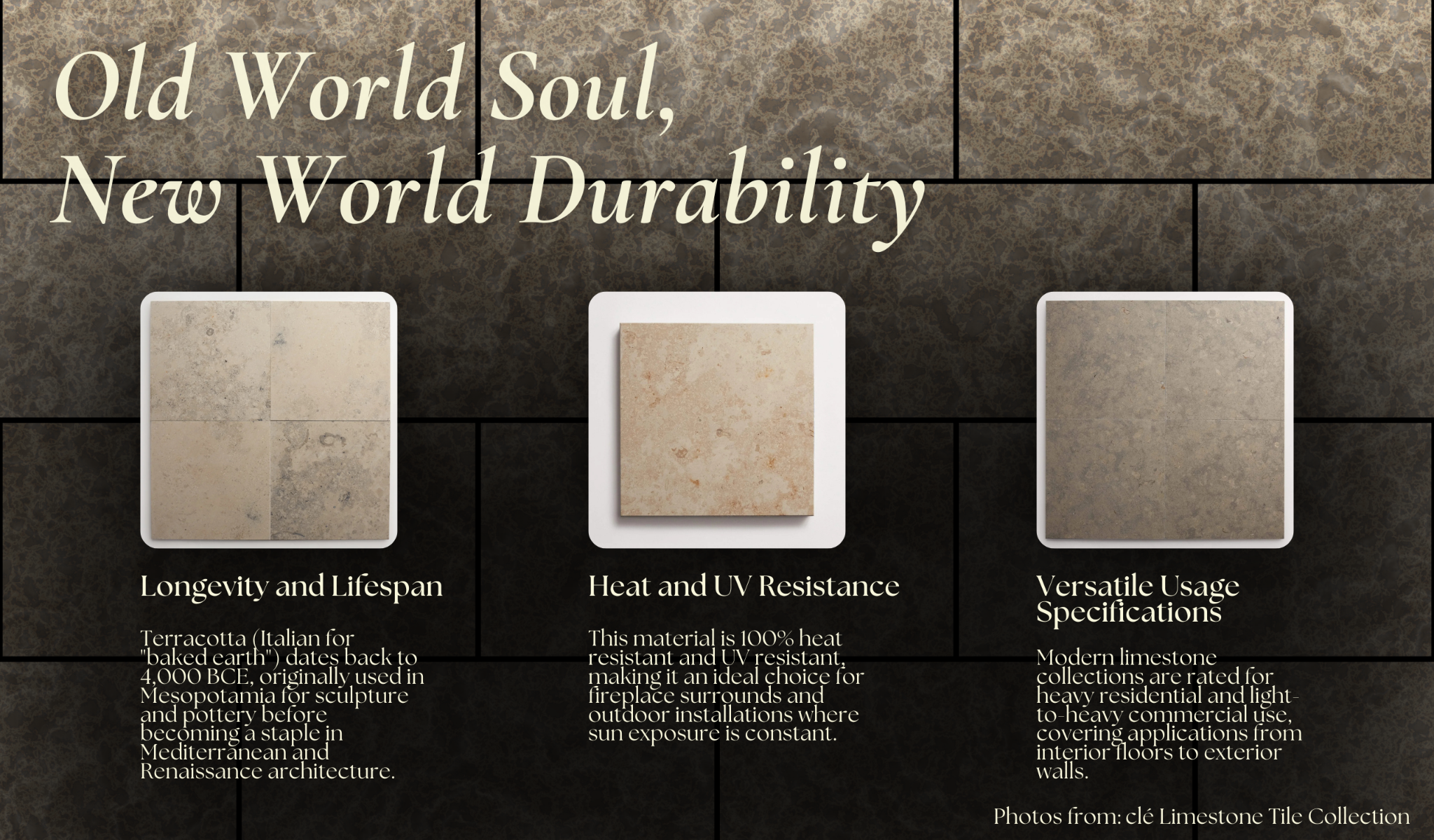
The most convincing 16th-century inspired stone tends to share a few traits:
- Low-sheen finishes (honed, brushed, antiqued) that diffuse light rather than reflect it
- Softened edges (tumbled/aged) that feel hand-worn, not factory crisp
- Warm neutrals; bone, oat, sand, mushroom, honey, rather than icy whites
- Natural variation that reads as “material integrity,” not inconsistency
- Classic layouts like French pattern (Versailles), large rectangles, or mixed sizes for a collected feel
In short: it looks like it has a story, even on day one. That’s why in 2026 16th-century inspired limestone tiles are having a moment across leading brands like clé, from quiet, sun-warmed surfaces that feel collected over time, yet still work beautifully with modern layouts and everyday routines.
Why this look is trending again (and why it lasts)
2026 is texture-first, not trend-first
Across 2026 trend reporting, the throughline is clear: natural materials aren’t accents anymore; they’re the architecture of a room. Stone, plaster, timber, clay, used generously, left imperfect, and chosen for sensory calm. That’s exactly what Old World stone delivers: visual quiet, tactile depth, and a finish that doesn’t need ornament to feel complete.
For a complementary read on classic material choices beyond the floor, this roundup of timeless wall tile options is a useful reference point, especially if you’re also considering stone on a fireplace surround or exterior-facing feature.
The Mediterranean/Tuscan warmth is back
Warm, sun-washed palettes and rustic finishes are resurfacing for 2026, but in a cleaner, more edited way, and less themed, more timeless. That renewed appetite for terracotta, warm stone, and villa-like restraint makes 16th-century inspired stone feel perfectly placed.
Stone drenching” makes the Old World feel modern
A major recent move is using stone more continuously with floors, walls, ledges, even vanities, so a space feels carved rather than decorated. Done with softer, aged stone finishes, the effect reads modern and historic at once.
Longevity is the new luxury (and a sustainability signal)
In 2026, “buy it once” materials are increasingly framed as value-forward: fewer replacements, fewer trend cycles, more permanence. Some trend discussions also position responsibly sourced stone as compatible with lower-carbon thinking compared to more energy-intensive, heavily processed alternatives, especially when used with minimal finishing.
New world durability”: what makes today’s stone easier to live with?
Old stone was durable, but it was also maintained by habit and tradition. Today, we want the look, but we also want practical performance. That’s where modern improvements help:
Better finishing + sealing options
Modern sealers can improve stain resistance significantly (especially on porous stones like limestone and travertine). While no sealer makes stone invincible, it buys you time—more like a raincoat than a force field.
Improved substrate systems
A huge portion of “stone problems” come from what’s underneath: movement, poor prep, incorrect mortar, or lack of decoupling. Today’s installation systems can dramatically improve long-term success, especially for floors.
More informed stone selection
We’re better at matching material to use cases now: choosing honed/tumbled limestone in a kitchen instead of polished marble, selecting textured finishes for wet areas, or using certain stones on walls to reduce maintenance.
The result: you can get the romance of old stone without signing up for constant anxiety.
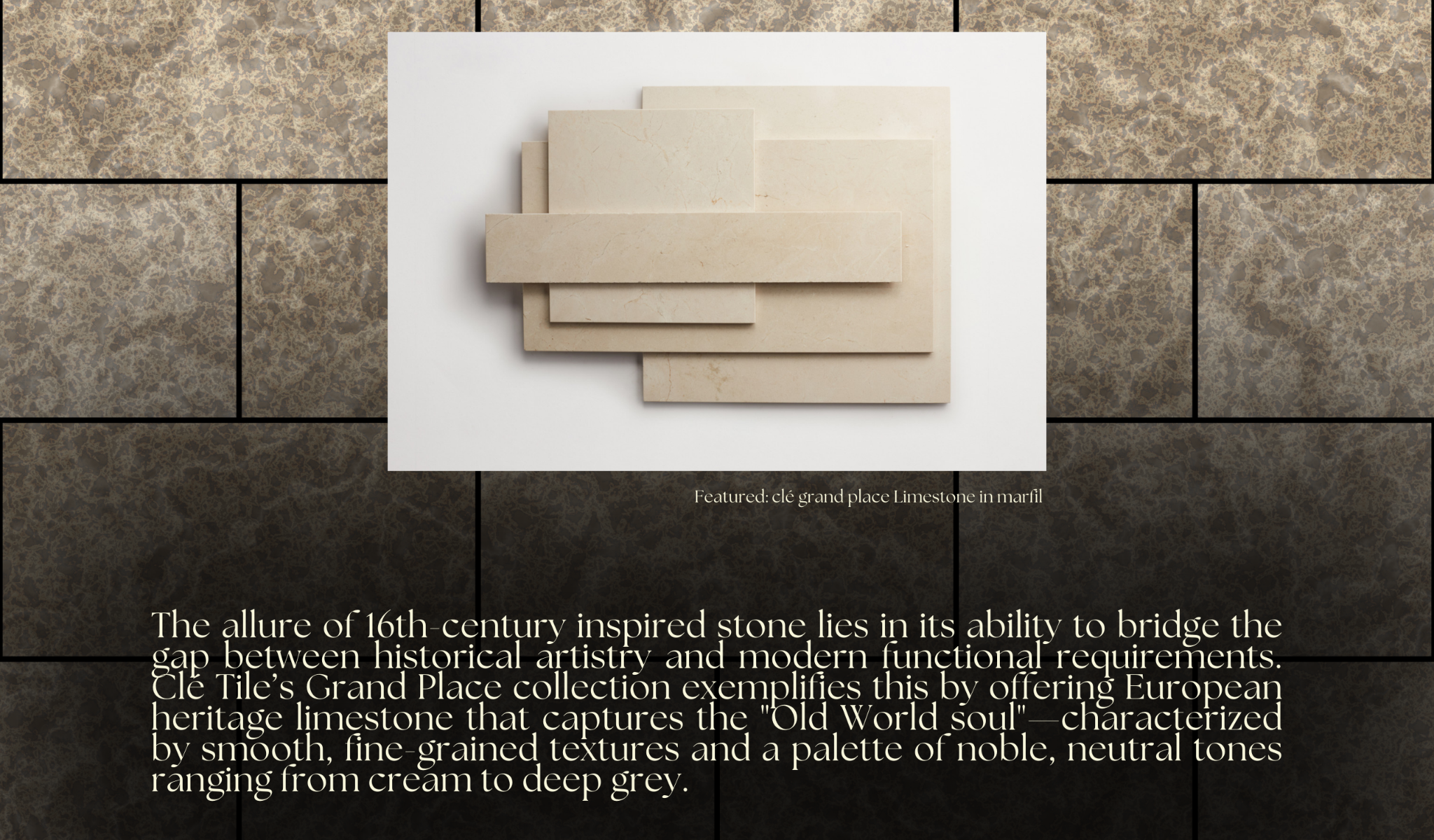
The stones that deliver the 16th-century look best
Limestone (the most authentic Old World mood)
Limestone is the backbone of that quiet European warmth. It reads soft and architectural, especially in honed or tumbled finishes. Over time, it develops patina, and subtle shifts that make it feel even more genuine.
Best for: entryways, kitchens (with a realistic mindset), hallways, bathrooms with the right finish.
Travertine (warm, textural, and forgiving in aged finishes)
Travertine naturally has voids and movement, which can look stunning when it’s filled and honed—or left more rustic for a true antique effect.
Best for: floors, showers (finish-dependent), feature walls, and indoor-outdoor transitions.
Marble (use it like an heirloom, not a “wipe-clean” surface)
Aged marble is breathtaking, especially with an antiqued finish. But marble shows etching more readily than many stones. For some people, that’s part of the charm. For others, it’s a deal-breaker.
Best for: powder rooms, lower-traffic baths, fireplace surrounds, feature moments.
Sandstone / quartzite-look stones (for rustic warmth with performance)
Some stones in this family can offer texture and durability that works well for active homes, especially when chosen carefully for slip resistance and hardness.
Best for: high-traffic floors, rustic-modern spaces, entry areas.
Where it works best in a modern home
- Entryways: the most natural place for Old World stone with instant character.
- Kitchens: creates warmth underfoot and balances modern cabinetry.
- Bathrooms: choose honed/tumbled textures for a softer, spa-like feel.
- Fireplaces: stone + heat + shadow = instant atmosphere.
- Hallways: long runs of stone become an architectural feature.
How to get the look without overcommitting
Not ready for full stone flooring? You can still bring in the 16th-century mood:
- Use stone on a fireplace surround and keep floors more practical
- Add a stone threshold or small entry “rug” of stone
- Choose a tumbled stone backsplash or powder-room wall
- Combine stone with modern elements (flat-panel oak cabinets, microcement, minimal hardware) for balance
Care and maintenance: the reality (simple, not scary)
- Use pH-neutral cleaner (avoid vinegar and acidic sprays)
- Reseal based on use (watch how water behaves on the surface)
- Add doormats and rugs to reduce grit (the biggest cause of wear)
- Wipe oil and pigment spills quickly
- Accept that a little patina is part of the design; not a failure
The takeaway
16th-century inspired stone isn’t about recreating history; it’s about capturing a feeling: permanence, warmth, and the elegance of lived-in texture. In a modern home, it brings soul without clutter, an architectural base that supports almost any style.
And with today’s better sealers, smarter installation systems, and more informed material choices, you can have the romance of Old World stone with the practicality modern life requires.
The long-game approach applies to the whole home, too, this piece on letting the house breathe after a renovation aligns with the idea that great materials (and great rooms) settle into their best selves over time.