





Small bathrooms require discipline. Clutter, oversized fixtures and poor planning show immediately, and small mistakes feel amplified.
Space is rarely the real issue. Layout problems, bulky fittings and weak lighting usually cause the frustration. With thoughtful choices, even a tight room can function beautifully.
You cannot fit everything, so you have to edit. Focus on what you use daily rather than what looks impressive in a showroom. When you stop forcing too much into the space, smarter solutions appear – clean lines, wall-mounted pieces, hidden storage and better flow.
In this blog, we will share practical, step-by-step strategies to help you rethink the layout and turn a compact bathroom into one that feels open, efficient and calm.
Fix the Layout Before You Buy Anything
Measure carefully and write everything down. Accuracy now prevents regret later.
Stand in the room and pay attention to how you move. If you twist past the vanity or squeeze around the toilet, the layout needs adjustment.
Keep plumbing in place where possible to avoid unnecessary costs. Instead of relocating everything, improve positioning unless the setup truly fails.
If the door limits movement, replace it with a pocket door or reverse the swing. Even small changes can create noticeable breathing room. Sketch a simple floor plan to spot crowding before you commit to anything.
Scale Down the Fixtures
Showrooms exaggerate size – your bathroom cannot.
Choose compact toilets. Select shallow vanities. Look for sinks with rounded edges instead of sharp corners. Every inch you save reduces visual pressure.
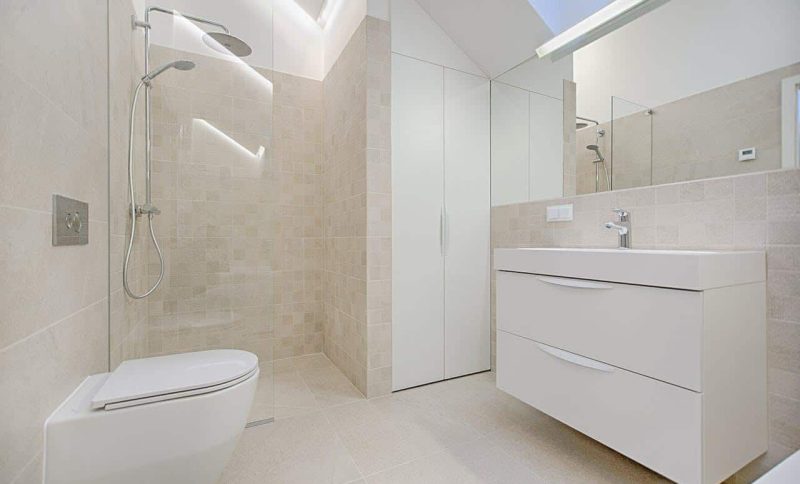
Floating vanities work well in small rooms. They expose more floor, which makes the space feel lighter. Add drawers instead of deep cabinets; drawers use space more efficiently.
During a bathroom remodel, fixture scale determines comfort. Oversized pieces dominate the room, while slim profiles support balance. Wall-mounted faucets, narrow-depth counters and streamlined hardware keep everything proportional. The goal is not to impress guests – it is to move freely without bumping into something.
Skip double sinks unless absolutely necessary. One well-designed basin with adequate counter space usually functions better in compact layouts.
Choose pieces that fit the room, not your wish list.
Question the Bathtub
Be honest. How often do you use it?
In many small bathrooms, the tub becomes a storage ledge for shampoo bottles and little else. Replacing it with a walk-in shower can open the floor plan dramatically.
Install clear glass panels rather than framed enclosures. Visual barriers shrink rooms. Transparency extends sightlines.
Consider a curbless shower floor. Let the tile run continuously from the main floor into the shower area. That seamless transition makes the room feel wider.
If you must keep a tub, choose a shorter model designed for compact spaces. Pair it with a simple glass screen instead of a heavy curtain rod.
Remove what you do not use. Keep what serves you.
Build Storage Upward
When the floor is tight, look at the walls.
Add shelving above the toilet. Install tall, narrow cabinets instead of wide, squat units. Use vertical height to your advantage.
Recess shelves into the shower wall. Built-in niches hold products without protruding into elbow room. They look tidy. And they function better. Swap towel bars for hooks. Hooks need less horizontal space and can sit behind doors or along slim walls. Small swaps add up.
Use mirrored cabinets that sit flush with the wall. You’ll see how they provide storage without projecting outward.
Think upward, not outward.
Lighten the Palette
If a bathroom already feels tight, dark colors rarely help. Deep tones tend to soak up light, which can make the walls feel closer than they really are. Lighter shades do the opposite – they bounce light around and create a softer, more open feel.
You don’t have to stick with plain white, though. Warm whites, gentle grays or muted neutrals can make the space feel calm without looking cold. Try to keep the color story simple. Too many sharp contrasts break up the room visually and make it feel smaller than it is.
Tile choice plays a role as well. Larger tiles mean fewer grout lines. And fewer lines mean less visual distraction. When the surface looks continuous, the room feels smoother and more expansive. Carrying the same tile into the shower helps everything flow together instead of looking segmented.
Also, a big mirror above the vanity can also change the mood instantly – if you can extend it upward, even better. Mirrors reflect light and movement, which adds depth without taking up any physical space.
Lighting deserves just as much attention as color. Instead of relying on a single ceiling fixture, use layered lighting. Add a main overhead light, then softer lighting around the mirror – where you actually need it. Strong shadows can make corners feel tight, while even lighting spreads comfortably across the room.
Hide the Clutter Relentlessly
Small bathrooms punish excess.
Clear the countertops. Store daily items inside drawers with dividers – and keep only what you use every day within reach. Install pull-out trays inside cabinets. They prevent forgotten items from gathering at the back. Accessibility reduces mess.
Use over-the-door racks for hair tools or cleaning supplies. They stay hidden yet accessible.
Be ruthless with what you store. Old cosmetics, half-used bottles, expired products – remove them. If you have not touched it in months, it probably does not belong there.
Simplify the Details
Choose hardware with clean lines. Avoid bulky handles and decorative trim. Small rooms prefer restraint.
Keep finishes consistent. Too many metal tones create visual noise. One or two finishes maintain cohesion. Use slim towel rings instead of wide bars where possible. Select compact light fixtures rather than oversized statement pieces.
Even grout color matters. Matching grout to tile reduces contrast and makes surfaces feel unified.
Edit decorative items carefully. One plant or framed print is enough. More can overwhelm.
The bottom line here is that a small bathroom rewards intention. It punishes excess. It reflects every choice clearly. Start with layout. Protect floor space. Scale fixtures appropriately. Remove what you do not use. Keep storage vertical and concealed.
Use light colors and reflective surfaces to extend sightlines. And maintain consistency in materials and finishes. Focus on movement and comfort rather than decoration.
When you treat each inch as valuable, the room responds. It feels open. It feels organized. It feels manageable.
Size does not determine satisfaction. Smart decisions do.