Walk into any specialty café and the coffee in your cup will taste better than what most people brew at home. That gap isn’t down to magic. It’s down to three things the barista controls and most home brewers don’t: fresh beans, a real grinder, and the right brew method for the cup. Fix those and you can match café coffee at home with a setup that costs less than two dinners out.
To brew coffee at home, start with whole-bean specialty coffee that was roasted within the last two weeks. Finding a good coffee roaster goes a long way. Grind the beans fresh, right before you brew. Match the grind size to the brew method (coarse for French Press and cold brew, medium for drip and pour-over, fine for AeroPress and espresso). Use a 1:16 to 1:17 coffee-to-water ratio by weight, water around 195 to 205 degrees Fahrenheit, and let the grounds bloom for 30 seconds if you’re using a pour-over or drip. That’s the whole game.
Below is a fuller guide. We’ll walk through every brew method that matters, how much coffee to use, what equipment you actually need, and how to dial things in until you’re making coffee that beats what you buy at the airport.
Why Home-Brewed Coffee Tastes Worse (And How to Fix It)
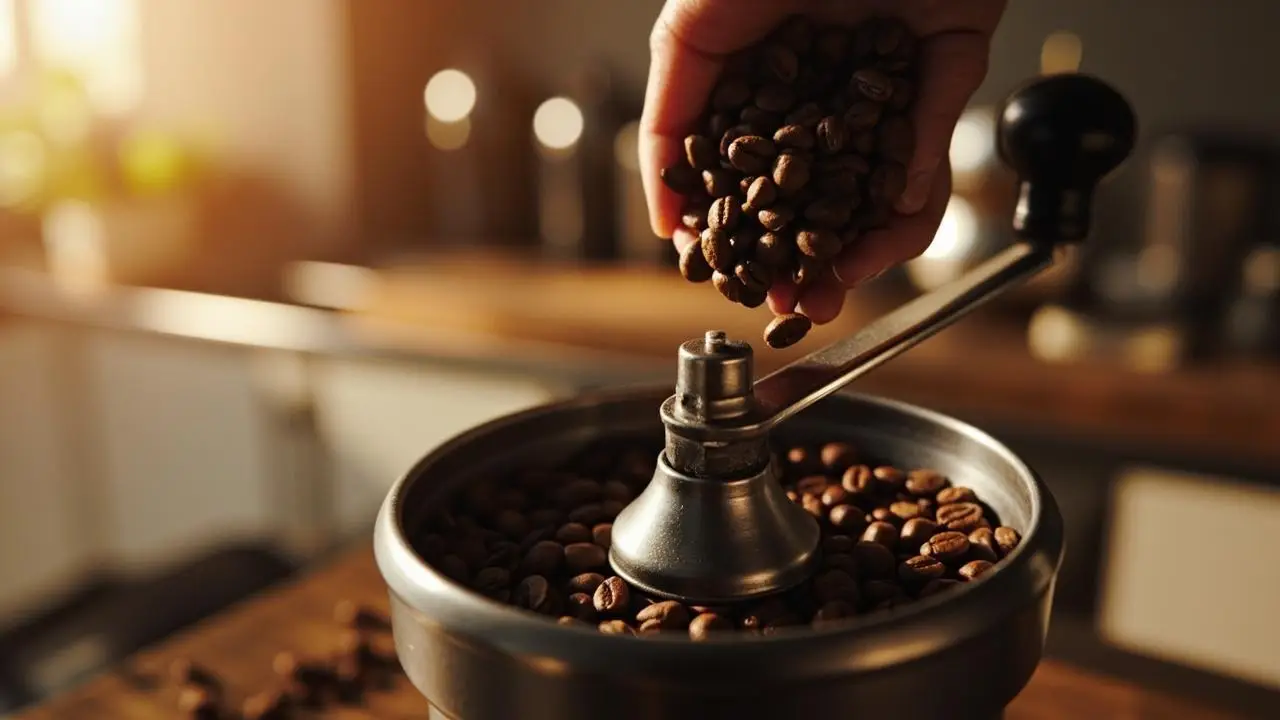
Three things separate good coffee at home from disappointing coffee at home. First, the beans. Stale beans make stale coffee. Buy whole beans, roasted recently, ideally within two weeks. Roasters like Boxwood Coffee put the roast date right on the bag, which is the easiest way to tell what you’re getting. Second, the grind. Pre-ground coffee starts losing aroma in minutes. A burr grinder at home solves this. Third, the brew method. If you’re using whatever brewer came with your kitchen, you may not be getting the most out of those beans. Switching to a French Press or a Hario V60 changes the cup more than people expect.
What Equipment You Actually Need
You don’t need a $1,500 espresso machine to make great coffee at home. A short list does most of the work.
- A burr grinder. Even a manual hand grinder beats a blade grinder.
- A digital kitchen scale. Weighing beans and water is what makes brewing repeatable.
- A gooseneck kettle if you’re doing pour-over. A regular kettle works for everything else.
- One brewer: a French Press, an AeroPress, a Hario V60, a Chemex, or a Moka pot.
- Fresh whole beans.
That’s it. You can absolutely build a beautiful coffee setup with just those items.
The Best Methods to Brew Coffee at Home
Each brew method gives a different cup. Here are the ones worth knowing.
French Press (Plunger)
The French Press is the easiest entry point. Coarse grind. Hot water. Wait four minutes. Press down. Done. It produces a heavy, full-bodied cup with a little sediment, and forgives small mistakes. You’ll need about 30 grams of coffee for a 500 ml French Press. The plunger does the work.
Drip Coffee Maker
A drip machine is the classic American workhorse for hot coffee, and a good one is excellent. SCA-certified drip coffee brewers heat water to the right temperature and spray it evenly across the coffee grounds. Use medium-ground coffee, a paper coffee filter, and a 1:17 ratio. Drip coffee makers shine when you’re brewing for more than one person and don’t want to babysit the process. A great drip machine is one of the easiest ways of making coffee at home, especially first thing in the morning.
Pour-Over Coffee (Hario V60, Chemex)
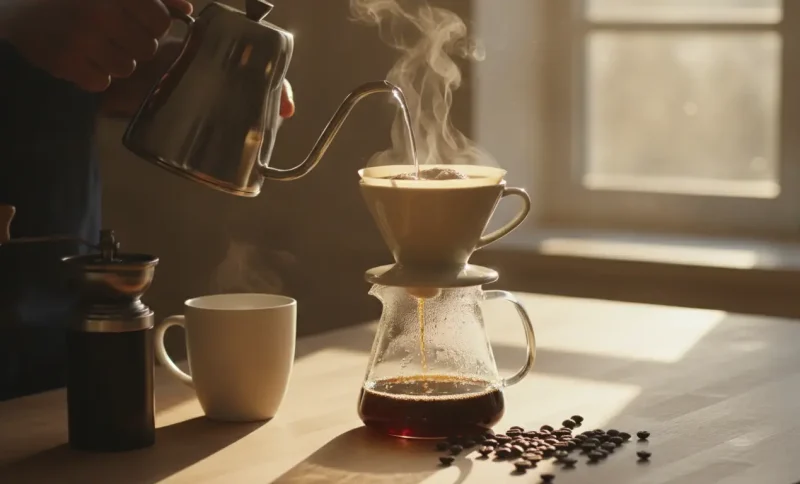
Pour over coffee gives you the most control of any home brewing method. You grind to a medium-fine, wet the coffee grounds with a splash of hot water and let them bloom for 30 seconds, then pour the rest in slow circles through a paper coffee filter. The Hario V60 is the classic ceramic dripper. The Chemex is the elegant glass one. Both produce a clean, bright cup that shows off a single-origin coffee. This is the brewing method most specialty coffee shops use for single cups, and it’s the best way to make coffee that highlights the character of a particular bean.
AeroPress
The AeroPress brews a single cup in under two minutes and tastes between an espresso and a pour-over. It’s compact, durable, and travels well. Most recipes call for 17 grams of finely ground coffee, water just off the boil, and a one-minute steep before pressing. It’s also incredibly forgiving, which is why it’s popular with home brewers.
Moka Pot (Stovetop)
The Moka pot is the Italian stovetop classic. It brews concentrated, dark, espresso-ish coffee on a gas burner. You fill the bottom chamber with water, pack the filter basket with finely ground coffee, screw it together, and put it on medium heat. Three minutes later, hissing and ready. Strong cup. Easy ritual.
Cold Brew
Cold brew is what you make in the fridge overnight. Coarse-ground coffee plus cold water sits in a jar for 12 to 18 hours. Strain through a fine-mesh sieve and a paper filter. You’ll end up with a smooth, low-acid concentrate that lasts a week in the fridge and tastes great over ice. Use a 1:8 ratio for concentrate or 1:14 if you want to drink it straight.
Espresso
Espresso requires actual pressure (about 9 bars) and a fine grind, which is why a home espresso machine costs more than the other brewers combined. If you’re not ready to invest in a real espresso machine, the AeroPress and Moka pot get you in the neighbourhood. A good entry-level espresso machine paired with a quality grinder will run somewhere between $700 and $1,500 once you’ve added everything up.
How Much Coffee Do I Use to Make 2 Cups of Coffee?
For two standard 8-ounce cups of coffee (about 240 ml each), use roughly 30 grams of ground coffee and 480 grams of water. That’s a 1:16 ratio. Adjust to taste from there. If your coffee tastes weak or watery, use more coffee. If it tastes harsh or bitter, use less. Weighing is more accurate than scooping, but if you don’t have a scale, two level tablespoons of ground coffee per 8-ounce cup is a decent rule of thumb.
The Coffee-to-Water Ratio
A 1:16 or 1:17 ratio works for most brew methods. Espresso uses a much higher ratio (1:2 or thereabouts). Cold brew goes the other way (1:8 for concentrate). The bigger lesson: weigh, don’t scoop. A scoop of dense, oily beans weighs more than a scoop of light, dry beans. Weight gives you a number you can repeat. Once you find a ratio that tastes right, you can hit it every morning.
Grind Size by Brew Method
Grind size controls how fast water pulls flavour out of the coffee. Too fine and you’ll over-extract (bitter). Too coarse and you’ll under-extract (sour, weak).
- French Press: coarse, like rough sea salt
- Cold brew: very coarse, almost like cracked pepper
- Drip coffee maker: medium, like white sand
- Pour-over (V60, Chemex): medium to medium-fine
- AeroPress: medium-fine, depending on recipe
- Moka pot: fine, like table salt
- Espresso: very fine, almost powdery
A burr grinder lets you actually choose a setting and stick with it. Blade grinders don’t, which is why pre-ground coffee tends to make muddy cups.
Water Temperature Matters
Brewing temperature should sit between 195 and 205 degrees Fahrenheit (about 90 to 96 degrees Celsius). Hotter than that and you’ll scorch the coffee. Cooler than that and you’ll under-extract it. If you don’t have a thermometer, bring water to a boil and let it sit for 30 seconds before brewing. That’s close enough.
Coffee Brewing Methods Compared
Each of these coffee brewing methods produces a noticeably different final cup. French Press coffee is bold and full-bodied. Pour over coffee is clean and bright. AeroPress is balanced and quick. Moka pot produces strong coffee that lands somewhere near espresso. Drip is reliable for a full pot. Cold brew is smooth and low-acid. Espresso is concentrated and intense. There’s no single best way of making coffee. The best way is the one that fits your morning. Most home coffee brewers keep two methods around (one fast and one slow) and rotate based on the day.
How to Brew Coffee at Home Without a Machine
You don’t need a coffee maker to brew great coffee. The simplest no-machine method is the cowboy method: heat water, add ground coffee straight to the pot, let it sit for four minutes, then pour through a fine sieve. A French Press is the slightly more refined no-machine version. So is an AeroPress, a Moka pot, or a pour-over cone. Most of the great brew methods don’t actually require a machine.
If you really have nothing, a fine-mesh sieve over a mug works. Bloom the grounds in a separate bowl with hot water for 30 seconds, then pour the brew through the sieve into your cup. Not glamorous, but it gets you coffee.
How to Make Coffee Anti-Inflammatory
Coffee itself contains compounds that researchers have linked to reduced inflammation, particularly when brewed without filtering out the coffee oils (so French Press, Moka pot, and espresso are more anti-inflammatory than paper-filtered drip). To enhance that further, skip the dairy and refined sugars and add cinnamon, turmeric, or a splash of plant milk like oat or almond. Some people also add a teaspoon of coconut oil or MCT oil for the supposed metabolic benefits. None of this turns coffee into medicine, but a clean cup brewed from quality beans is genuinely a better start to the day than a sugar-loaded café drink.
What Coffee Is Best for GERD?
If acid reflux is a concern, look for coffees marketed as low-acid. Dark roast beans are naturally lower in acidity than light roasts, because longer roasting breaks down some of the acidic compounds. Cold brew is dramatically lower in acidity than hot-brewed coffee, often 60 to 70 percent less, which is why people with GERD frequently switch to cold brew. Other moves: drink coffee with food, avoid drinking on an empty stomach, and skip the dairy if it’s a trigger. Specialty roasters often label single-origin beans with acidity notes, so you can pick a less acidic origin (Brazil, Sumatra, and Peru tend to run lower-acid than Ethiopia or Kenya).
Why a Better Cup of Coffee Starts at Home
Making coffee at home gives you total control over the brewing process. You pick the beans, you choose the grind, you set the ratio of coffee to water, and you decide the brewing device. A simple stovetop coffee maker or a single-cup AeroPress lets you brew one cup at a time, fresh, and tweaked exactly the way you like it. That kind of control is the difference between drinking coffee out of habit and actually enjoying it. The right brewing equipment, combined with a few weeks of practice, will give you a better cup than almost any chain café in town. Black coffee made carefully from a single-origin bean is one of the small pleasures of being a real coffee drinker. Whether you want a clean type of coffee from a V60, a full-bodied cup of coffee from a French Press, or a quick espresso-style shot from a Moka pot, learn how to make coffee using the method that fits your morning. That’s really the best way to brew at home.
How to Buy Coffee That’s Worth Brewing
Great coffee at home starts with great beans. A few rules:
- Look for the roast date printed on the bag (not a “best by” date)
- Buy whole beans rather than pre-ground
- Use the bag within four weeks of the roast date
- Store beans in an airtight container, at room temperature, away from sunlight
- Match the bean’s recommended brew method to what you actually use
For most people, a good independent roaster is the upgrade that moves the needle. Roasters like Boxwood Coffee ship beans fresh, list the roast date clearly, and source from farms that care about the cup. A subscription means you’re never trying to squeeze life out of a stale bag.
The Coffee World Has Never Been More Accessible
Homebrewing has come a long way. Twenty years ago, regular coffee usually meant a Keurig pod or a tin of pre-ground from the grocery shelf. Today, a quality coffeemaker, fresh beans from a real coffee roasting house, and a few weeks of practice will produce a daily brew that’s measurably better than what you’d get at a chain coffeehouse. Whether you grew up on Starbucks, Counter Culture Coffee, or your local independent café, the gap between coffee shop coffee and what you can make at home has closed entirely. There’s never been a better time to get started on brewing your own. The oils from the coffee, the odor of fresh grounds, and the satisfaction of pulling a good cup are part of why so many people fall in love with home coffee preparation. With a stainless steel kettle, a real burr grinder, and a simple AeroPress, you can make a coffee recipe at home that rivals what you’d pay $7 for at the counter.
Frequently Asked Questions
What’s the Easiest Brew Method for Beginners?
The French Press is the easiest. Coarse grind, hot water, four-minute wait, press. It’s hard to make undrinkable coffee with a French Press. A drip coffee maker is the easiest hands-off method.
How Long Do Coffee Beans Stay Fresh?
Roasted coffee beans peak in flavour for about two to four weeks after roasting. Pre-ground coffee starts losing aroma within minutes. Keep beans whole in an airtight container at room temperature, away from light. Don’t freeze them unless you’re storing a long-term backup.
Do I Really Need a Burr Grinder?
Yes, if you want consistent results. Burr grinders crush beans evenly. Blade grinders chop unevenly, which means part of your brew is over-extracted and part is under-extracted. Even an inexpensive hand burr grinder will improve your cup significantly.
What’s the Best Coffee-to-Water Ratio?
For most brew methods, 1:16 to 1:17 by weight. That means 1 gram of coffee for every 16 to 17 grams of water. For two 8-ounce cups, that’s about 30 grams of coffee to 480 grams of water. Adjust to taste. Espresso uses a much higher ratio (around 1:2), and cold brew concentrate uses a lower one (1:8).
Why Does My Coffee Taste Bitter?
Bitter coffee usually means over-extraction. Try a coarser grind, shorter brew time, or cooler water. If the coffee still tastes harsh, the beans might be old or over-roasted. Fresh beans from a quality roaster fix most flavour issues.
Can I Make Espresso Without an Espresso Machine?
Not real espresso, no. Espresso requires high pressure that only a real machine produces. But you can make espresso-style concentrate using a Moka pot or an AeroPress, and the result is close enough for most drinks (cappuccinos, lattes, Americanos) that no one will complain.