


We often think of the kitchen and the bathroom cabinet as two separate worlds. One is for meals, the other for creams and serums. But the skin is a living organ, rebuilt every day from the nutrients we eat. What lands on your plate shows up in your complexion, sometimes within weeks. Understanding that connection is one of the easiest and most enjoyable ways to support healthy, resilient skin at any age.
Collagen: The Protein Behind Firm Skin
Collagen is the most abundant protein in the body and the main structural component of the skin. It gives the face its firmness and bounce. Our bodies make collagen continuously, but production slows from our mid-twenties onward, dropping by roughly one percent each year. Sun exposure, smoking, poor sleep and diets high in refined sugar speed up that decline.
The good news is that the body needs specific building blocks to make collagen, and many of them come straight from food.
The Skin-Friendly Shopping List
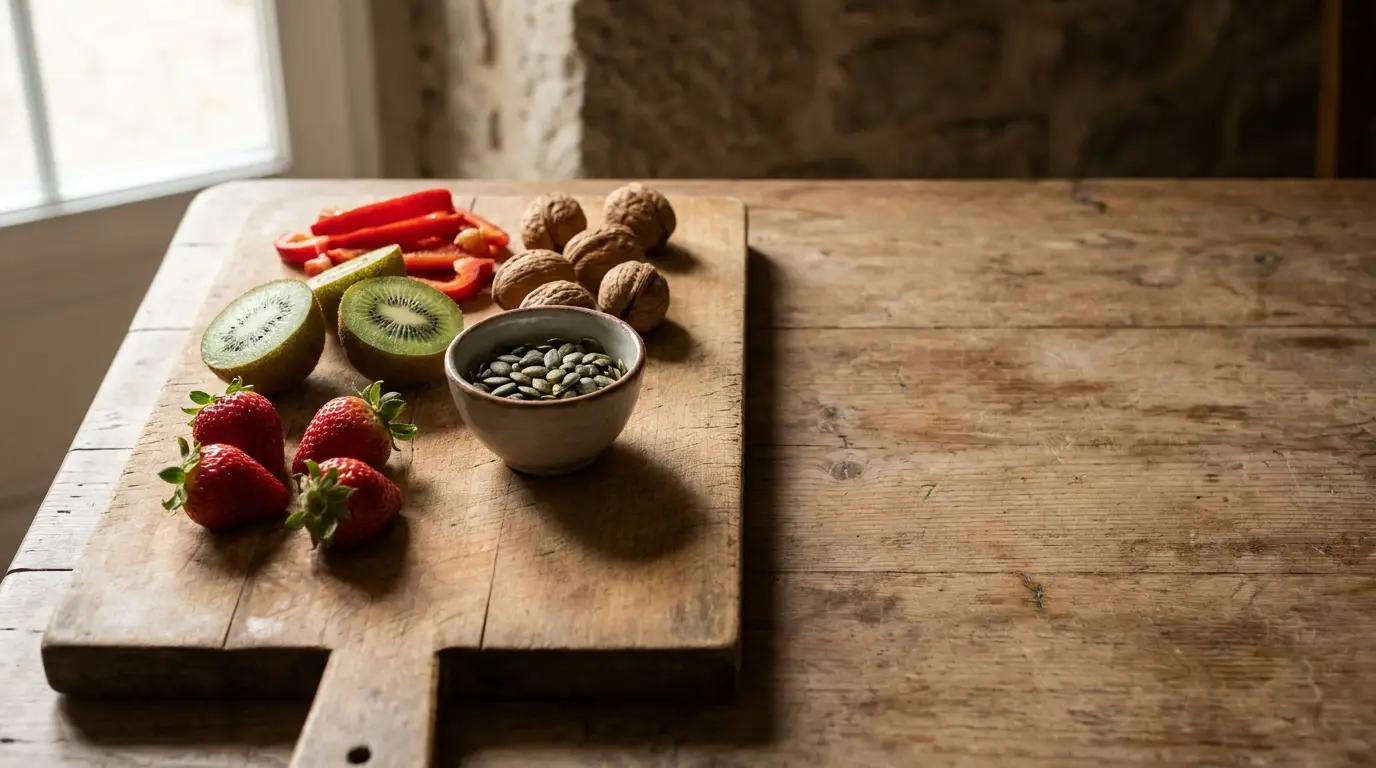
- Vitamin C-rich produce. Citrus fruits, strawberries, kiwi, red peppers and broccoli. Vitamin C is essential for collagen synthesis; without it, the body simply cannot build stable collagen fibres.
- Quality protein. Eggs, fish, poultry, beans and lentils provide the amino acids glycine, proline and lysine that collagen is made from.
- Bone broth. A comforting, slow-cooked staple naturally rich in gelatin and amino acids.
- Healthy fats. Salmon, sardines, walnuts, flaxseed and olive oil support the skin barrier and help it hold on to moisture.
- Zinc and copper sources. Pumpkin seeds, cashews, chickpeas and shellfish support the enzymes involved in skin repair.
- Colourful antioxidants. Berries, tomatoes, leafy greens and green tea help protect existing collagen from oxidative damage.
A Day of Glow-Friendly Eating
Putting this into practice does not require a special diet. A simple day might look like this:
- Breakfast: Greek yoghurt with berries, a spoonful of ground flaxseed and a few walnuts.
- Lunch: A big salad with leafy greens, roasted red peppers, chickpeas, pumpkin seeds and an olive oil and lemon dressing.
- Snack: A kiwi or an orange with a handful of almonds.
- Dinner: Baked salmon with steamed broccoli and sweet potato, or a lentil and vegetable stew made with homemade broth.
Hydration rounds it out. Water, herbal teas and water-rich foods like cucumber and watermelon all help keep skin supple.
What to Limit
Sugar deserves a special mention. When blood sugar is consistently high, sugar molecules attach to collagen fibres in a process called glycation, making them stiff and brittle. The result over time is skin that loses its spring. You do not need to give up dessert entirely, but keeping refined sugar and highly processed snacks occasional rather than daily is one of the best things you can do for your complexion. Heavy alcohol intake is similarly dehydrating and inflammatory.
Do Collagen Supplements Work?
Collagen powders have become a popular addition to coffee and smoothies. Some studies suggest hydrolysed collagen peptides may modestly improve skin hydration and elasticity, although research is still developing and results vary between people. If you enjoy them, they can be a convenient extra, but they work best alongside a balanced diet rather than as a replacement for one.
When Nutrition Meets Professional Care
Food supports the skin from within, but it cannot fully reverse the structural changes that come with time. That is why many people combine a healthy lifestyle with professional treatments that work on the same goal: helping the body produce more of its own collagen.
One example is Sculptra, a treatment that uses poly-L-lactic acid to stimulate the skin’s natural collagen production gradually over several months. Rather than adding instant volume, it encourages the body to rebuild support from within, which is why the results tend to look subtle and natural. It is always administered by a licensed medical professional after a proper consultation.
The same habits that make good food choices worthwhile, like consistency and patience, are what make these treatments successful too.
Small Habits, Visible Results
Skin health is built in small daily choices. A vegetable-rich lunch, a piece of fruit instead of a pastry, a glass of water before coffee, sunscreen every morning and a decent night’s sleep. None of these feel dramatic on their own, but together they add up to a complexion that looks rested and healthy for years to come.
The Takeaway
Your kitchen is one of the most powerful beauty tools you have. Fill your plate with colourful produce, quality protein and healthy fats, go easy on sugar, and stay hydrated. Whether or not you choose professional treatments along the way, good nutrition is the foundation that every other part of your routine is built on.