You bought the machine. You upgraded the grinder because a forum told you the grinder was the problem. You watched the videos on distribution and tamping.
The shot still tastes sour. Sharp, thin, like biting into an underripe lemon.
The next piece of advice is almost always the same: grind finer. Sometimes that works. Often it produces a shot that is somehow sour and bitter at the same time, which is the point where most people conclude their machine isn’t good enough.
It usually isn’t the machine. It’s a mismatch between what’s in the hopper and what the equipment in front of you can actually pull out of it.
Sour Means Under-Extracted
Espresso doesn’t dissolve all at once. Compounds come out of the coffee in a rough order.
Acids go first. They are the most soluble things in the bean and they leave early in the shot. Sugars and the compounds that read as sweetness and body come out through the middle. The bitter compounds come last, which is why a shot that runs too long turns harsh and drying.
A sour shot is one that stopped somewhere in the first stage. You pulled the acid out and never got far enough to balance it with anything else.
This is worth separating from acidity, because the two get confused constantly. A bright light roast pour over is acidic and that’s the point of it. Sour espresso is acid with nothing underneath it.
Two quick diagnostics before anything else:
- Sour and thin, shot runs fast: under-extracted.
- Bitter and drying, shot runs slow: over-extracted.
- Sour and bitter together: water found a channel through the puck and extracted parts of it unevenly. This is a puck problem, not a grind problem, and grinding finer usually makes it worse.
Roast Level Decides How Hard Extraction Is
Roasting is a physical process, not just a flavor one.
As a bean roasts it loses moisture, expands, and becomes progressively more porous and brittle. The further the roast goes, the easier it is for water to get inside and dissolve things out. A dark roast gives up its solubles readily. A light roast holds onto them.
Roasting also breaks down the acids that were in the green bean. So a lighter roast gives you more acid to balance, and simultaneously makes it harder to extract the sweetness that would balance it. Both problems arrive together.
This is the part most home espresso advice skips. People treat roast level as a taste preference and grind as the technical variable. It’s the other way round. Roast level sets the difficulty. Grind is how you respond to it.
Some roasters build their range around this rather than treating it as a footnote, classifying espresso as a roast level in its own right, sitting between medium and dark, instead of as a separate category of bean. Verena Street’s espresso roasts are organized that way, filed alongside light, medium and dark rather than in their own aisle. It’s a more accurate description of what’s actually happening in the roaster than the phrase “espresso bean” suggests.
What That Means on a Home Machine
Light roast espresso is absolutely possible. Specialty cafes build entire menus on it.
It needs three things at once: brew temperature at the top of the usable range, a grind that is both very fine and very consistent, and often a longer ratio than standard, closer to 1:2.5 or 1:3 rather than 1:2.
Most home setups can deliver one of those, sometimes two. Consumer thermoblock boilers swing several degrees during a shot. Entry-level grinders produce fines and boulders in the same dose, and the fines clog while the boulders under-extract, which is a recipe for channeling. Pressurized baskets, which ship with a lot of home machines, create artificial resistance that produces crema-looking output without the extraction behind it.
Push a light roast through that and you get sourness that no amount of grinding finer will fix, because the limitation isn’t the grind.
A medium-dark or lightly dark roast extracts inside the window a home machine can actually reach. That isn’t settling for less. It’s matching the coffee to the equipment.
This isn’t theoretical. Take a blend lighter than it should be and pull it on the kind of machine most people have at home, and the pattern is consistent. The shot runs fast, because the bean hasn’t developed enough structure for the water to work against. The crema comes out pale and collapses within seconds instead of holding. What lands in the cup is sharp and hollow at the same time, all front end and no middle, and adding milk doesn’t rescue it because there’s nothing underneath for the milk to sit on.
On a commercial machine with real temperature stability and a grinder that costs more than the espresso machine, you can chase that. Finer grind, hotter water, longer ratio. On a home setup you usually can’t, and the coffee gets blamed for tasting sour when the actual problem is that it was never roasted for the job it’s being asked to do.
Check the Roast Date Before You Change Anything
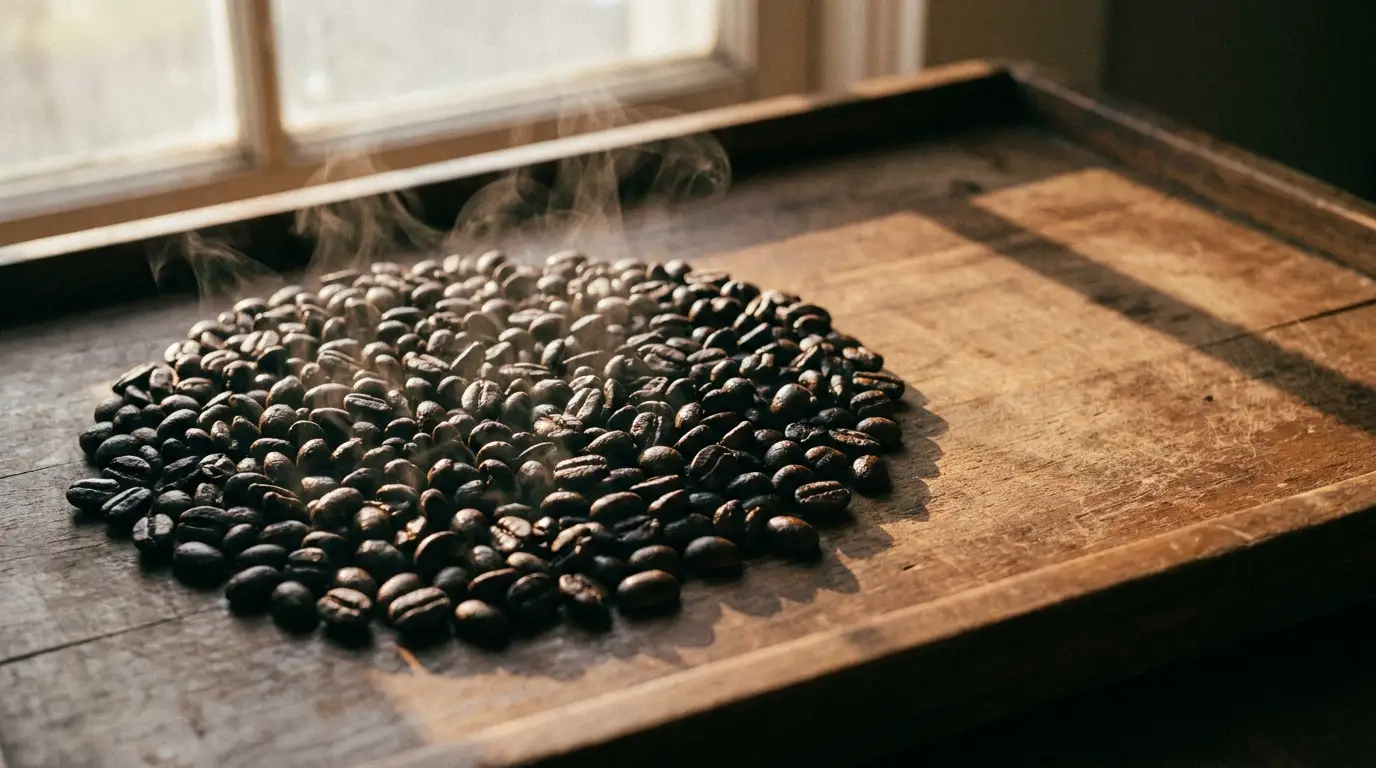
Coffee coming out of the roaster is saturated with carbon dioxide. It releases that gas over the following days.
Under nine bars of pressure, that gas has to go somewhere. It disrupts the puck as water passes through, water finds the path of least resistance, and the shot gushes. The result tastes sour and thin regardless of how well you ground it.
Too-fresh coffee is one of the most common causes of sour espresso and one of the least diagnosed, because “fresher is better” is such a fixed idea. For espresso specifically, a rough window of seven to fourteen days off roast is where most blends settle. Filter coffee tolerates being younger.
The reverse is worth knowing too: stale coffee doesn’t taste sour. It tastes flat, hollow, slightly papery. If your shot is aggressively sour, age isn’t the issue.
Darker roasts are more porous, so they shed that gas faster and settle sooner than a light roast will. An espresso roast is often ready toward the earlier end of that window, where a light roast for filter might want longer.
The practical version: buy from a roaster who prints a roast date rather than a best-before, and give a fresh bag a few days before you judge it or start adjusting anything.
Only Then, Dial In
Once the coffee is right, start from a baseline and change one thing at a time.
Eighteen grams in, thirty-six grams out, twenty-five to thirty seconds. That’s a 1:2 ratio and it’s the reference point almost everything else is described against.
From there:
- Sour, and the shot ran fast: grind finer.
- Sour, and the shot ran slow: that’s channeling. Fix distribution and tamping before touching the grinder.
- Bitter and drying, shot ran slow: grind coarser.
- Weak and watery: check your dose is actually filling the basket.
Change one variable, pull, taste, write it down. Changing grind and dose and temperature in the same session tells you nothing about which one did what.
On temperature, the usable range is roughly 195 to 205°F. Darker roasts sit toward the lower end, lighter roasts toward the upper. If you’re pulling a medium-dark coffee and it’s sour, temperature is unlikely to be the culprit and it’s the last thing worth adjusting.
Origin Matters More for Espresso Than for Filter
Not every coffee is built to survive pressure extraction.
Brewing methods that use gravity and time are forgiving of delicate, high-acid coffees. Espresso concentrates everything. A bright washed African coffee that is elegant as a pour over can arrive as a shot that tastes like citric acid.
Coffees with more body and lower natural acidity hold their shape under pressure. That’s why a lot of espresso blends are assembled from three regions doing three separate jobs.
Central American coffees bring structure and a cocoa and nut register that reads as familiar rather than exotic. South American coffees, Brazil especially, carry sweetness and body, and contribute most of what people recognize as crema. Indonesian coffees provide weight and a low, earthy base that stops the shot thinning out once it’s concentrated.
Our own espresso blend draws on all three, and the Indonesian component is the least glamorous of them and the one doing the most structural work. Pull that kind of weight out of a blend and the shot gets brighter and more interesting on paper, then noticeably thinner in a cup of milk.
Which matters, because most people buying espresso beans are making lattes and flat whites, not straight shots. The coffee has to still be present under six ounces of steamed milk. Delicate is the opposite of what that job needs.
When It Really Is the Machine
To be fair to the equipment, sometimes it is the equipment.
If you’re using a pressurized or dual-wall basket, swap to a single-wall one. The pressurized basket is a training aid that hides grind problems, and it caps how good your espresso can get.
If your grinder can’t go fine enough to slow a shot down without stalling, that’s a hard limit and you’ll need a better one eventually.
And if shot times swing wildly between pulls with identical prep, you may have a genuine pressure or temperature stability problem worth investigating.
But those are the last things to check, not the first.
The Order to Work Through
- Is the roast level appropriate for your equipment?
- Is the coffee inside its rest window?
- Are you at a 1:2 ratio in 25 to 30 seconds?
- Grind.
- Distribution and tamping.
- Temperature.
- The machine.
Most sour espresso is resolved somewhere in the first three, before you’ve spent a cent.