

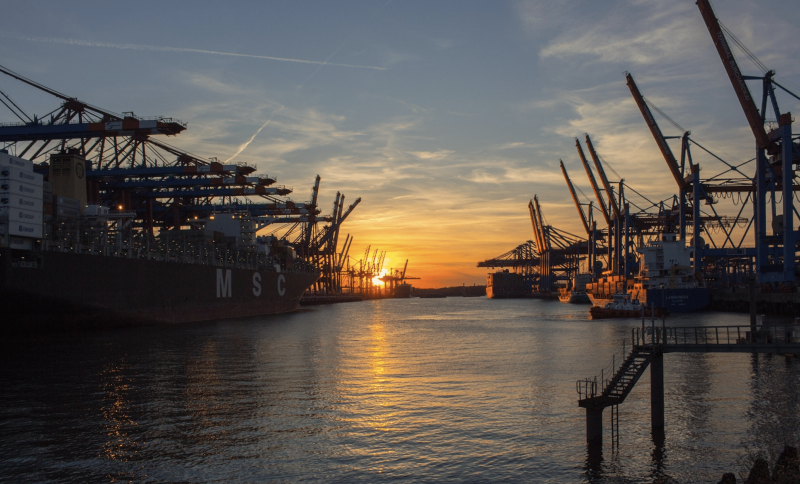
The history of Newark as a major regional food distribution hub, often referred to broadly as a food port or terminal gateway, is deeply rooted in its strategic geography along Newark Bay. Over the course of two centuries, the area transformed from a modest local agricultural market into one of the most critical centers for food processing, cold chain logistics, and perishable trade in North America. By examining its evolution across different eras, we can understand how natural waterways, rail infrastructure, industrial innovation, and modern shipping technologies combined to turn Newark into a giant engine powering the regional food supply.
Newark’s Early Agricultural and Industrial Growth
During the early nineteenth century, Newark served primarily as a local collection point for agriculture produced in New Jersey. Farmers from the surrounding countryside brought crops, livestock, and raw dairy into town to sell at open markets. The city’s growth exploded with the construction of early transportation canals and river routes. When the Morris Canal opened during the 1830s, it created a direct link between Middle America farming regions, energy resources like coal in the Southern states, and the bustling docks along the Passaic River. This waterway connection meant that raw agricultural goods could move quickly into urban markets. Around the same time, massive industrial milling operations began springing up along the waterfront. Flour mills operating along the Commercial Dock processed thousands of bushels of wheat every single day, relying on barges to bring in raw grain and deliver finished flour to nearby cities. As Midwestern grain production eventually expanded and outpaced local milling capacity, Newark adapted by shifting its industrial focus toward large scale baking, food packaging, beverage bottling, and general processing to feed the rapidly rising population of the New York metropolitan area.
The Rise of Newark’s Wholesale Food Markets

By the early decades of the twentieth century, the city needed a more structured framework to handle the sheer volume of fresh food arriving daily by rail and boat. This led to the emergence of dedicated wholesale markets and centralized shipping zones. The most famous among these was the Down Neck Farmers Market, located in the Ironbound neighborhood off Chapel Street. Operating largely through the late night and early morning hours, this sprawling open air terminal became the beating heart of local fresh food distribution. Regional farmers backed up trucks loaded with freshly harvested New Jersey produce. It should be noted that New York City has the lowest produce prices of any other city close to it size. This is because of the farms in New Jersey, New York State, and Connecticut. Also, wholesale vendors unload rail cars and barges filled with fruits and vegetables grown in other parts of the country. Around mid century, independent grocers recognized that surviving against giant national retail chains required shared logistics and collective buying power. In 1949, a young cooperative known as Wakefern Food Corporation leased a modest fifteen thousand square foot warehouse near the port facilities in Newark. By consolidating their storage and shipping operations in one central, accessible location, these local merchants cut costs and established the foundational logistics network that would eventually grow into ShopRite, one of the largest supermarket chains in the northeastern United States.
The Birth of Containerized Shipping at Port Newark
While Newark was already a vital regional market, its transformation into a global food portal truly accelerated in 1956 through a revolutionary concept born on its docks. On April 26 of that year, entrepreneur Malcom McLean watched as fifty eight standardized metal shipping containers were loaded onto a converted tanker ship called the Ideal-X at Port Newark. This single event marked the commercial debut of intermodal containerized shipping, an invention that completely reshaped global trade. Before containerization, loading food products required cargo workers to individually bundle, crate, and hand pack items onto ships, a process that took days and exposed delicate fresh goods to severe damage, theft, and temperature spoilage. Standardized containers dramatically sped up loading times and slashed freight costs, making transoceanic food shipping far more practical and affordable.
Refrigerated Containers and the Global Food Supply Chain
As container technology advanced, companies introduced specialized refrigerated units, commonly known in the logistics industry as reefers. These temperature controlled containers allowed perishable cargo like fresh berries, leafy greens, frozen poultry, seafood, and meat to travel thousands of miles across ocean routes without deteriorating. Port Newark quickly positioned itself as the primary East Coast entry point for an enormous array of international food products. Massive shipments of coffee beans from South America, raw cocoa from West Africa, edible oils, Chilean fresh fruit during northern winter months, tropical fruit concentrates, and specialized dietary or kosher commodities began flowing through the port on a daily basis.
Newark’s Modern Food Port Infrastructure
In the modern era, the Port Newark and Elizabeth Marine Terminal complex forms an indispensable node within the broader Port of New York and New Jersey, acting as the largest maritime food entry corridor on the Atlantic coast. The infrastructure surrounding the harbor has evolved into a highly specialized ecosystem designed explicitly around food safety and rapid distribution. Expansive, state of the art cold storage facilities line the perimeter of the port, housing millions of cubic feet of temperature controlled space to prevent any disruption in the cold chain. Federal inspection stations operated by the United States Department of Agriculture sit directly beside the docks, allowing official teams to inspect incoming fruit, vegetable, and meat imports for safety and pest control before releasing them into domestic commerce.
Specialized Food Storage and Distribution Facilities

Located on Miller Street in Newark, right outside the Newark Port, is a full-service, multi-temperature facility opened in 2019. The building functions primarily as a specialized logistics, cold storage, and distribution hub for importers and distributors. The Newark Port is now so focused on food that different building focus on different Ingredients. Low-moisture ingredients like nuts, dried fruit, and seeds are highly sensitive to humidity, pests, and temperature fluctuations, the facility provides climate-controlled storage. The food industry has grown so large at the Newark port that fish goes to one building, candy goes to another building, and vegetables go to their own building, and so on. This move preserves freshness as containers of single ingredients arrive from ships and go directly from the port to the right warehouse.
Newark’s Transportation Network and Regional Food Access
Furthermore, the port’s unique position at the intersection of major transportation networks ensures that food moving off ships reaches dinner tables with incredible speed. Direct access to major highway corridors like the New Jersey Turnpike and Interstate 95, combined with dedicated on dock rail facilities, allows logistics companies to put imported food onto trucks or trains immediately. From these docks, distributors can reach more than forty million consumers within a simple four hour drive. Beyond commercial supply chains, this central location also supports regional food security efforts, serving as a critical staging site for emergency food assistance and non profit organizations like the Community FoodBank of New Jersey. Through two centuries of continuous adaptation, Newark’s food port has proven itself to be much more than just a cluster of warehouses, standing instead as a vital lifeline feeding millions of people across the nation.


