

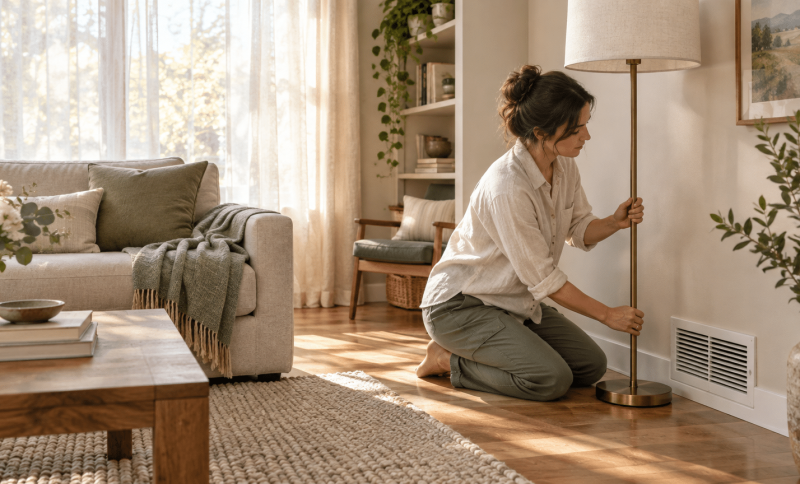
A home does not need a full remodel to feel noticeably better. Temperature, lighting, noise, furniture placement, and storage often have more impact on daily comfort than expensive finishes.
The most useful upgrades are the ones that solve a specific problem. Start with the areas that feel too hot, too dark, too noisy, or difficult to use, then improve those first.
1. Get Temperature and Airflow Under Control
Uneven temperatures are often caused by more than the thermostat.
Blocked vents, dirty filters, leaking ducts, poor insulation, and direct sun exposure can all make one room uncomfortable while the rest of the house feels fine.
Start by checking that supply and return vents are open and not covered by furniture. Replace filters when needed and look for obvious airflow problems.
If the system struggles to maintain the set temperature, cycles constantly, or produces weak airflow, a qualified HVAC contractor can determine whether the issue involves the equipment, ductwork, controls, or routine maintenance.
Air sealing can also make a noticeable difference.
Gaps around doors, windows, attic access points, and utility penetrations allow conditioned air to escape. Weatherstripping and appropriate caulking can reduce those losses.
The U.S. Department of Energy’s home-upgrade guidance also recommends measures such as insulation, air sealing, and duct sealing to improve efficiency and indoor comfort.
Humidity should be checked at the same time.
A room can feel uncomfortable even when the temperature is reasonable if the air is too humid. Bathrooms and kitchens need effective ventilation, while recurring dampness should be investigated for leaks or moisture intrusion rather than covered up with a dehumidifier alone.
2. Improve the Way Rooms Are Lit
Lighting has a major effect on how comfortable a room feels.
One bright ceiling fixture often creates glare while leaving work areas poorly lit.
Use several sources instead.
General lighting provides overall visibility. Task lighting should cover areas where people read, cook, work, or prepare food. Softer accent lighting can make living spaces more relaxed in the evening.
Natural light also deserves attention.
Heavy window coverings, tall furniture, or clutter around windows can make rooms darker than necessary. Rearranging these elements may improve the space without adding another fixture.
In bedrooms, dimmable lighting and better control of outside light can make the room easier to use at different times of day.
3. Reduce Noise Where It Starts
Hard surfaces can make living rooms, kitchens, and open-plan spaces feel louder than expected.
Rugs, curtains, upholstered furniture, and other soft materials help absorb reflected sound.
If the problem is coming from outside, check doors and windows for gaps before considering more expensive upgrades.
Noise between rooms may require a different approach.
A hollow interior door, hard flooring, or poorly isolated mechanical equipment can transmit more sound than the wall itself.
Identify the source before adding acoustic products randomly.
For bedrooms and home offices, even modest noise reduction can make a meaningful difference because those spaces depend more heavily on concentration and rest.
4. Make the Layout Easier to Live With

Furniture placement can make a good-sized room feel smaller than it is.
Look at the routes people actually use.
Doorways, stairs, kitchen work zones, and the space around beds and dining chairs should remain easy to move through.
Watch for Common Layout Problems
- Oversized coffee tables
- Extra chairs that block circulation
- Cabinets placed too close to doors
- Furniture covering vents
- Storage units narrowing walkways
- Dining chairs with too little clearance
Removing one bulky item can improve a room more than adding another organizer.
Storage should also be placed close to where items are used.
Shoes belong near the entry. Cooking tools should be close to food-preparation areas. Blankets and chargers need a defined place near seating.
This reduces clutter without filling the house with more furniture.
5. Use Decor to Add Character, Not Clutter
Personal details make a home feel finished, but they work best when they do not compete for attention.
Artwork, plants, textiles, and lighting can give a room personality without changing its function.
In a game room, home bar, media space, or entertainment area, neon signs can create a focal point and add ambient light.
The key is restraint.
If the room already has bold furniture, patterned walls, or several decorative features, another strong element may make the space feel busy.
Choose one main visual feature and support it with quieter surroundings.
This also makes the room easier to update later because the design is not dependent on several permanent choices.
6. Give Bedrooms Different Priorities
Bedrooms need a different approach from shared living spaces.
Temperature control, light, noise, and movement around the bed usually matter more than decorative upgrades.
Start with the basics.
Make sure vents are clear, curtains or shades provide enough light control, and there is adequate space to move around the bed.
If the room feels crowded, remove furniture that is rarely used.
Nightstands, charging cables, work equipment, and clothing can also create unnecessary visual clutter.
A bedroom should support sleep and everyday routines rather than become overflow storage for the rest of the house.
7. Spend Where the Improvement Will Be Felt
Home upgrades are easier to prioritize when each one has a clear purpose.
If a room feels hot, investigate airflow, insulation, and sun exposure. If it feels cramped, change the layout. If it feels harsh, review lighting and sound.
This prevents money from being spent on finishes that do not solve the real problem.
Smaller changes often have the strongest effect because they improve how the house works every day.
A home feels more comfortable when temperature, lighting, noise, movement, and storage are working together. Once those basics are right, decorative improvements become much easier to choose.


