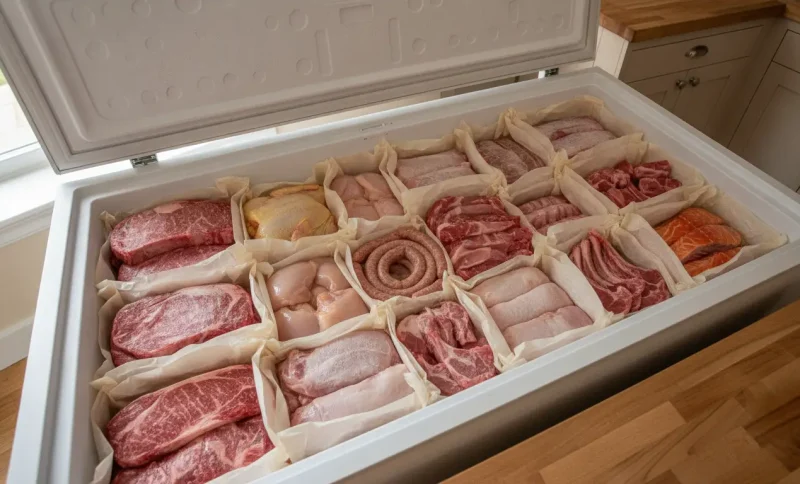
In your house, does grilling season hand off to slow cooking? As the days get shorter, the same cuts that spent the peak of summer on the grill start earning their keep in a Dutch oven, a slow cooker, or a stockpot simmering on the back burner.
A well-stocked freezer eases the transition to long, low cooking, provided it’s filled with the right pastured proteins. Building this mix is the same year-round: a little of everything, intentionally bought, in cuts suited for grilling or braising.
This balance is worth building across five proteins at once, grass fed and finished beef, corn and soy free chicken, pastured pork and lamb, and sustainable seafood, starting with grass fed beef.
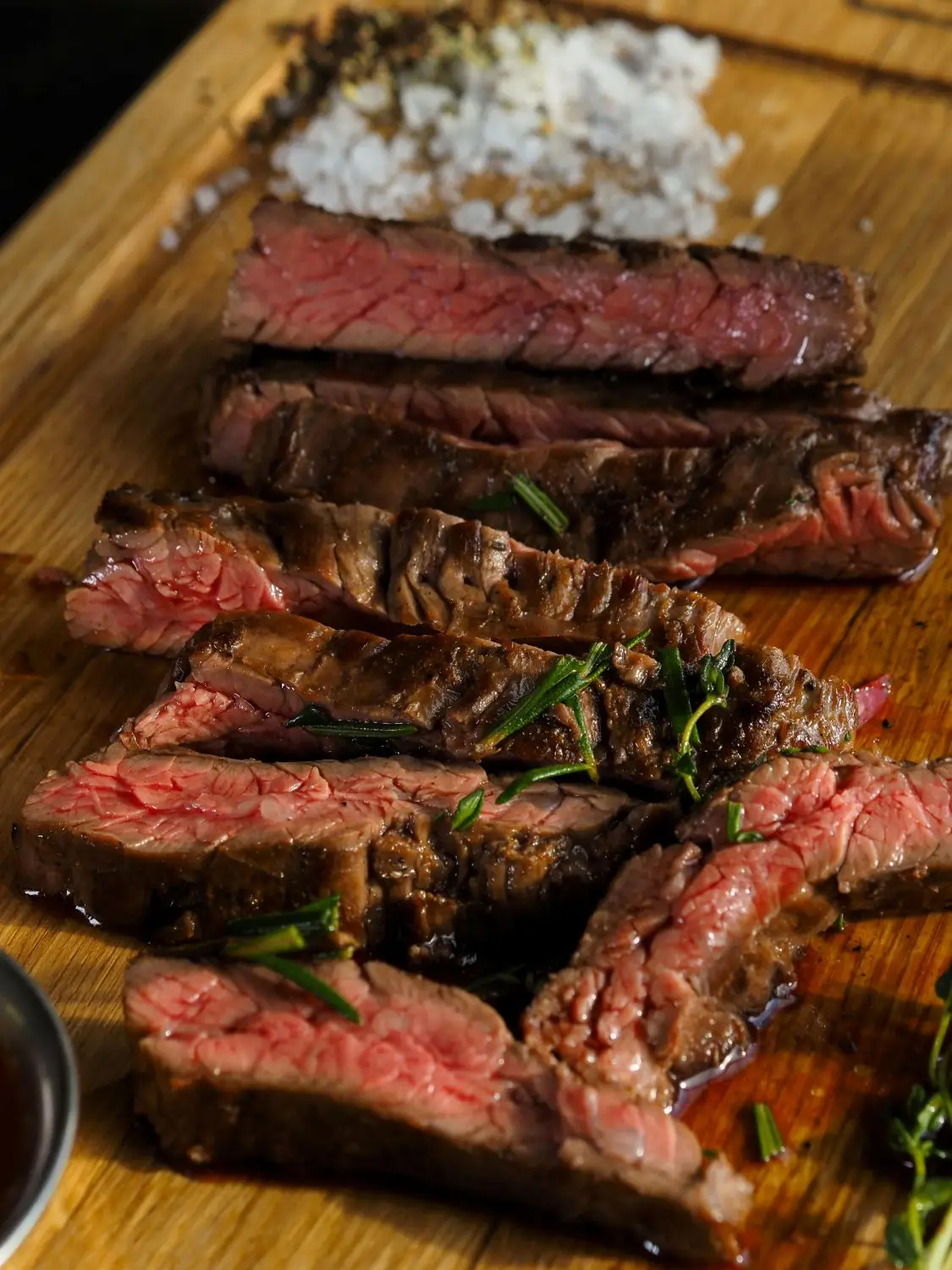
Grass Fed and Finished Beef Anchors the Freezer
Grass fed and finished beef holds up best to a mixed freezer-stocking strategy because it spans both seasons so well. Ground beef and a couple of quick-seared steaks cover the last grilling nights of the year, while a chuck roast, short ribs, or beef shanks earn their keep once slow-cooking season sets in.
Buying grass fed beef in a bulk mix of cuts, rather than one package at a time, is often the easiest way to build variety without overspending.
It’s also worth keeping grass fed beef tallow on hand, since it’s a shelf-stable fat that works for searing or roasting vegetables or finishing a pan sauce long after your meats are gone.
Buying grass fed beef online directly, rather than picking through whatever a grocery case has that week, usually means a wider range of cuts arrives at once, making it easier to stock for both grilling and braising in a single order.
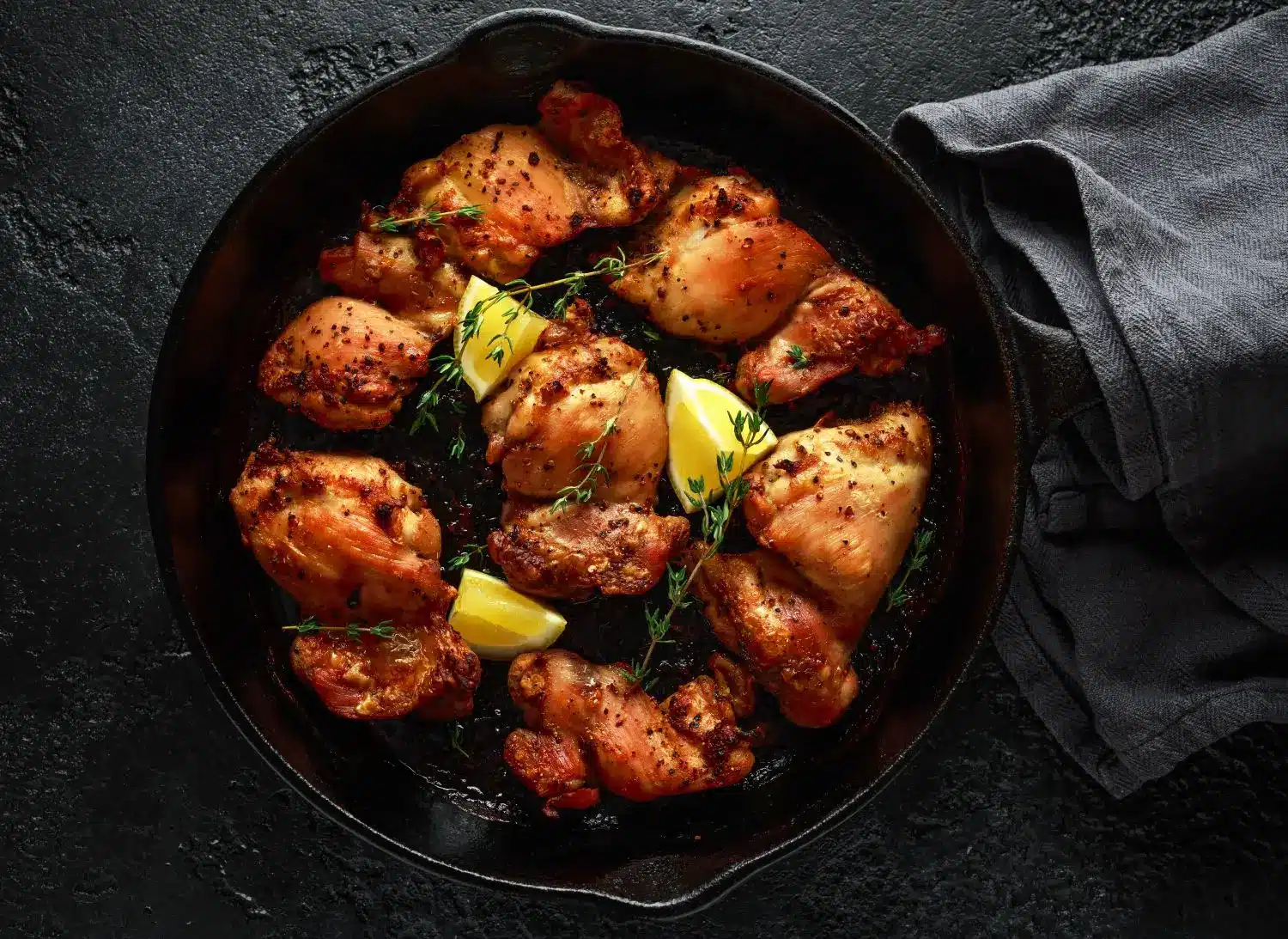
Corn and Soy Free Chicken Covers Weeknights
Corn and soy free chicken is the workhorse that fills the gaps between bigger cooks. A few packs of pasture raised chicken thighs or breasts cover fast weeknight dinners, while a couple of whole birds are worth keeping around for a Sunday roast or a pot of broth once the weather turns.
This is because pastured chicken tends to cook a little differently than conventionally raised chicken, since its fat and moisture content reflect a more varied diet, so it’s worth keeping in stock no matter the season or recipe.
Pastured Pork Fills the Quiet Middle of the Freezer
Pastured pork rarely gets top billing, but it’s often the most versatile protein in the freezer. Ground pork, sausage links, and bratwurst work into a weeknight pasta or a breakfast just as easily as they do a summer cookout, while ready-to-eat pulled pork is built for easy dinners once the weather cools.
Bacon and other cured cuts round things out, since they store well for months and add flavor to everything from a pot of beans to a simple weeknight vegetable side.
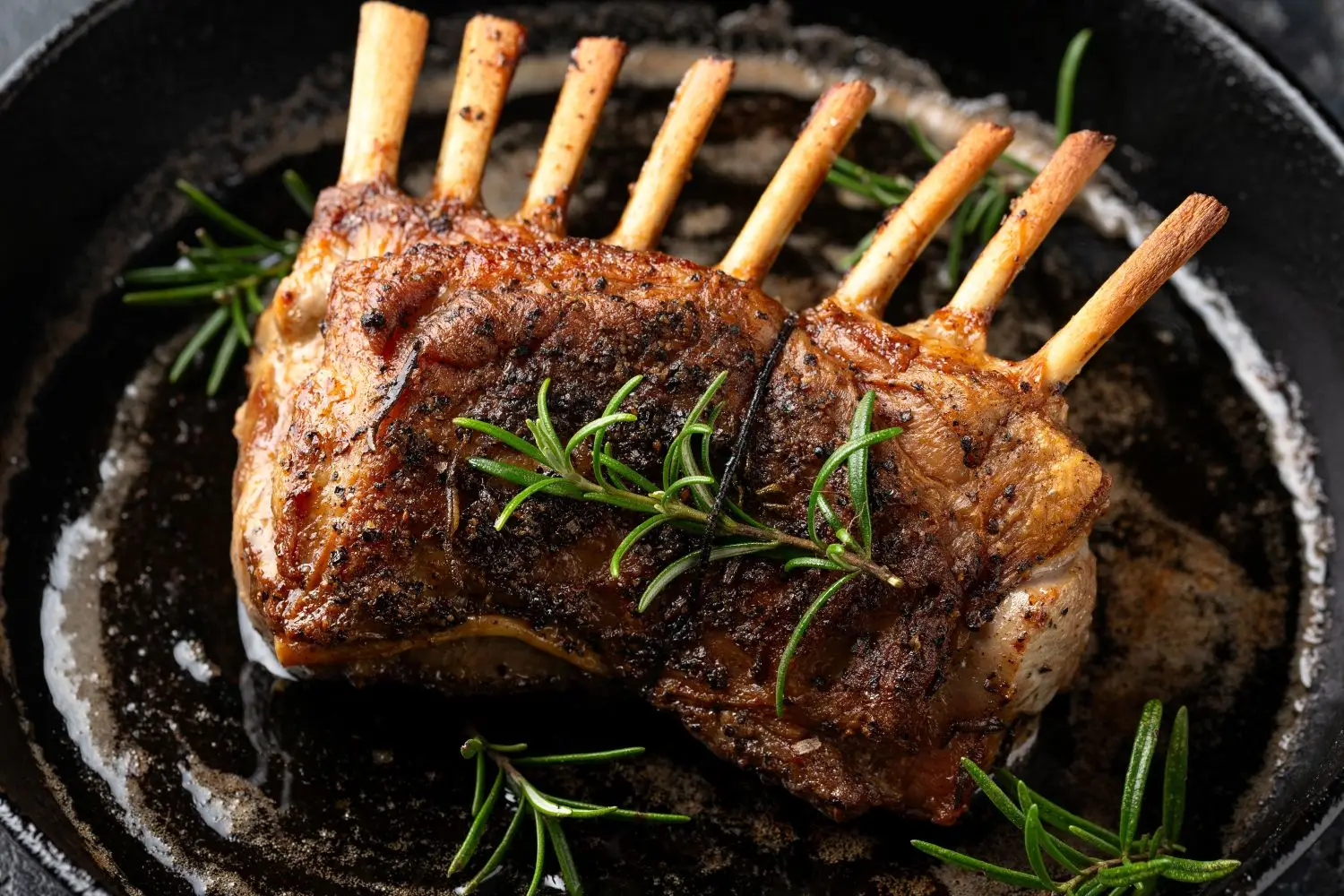
Pasture Raised Lamb Adds Variety Without Extra Effort
Pasture raised lamb is worth a small, dedicated corner of the freezer rather than a single occasional purchase. Ground lamb swaps easily into any recipe built for ground beef, which makes it a low-risk way to add variety without learning a new dish.
Loin chops handle a quick sear the same way a steak does, and a rack of lamb holds its own during summer grilling or fall Dutch oven braising.
Wild Caught Seafood Rounds Out a Balanced Stock
Line-caught and wild-caught seafood are the easiest proteins to underbuy, since they’re often treated as special-occasion purchases rather than freezer staples.
A firm white fish like halibut and a fattier option like salmon cover most weeknight needs between them, one for a quick sear or bake, the other for richer dishes that hold up to bolder seasoning.
How to Freeze and Balance Pasture and Sustainably Raised Proteins
Whether it’s a cut of grass fed and finished beef or wild-caught fish, keeping your freezer organized makes busy mealtimes that much more streamlined. Consider portioning it into meal-sized packages before it goes into the freezer, rather than thawing a large block and refreezing the unused portion.
The proportions matter as much as the proteins themselves. A freezer that’s three-quarters ground beef and one lonely chicken breast isn’t really stocked; it’s just full.
Balancing a few quick cooking cuts against a few that reward a slow braise is what keeps a week of dinners from feeling repetitive, no matter which protein happens to be thawing on a given night.
A quick reference makes the stocking math easier:
|
Protein |
Best Stocking Cuts |
Approx. Freezer Life |
Best Thaw Method |
|
Beef |
Ground beef, steaks, chuck roast, stew meat |
6 to 12 months |
Refrigerator, 24 hours |
|
Chicken |
Thighs, breasts, whole bird |
9 months |
Refrigerator, 24 hours |
|
Pork |
Ground pork, sausage, shoulder cut |
4 to 6 months |
Refrigerator, 24 hours |
|
Lamb |
Ground lamb, chops, rib rack |
6 to 9 months |
Refrigerator, 24 hours |
|
Seafood |
Fillets, portioned steaks |
3 to 6 months |
Refrigerator, same day |
For families going through more than a few pounds of grass fed meats a month, a direct beef share is worth considering as a freezer-stocking strategy of its own.
Rather than picking cuts one at a time, a quarter, half, or whole beef share arrives all at once, a mix of steaks, roasts, ground beef, and extras from a single animal, usually priced per pound across the whole share instead of per cut.
That balance mirrors exactly what a mixed stocking strategy is already built around, just delivered in one large batch instead of built up meal by meal over several months.
Commonly Asked Questions About Freezing Proteins
A few practical questions tend to come up once your freezer’s actually stocked. Here’s what’s worth knowing before it’s full.
1. How Long Can Meat Safely Stay in a Freezer?
Most cuts hold peak quality for several months to about a year, depending on the protein, though food stored at a consistent 0°F stays safe to eat indefinitely. It’s really quality, not safety, that fades over time.
2. How Much Freezer Space Does a Family Actually Need?
A general rule of thumb is about one cubic foot of freezer space per person, though that number climbs quickly for anyone buying in bulk or splitting a larger meat share with another household.
3. What’s the Safest Way to Thaw Frozen Meat?
The refrigerator is the safest method for nearly everything, usually taking about 24 hours for smaller cuts and up to two full days for a whole chicken or a larger roast. Cold water thawing works in a pinch, but meat should never sit out on a counter to thaw.
4. Is It Safe to Refreeze Meat After Thawing It?
Yes, as long as it was thawed in the refrigerator and not left out at room temperature. Quality may dip slightly on a second freeze, but it stays safe to eat.
A well-stocked freezer isn’t really about one big shopping trip; it’s a rotation: a little bit of everything, from grass fed beef to corn and soy free chicken, replaced as it’s used, so grilling season and braising season never actually run out of options.
About Primal Pastures
Primal Pastures believes food should care for you, not just fill you up. What started as 50 backyard chickens in Southern California has grown into a partnership with regenerative farms countrywide, dedicated to honoring the land, the animal, and your kitchen table. Every beef, chicken, pork, and lamb product is born, raised, and harvested in the USA and shipped straight to your door, backed by lab-tested nutrition and thousands of five-star reviews for the cleanest meat you can eat.
Explore Primal Pastures’ lineup of grass fed beef and other pastured proteins at https://primalpastures.com/