


Bay leaf oil has a long history of traditional use for aches and other physical discomforts. The oil comes from bay laurel, or Laurus nobilis, an aromatic plant used in cooking, cosmetics, and traditional remedies.
Its potential soothing and anti-inflammatory properties have attracted interest, but evidence for using bay leaf oil specifically to treat human pain remains limited. It is better considered a complementary option for temporary comfort than a replacement for proven pain treatments.
Bay Leaf Oil for Pain: What May Make It Useful?
Bay leaf oil’s chemical composition, including 1,8-cineole, eugenol, and linalool, varies by environment and extraction, altering its aroma and properties.
Although traditionally used for joint and muscle discomfort, research on Laurus nobilis‘s anti-inflammatory and analgesic effects is limited to lab or animal models, lacking clinical verification.
Topical essential oils generally have stronger evidence for musculoskeletal pain support than bay leaf oil specifically, though that research is still limited by small trials and quality concerns.
How to Use Bay Leaf Oil for Pain
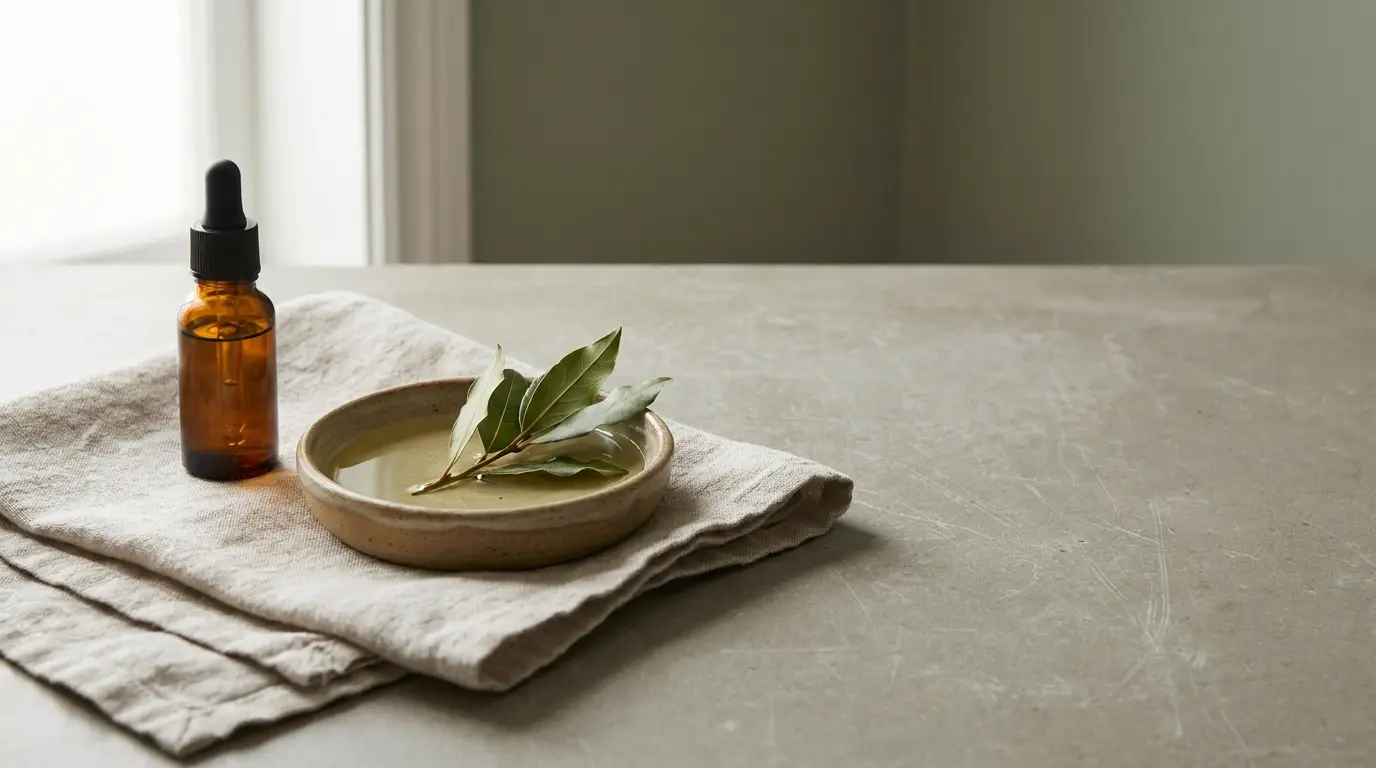
Bay leaf oil is generally used topically when incorporated into massage or other personal-care routines. Essential oils are concentrated, so they should not be applied to the skin without following the dilution instructions for the specific product. If you’re exploring botanical options for a topical routine, you can browse Wholesale Botanics’ essential oil collection for available oils.
Dilute Before Applying
Use the recommended dilution rather than applying concentrated oil directly to the skin. A carrier oil can help distribute the essential oil and reduce the risk of irritation. The exact dilution should come from the product instructions because essential oils can differ in concentration and composition.
Massage Into the Affected Area
A diluted preparation can be gently massaged into areas of everyday muscle soreness or stiffness. The massage itself may also contribute to a feeling of comfort and relaxation. Avoid vigorous massage over injuries, swollen areas, broken skin, or places where the cause of pain is unknown.
Start With a Small Area
Patch testing is a sensible precaution before using bay leaf oil more broadly. Apply the diluted preparation to a small area and watch for redness, itching, burning, or other irritation. Stop using it if a reaction develops.
What Types of Pain Might Bay Leaf Oil Be Used For?
Bay leaf oil is more appropriate to discuss in terms of temporary comfort than treatment of a specific medical condition.
People may consider a diluted preparation as part of a massage routine for occasional muscle soreness, stiffness, or minor everyday aches. It should not be presented as a treatment for arthritis, nerve pain, injuries, or other underlying conditions.
If pain keeps returning, the more useful question is usually what is causing it. An essential oil may provide a soothing part of a routine without addressing that underlying cause.
Bay Leaf Oil for Pain: How Long Does It Take to Work?
There is no well-established timeline for bay leaf oil to relieve pain. Any immediate feeling of comfort may come from the massage, the aroma, the warmth of rubbing the area, or other effects of the routine, rather than from a proven pain-relieving action of the oil itself.
If there is no improvement, increasing the amount of oil is not a good solution. Persistent pain deserves a closer look at the underlying cause.
Is Bay Leaf Oil Safe to Use on the Skin?
Bay leaf oil should be treated as a concentrated essential oil rather than a harmless household ingredient. Allergic contact dermatitis has been reported following topical exposure to Laurus nobilis oil, and laurel oil has also been identified as a potential skin and eye irritant. Also, do not ingest bay leaf essential oil unless a qualified professional has specifically advised you to do so.
Use it only as directed, keep it away from the eyes and broken skin, and avoid using it if you already know you react to bay laurel or related botanical products. A patch test can help identify irritation before broader application.
Bay Leaf Oil for Pain: Is It Worth Trying?
Bay leaf oil may have a place in a topical massage routine when the goal is temporary comfort from everyday soreness or stiffness. Its traditional use and early research make it an interesting botanical option, but the evidence does not support treating it as a proven pain medication.
If you choose to try it, keep the application simple and cautious. Dilute it properly, test a small area first, and stop if your skin reacts. For pain that persists, worsens, or has no clear cause, finding and addressing the underlying problem matters more than finding a stronger oil.


