

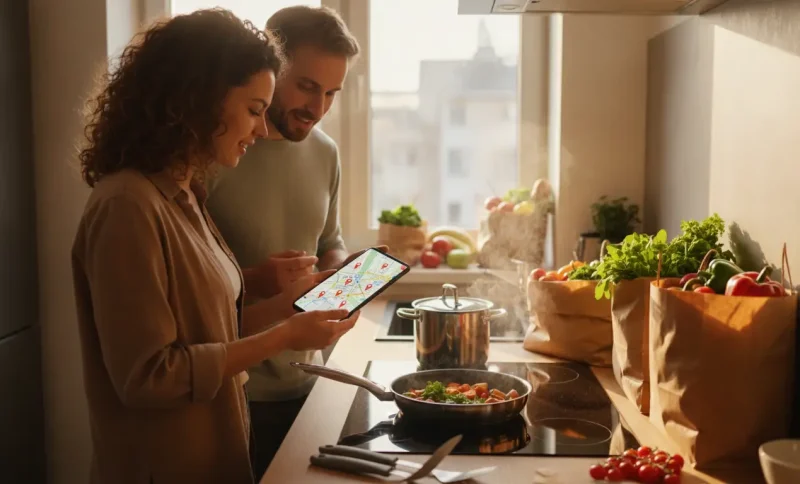
A rental kitchen once meant a scratched pan, two mugs, and a guess at how the stove worked. Now guests arrive with saved maps, shared shopping lists, translation apps, and short videos of a grandmother folding dumplings three blocks away. They still open cabinets. They also open phones. The meal begins before anyone touches the fridge, because search results, host messages, and food reels shape what lands on the counter. A family in Lisbon may buy tinned sardines after seeing a TikTok filmed at Mercado da Ribeira. A solo guest in Osaka may scan miso labels with Google Lens. Some still ask basic trust questions before booking, even typing «is airbnb legit?» while comparing reviews, fees, and kitchen photos. Those clicks affect dinner later. A clearer listing with a rice cooker, sharp knife, and nearby greengrocer gives travelers permission to cook like temporary residents, not hotel guests with leftovers.
The Phone Becomes the Pantry
The first shop used to happen after a tired walk around the block. Now it starts on the sofa, with a guest checking supermarket hours, pinning bakeries, and reading comments about which stall sells the best herbs. Small screens reduce waste. A couple staying four nights in Copenhagen can plan two breakfasts, one pasta night, and one open-faced sandwich experiment instead of buying six random sauces.
Details matter.
Guests look for basics in listing photos: salt, oil, a kettle, an oven tray, a chopping board that is not warped. Hosts who show those items clearly change behavior. If the photo shows only marble counters, visitors expect decoration. If it shows a moka pot beside coffee from a nearby roaster, someone will use it before 8 a.m.
Digital habits also create little food rituals. A group chat picks tonight’s recipe. One person saves a fishmonger. Another checks whether the induction hob needs a special pan. Dinner gets planned in ten tabs, then cooked in one small room.
Maps Turn Errands Into Tastings
A saved map changes a grocery run. Instead of wandering past the nearest chain store, travelers mark a bakery, a spice shop, and a produce stand near the apartment. Then the walk has a point. In Barcelona, a guest may compare Boqueria prices with a neighborhood market in Gràcia and choose the less theatrical tomatoes.
Good call.
Reviews shape trust at counter level. Star ratings tell part of the story, but comments reveal the useful bits: cash only, closed after lunch, English menu hidden, best mozzarella gone by noon. Travelers read those details while standing outside with tote bags.
This habit helps smaller food shops meet short-stay guests without paying for glossy ads. A butcher with fifty Google reviews and clear opening hours gets found. So does the corner store that sells eggs in packs of six. For a rental kitchen, six eggs beat a restaurant list with thirty places and no plan for breakfast.
Hosts Are Quietly Teaching Recipes
The best host guidebooks have moved past Wi-Fi codes and bin rules. Some now include a pasta shape chart, a note about Sunday closures, or a QR code for the farmer who delivers vegetables on Fridays. It feels small. It changes the first dinner.
Guests trust local tips when they are specific. Buy cheese at Latteria Giacobbe before 11 beats try local cheese. A photo of the exact olive oil in the cupboard prevents another half-used bottle from appearing next to the sink. Clear notes also prevent damage, such as warnings about cast-iron pans, espresso makers, or ovens with symbols rubbed off.
Short video helps.
A thirty-second clip showing how to light a gas hob saves messages at 9 p.m. Another clip showing the market entrance near the tram stop removes guesswork. The kitchen becomes less strange, and the guest’s meal feels tied to the street outside.
Appliances Are Getting More Social
Rental appliances used to be silent surprises. Now they show up in chats, reviews, and photos before arrival. Guests ask whether the blender works, whether the freezer has space for ice, or whether the oven temperature runs hot.
Fair questions.
A broken toaster can ruin breakfast faster than a bad view.
Cooking apps push this along. Travelers search for one-pan meals that fit a rental setup, then adapt them to whatever is available. A Dutch oven becomes a rice pot. A wine bottle stands in for a rolling pin. Nobody needs a perfect kitchen, but they need honest signals.
Social posts make equipment visible too. A guest who films shakshuka in a tiny Athens flat shows the pan, the burner size, and the window ledge full of basil. Future renters notice. Hosts notice as well, then add the missing spatula or replace the knife that bends under a tomato.
The result is practical pressure. Kitchens photographed as real workspaces get used as real workspaces.
Local Food Discovery Starts Indoors
A kitchen changes the way travelers read a city. Restaurant meals still matter, but cooking creates slower attention. Guests learn the price of peaches in August, the smell of a fish shop at 7 a.m., and the small embarrassment of buying the wrong flour. Those moments stick.
They are ordinary, which is the point.
Digital tools do not erase chance. They aim it. A map pin leads to a bakery, but the queue reveals what neighbors order. A translation app explains the label, but the shopkeeper still points to the better beans. The phone starts the search; the kitchen finishes it with steam on the window.
Travel brands and hosts should treat the rental kitchen as part of local food culture, not just an amenity box. Show the pan size. Name the market day. Mention the closest place for lemons, coffee filters, and dish soap. Then travelers can arrive hungry, open one saved map, and cook the first thing that makes sense. A simple photo of stocked shelves beats another sunset shot, especially for guests landing after shops close on Sundays too.


