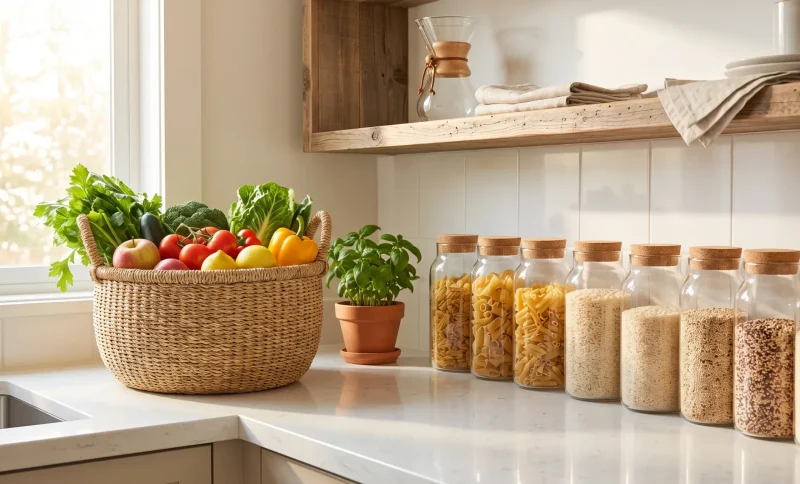
While running a household, many people make many different decisions every single day. They decide what meals to have, create and use a grocery list, pick recipes, and track their expenses. All of these aspects of managing a household connect to food and the kitchen and, in many ways, shape a household’s schedule and how it shops.
While organizing a home is primarily about establishing and following a routine, it can also mean developing a household budget and making the best use of available funds and supplies. This is especially true when food is the greatest household expense. Knowing what meals will be served can help individuals set budgets and make a smart grocery list.
Understanding how your food costs, daily purchases, and other household expenses interact can help you make decisions to create the home life you want. It does not have to be perfect—just organized enough to be functional.
Why Meal Planning and Budgeting Often Go Together
The connection between meal planning and home budgeting is often food. With a general idea of the meals you plan to serve, you can create a more focused grocery list, reduce impulse purchases, and use up what you already have at home.
Similarly, planning several meals with similar ingredients can reduce waste from expired foods and also make sure that purchased foods are used multiple times instead of once and then thrown away. In addition to making smart grocery purchases, it is also very important to check the pantry before you go to the store, make meals that can be left over for several days, and plan your meals around the foods that you already have.
This running total, however, of how you spend your money at home and elsewhere, eventually serves a greater purpose than tracking how much you spend on food. It helps you understand your spending habits and the trade-offs you make to accomplish your goals and priorities at home and at work.
Additionally, technology is playing a larger role in many aspects of organizing a household. Someone looking for more information about their finances can use an AI financial advisor to organize information, find patterns, and provide insights to help manage their personal finances better.
Daily Routine for Managing Your Home

There is no right or wrong approach to grocery shopping, and there are as many different ways to plan meals and shop for ingredients as there are different households to supply. Many people find the best way to plan meals and manage the kitchen and shops is to use a system that fits their existing routine and way of life.
For many households, meal planning and creating a list of meals to make throughout the week starts with what they already have in their pantry. Starting with familiar meals can create a strong foundation for a home planning routine. Later, you can start looking for additional recipes.
Thinking about how often you will need to shop for additional food and fresh ingredients will also help you organize meals around your current routine. Weekly shopping works for some families, but others prefer multiple smaller trips to the grocery store throughout the week.
Small Changes Can Make Household Management Easier
Creating household management systems is a process of degrees, and you don’t need to totally rethink your approach to home life to make improvements. For many, improved household organization comes about as a result of small changes implemented over time, with the biggest change often being to develop and continue to make use of a variety of different ‘Daily Routines’ and corresponding ‘Systems—such as always keeping a constantly updated Running Grocery List of the items you require to buy and need to restock from the store, and organizing your store-bought and homemade ingredients within your kitchen by category.
Finally, organization enables leisure time. The more efficiently you manage your tasks, the more time you have for the fun parts of your home life.
Building a More Balanced Approach to Everyday Decisions
While you can turn household management into an inflexible system of strict rules, running a home effectively is mainly about having enough flexibility. To manage a household effectively, it’s also important to use simple, creative methods for daily routine tasks.
Using your kitchen in the best way possible, and the rest of the household too, is about ensuring that you make the most of your resources and try to make things as easy as possible for yourself. This means organizing your time as much as your physical space and setting up systems to deal with different daily tasks and events. It is also about leaving room for the things that you enjoy and that make your home life better.
You don’t need to make every household decision perfectly. Creating a system that works best for your household and making the best decision possible for your situation are key to effective household management.