

A watch-party menu fails when the host is still draining a pan as the teams kick off. Build the food around two serving windows instead: a first round before kick-off, then a prepared refill at halftime. Prepare enough in advance that neither serving window requires much time in the kitchen.
For an adult gathering, decide whether you are serving dinner or snacks. Guests arriving hungry need something more substantial than a bowl of crisps. That choice should determine the shopping list before choosing dips and sauces.
Three jobs for the menu
Choose a filling main item, something crisp or fresh, and a dip that suits the rest. Small chicken wraps with shredded cabbage, cut vegetables and a bean dip make one possible combination. The arrangement gives guests different textures without asking the host to finish several hot dishes simultaneously.
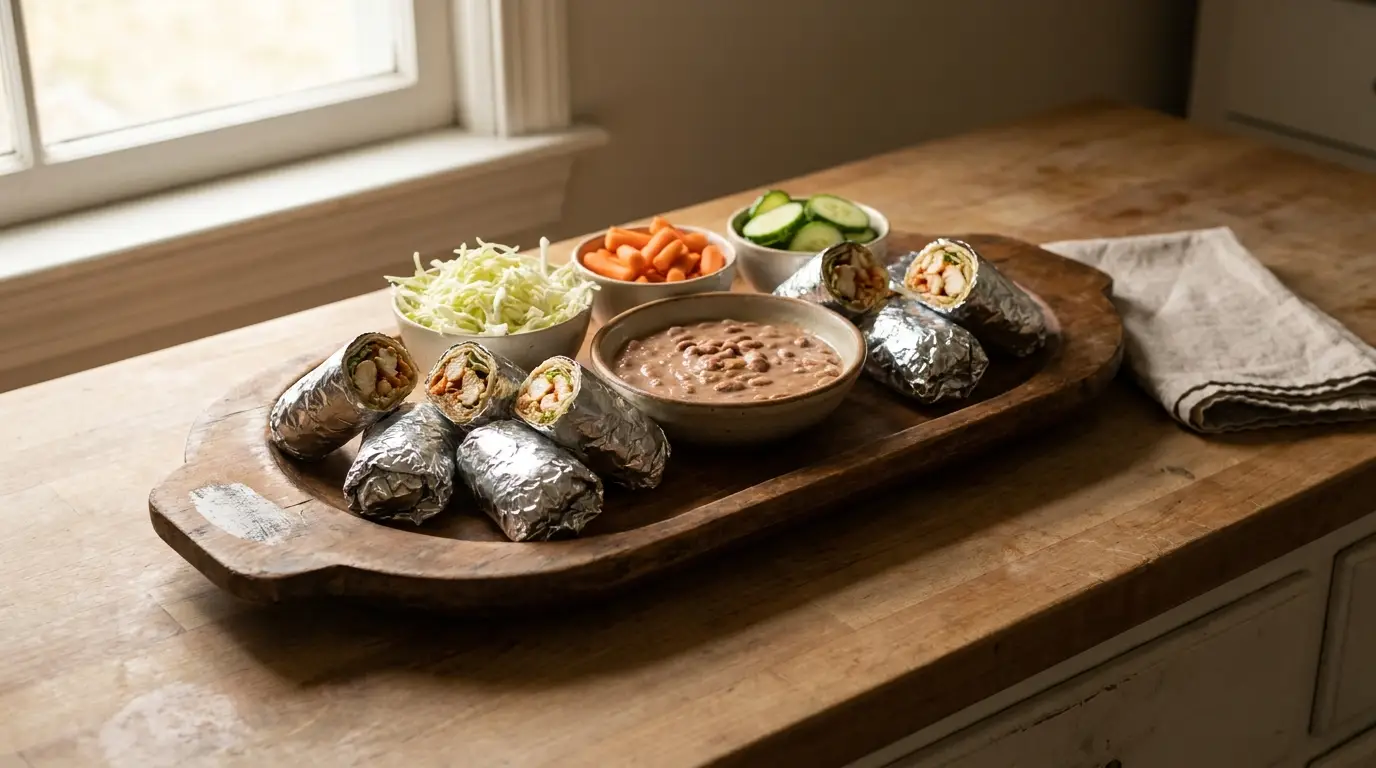
Keep wet fillings and sauces separate until assembly. A wrap that holds together when carried to the sofa is more useful than one overloaded for a photograph. Portion the filling modestly and leave an easy route back for seconds.
Check guests’ dietary needs before shopping, then read ingredient labels rather than guessing from a dish’s name. Tortillas, dressings and prepared dips can contain ingredients a visitor needs to avoid. Keep separate serving utensils with any dish prepared for a guest with a dietary restriction.
Move the work out of the first half
The day before, prepare suitable fillings and dips, label their containers and leave room in the fridge. Divide cooked food into shallow containers and refrigerate promptly instead of leaving a large batch on the counter. Keep raw poultry and its equipment separate from ingredients that will be eaten without further cooking.
On match day, set out plates, napkins and serving tools before starting the final cooking. Cook chicken to 165°F / 74°C, measured in the thickest part with a food thermometer; leftovers being reheated also need to reach that temperature. Do not infer doneness from colour or the appearance of the sauce.
Leave one part of the table free of food. Someone will need to put down a handset, read a message or look at a lineup without balancing the screen above a dip. A guest checking MelBet Zambia during the pre-match conversation should have room to read the fixture, market, odds, stake and account details without passing the phone over the serving dishes. Guests can use the clear space while keeping account activity on their own screens.
Small platters have a practical advantage
Bring out a modest first batch and keep the reserve under suitable temperature control. The FDA advises keeping cold buffet food at 40°F or below, roughly 4°C, and hot food at 140°F / 60°C or above. Check the food temperature rather than assuming a warming tray is hot enough.
Perishable food left without safe hot or cold holding should be discarded after more than two hours at room temperature. In conditions above 90°F, about 32°C, that window falls to one hour. Time outside safe temperature control is cumulative; the clock does not begin again when the teams return for the second half.
Replace a nearly empty platter with a clean, freshly filled one. Adding new food on top of an old batch makes it harder to track how long each batch has been out. A small label showing when a perishable dish came out is more useful than debating its age during stoppage time.
Halftime should need assembly, not cooking
Halftime gives guests a chance to check their phones while food is replenished. A result in another match or a conversation about a substitution can bring several phones out at once. Anyone opening Melbet should keep the account screen and any betting confirmation on their own handset while the serving area stays available to everyone. A stable place beside the plate beats trying to handle a phone and a dripping wrap together.
Keep the next serving round close to ready. Bring out the chilled reserve or food already held safely hot, replace utensils as needed and clear used plates. Plan around the actual halftime whistle, since stoppage time makes a fixed wall-clock schedule unreliable.
Keep the refill sequence short:
- Clear empty dishes and check how long perishables have been out.
- Replace food in clean serving dishes, keeping reserves hot or cold.
- Put sauces and utensils where guests can reach them without blocking the screen.
- Return to the room before play restarts rather than starting another recipe.
Store leftovers before the post-match debate
Divide any leftovers you plan to keep into shallow containers and refrigerate promptly, within the safe time limits. Discard food that has exceeded those limits rather than chilling it for another day. Label each container with the date and contents so guests can identify what was stored.
For guests taking food away, pack only portions still within the time limits and explain how long they have been out of temperature control. Transport chilled portions in a cooler with ice packs, then refrigerate them promptly at the destination.