


How a Caterer Plans a Party Menu: The Basics
- Caterers like My Catering Group plan from the guest list and the clock first, then choose recipes that fit both.
- One showpiece dish surrounded by a few simple supporting plates is easier to cook and more memorable to eat.
- A make-ahead schedule that runs backward from the moment guests arrive keeps the final hour calm.
- Perishable food should sit out for no more than two hours, or one hour when it’s above 90°F.
Planning a party menu is the part of hosting that quietly decides how the whole evening goes. Whether it’s a milestone birthday, a graduation or a holiday open house, the menu has to feed a crowd, fit one home kitchen and still leave the host free to enjoy the night.
That is why caterers plan menus the way they do. They take the guesswork out by starting with the guest list and the clock, choosing one dish worth remembering and working the cooking backward from the moment guests arrive, so the final hour is calm and the food is at its best when it reaches the table.
Here is how to plan a party menu like a caterer, adapted for a home kitchen with one oven, one fridge and one host who would like to enjoy the party too.
Start With the Guest List
Before you open a cookbook, settle two facts: how many people are coming and whether they will be seated or standing. Those details decide the menu more than any craving does, because a standing crowd needs food that can be eaten with one hand while a seated dinner can handle a knife and fork.
Add a simple dietary question to your invitation or RSVP while you’re at it. Knowing in advance that two guests are vegetarian and one avoids gluten lets you design a menu that includes them, which is much easier than improvising on the night.
Then Set the Clock
Consider when the food will be served, because the time of day changes portions. A mid-afternoon gathering where people have already eaten lunch needs less than an evening party where the food replaces dinner, so plan heartier dishes and a few extra portions when the party runs through a mealtime.
Build the Menu Around One Showpiece
Caterers rarely put ten complicated dishes on a table. They choose one dish that guests will remember, such as a slow-roasted pork shoulder, a big tray of baked pasta or a whole side of salmon. Then they surround it with a few supporting plates that are simple to make and easy to serve.
Balance the menu by temperature as well as flavor. A mix of hot, cold and room-temperature dishes keeps your oven from becoming a bottleneck, and room-temperature dishes like grain salads, roasted vegetables and good bread are forgiving when guests arrive at different times.
Choose dishes that hold their quality for an hour or two. Braises, roasts that slice well, sturdy salads and baked desserts all wait patiently, while delicate fried foods and anything that wilts quickly are best saved for smaller dinners.
Plan the Cooking Backward From the Doorbell
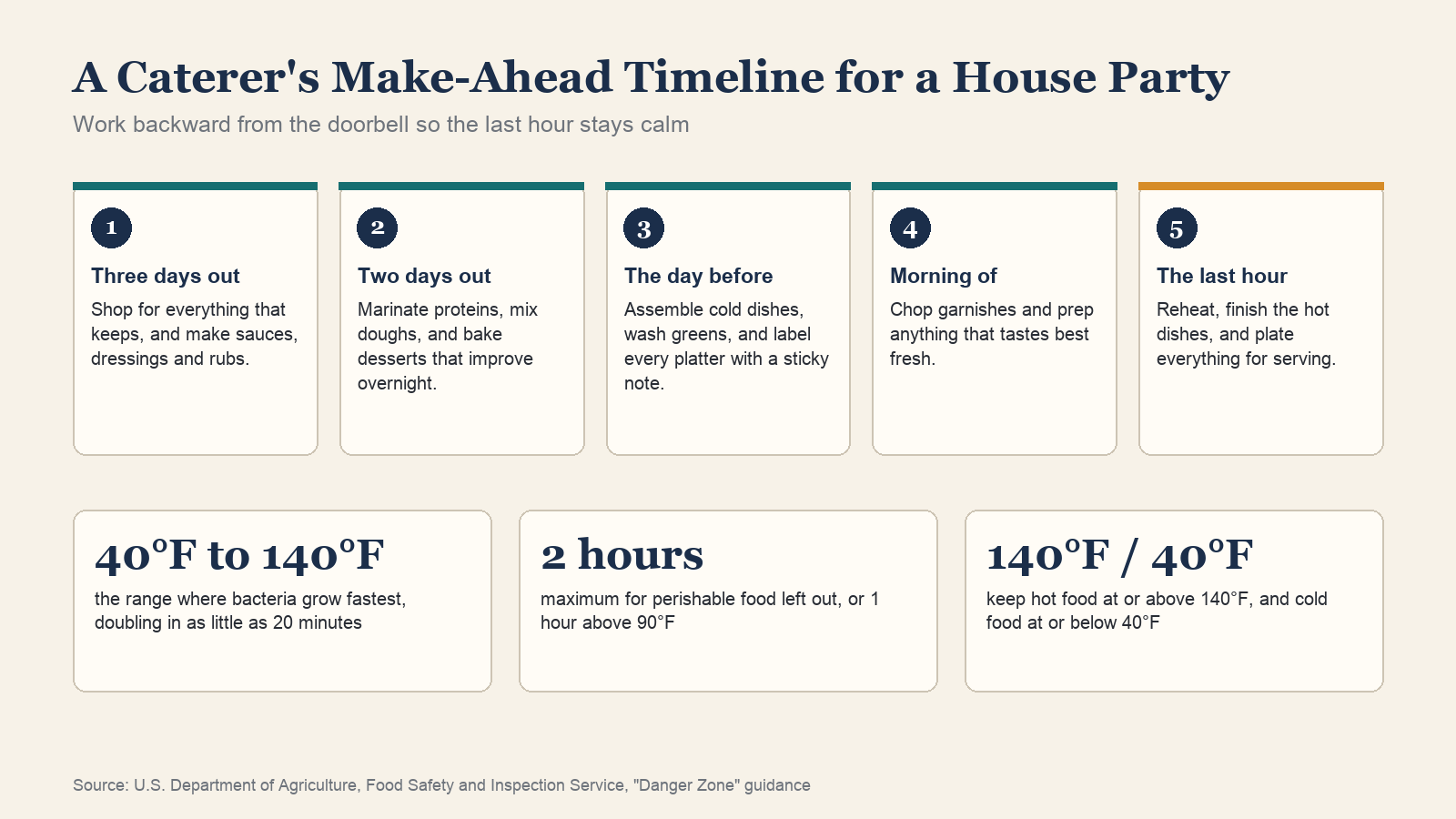
The biggest caterer habit worth borrowing is the production schedule. Start with the time guests arrive and work backward, assigning every task to a day so that very little is left for the final hour.
- Three days out: Shop for everything that keeps, then make sauces, dressings and spice rubs.
- Two days out: Marinate proteins, mix doughs and bake any dessert that improves overnight.
- The day before: Assemble cold dishes, wash and dry greens, and set out every platter and serving spoon, with a sticky note on each naming the dish it will hold.
- The morning of the party: Chop garnishes and prepare anything that tastes best fresh.
- The last hour: Only reheating, finishing hot dishes and plating are left, which is how caterers keep a kitchen calm while guests are walking in.
Keep the Buffet Safe and Fresh
A buffet that stays out all evening needs a plan for temperature. The USDA’s food safety guidance explains that bacteria grow fastest between 40°F and 140°F, doubling in as little as 20 minutes. It recommends never leaving perishable food out for more than two hours, or one hour when the temperature is above 90°F.
Hot food should stay at 140°F or above, which chafing dishes, warming trays and slow cookers handle well. Cold food should stay at 40°F or below, and nesting serving bowls in a larger bowl of ice keeps salads, seafood and dips properly chilled on a warm afternoon.
Caterers also refresh platters instead of putting everything out at once. Set out smaller portions, keep the rest in the fridge or a low oven, and swap in a fresh platter as each one empties, so the table always looks full and the food stays at a safe temperature.
Make Dietary Needs Feel Effortless
Guests with food allergies or restrictions appreciate being able to eat from the same table as everyone else. Build one or two dishes that are naturally free of common allergens, such as a roasted vegetable platter or a rice dish, and they’ll feel included without anyone needing to mention it.
Label every dish with a small card, and give each one its own serving utensil so ingredients don’t travel from platter to platter. If a guest has a serious allergy, set a portion aside for them before the buffet opens, which is a simple step that caterers take as a matter of routine.
Finish Food at the Last Minute
Professional caterers cook as close to serving time as they can, because texture and temperature are at their best in the first few minutes after a dish is finished. At My Catering Group, food is cooked and plated on site at each event instead of being delivered ready-made. The Ottawa-Gatineau company was founded in 2012 by chef Derick Cotnam, has catered events for more than 3,000 guests, and works from à la carte or custom menus with its own in-house bar team, a food truck and a bar truck.
You can apply the same idea at home on a smaller scale. Prepare components in advance, then do the final sear, toss or drizzle right before serving, and save fresh herbs, a squeeze of lemon and crunchy toppings for the very last moment.
When a Caterer Is Worth Calling
Some celebrations are big enough that hiring help is the kindest gift you can give yourself. For a milestone birthday, an anniversary or a graduation party with a long guest list, a caterer lets you spend the evening with your guests rather than at the stove.
Many caterers offer both set menus and custom ones built around your favorite dishes, which gives you a professional meal that still feels personal. Either way, the planning ideas above make you a better host, because a menu built around your guests and one great showpiece is the kind of meal people remember.