


What you need to know about filet mignon:
- Go thick-cut.
- Get a good sear.
- Butter bastes to add richness and flavor.
- Serve with a sauce and steakhouse-style sides.
If you’ve ever dreamed of serving up filet mignon like they do at a steakhouse, this recipe will show you how.
Steakhouse filet mignon, done right, isn’t super complicated. It’s a simple, tender steak that’s seared hard to develop a crust and flavor and then cooked with butter and aromatic herbs for richness. Paired with a few steakhouse-style sides and a sauce or two, it’s fancy enough to feel special.
Choose a Thick Filet for an Even Sear
Filet steak is one of the more tender cuts of beef, and it’s on the lean side with a delicate, buttery flavor. This means you need to treat it a little bit differently than other steaks. It benefits from finishing with butter to add richness and from not being buried under too-strong flavors.
Filet steak should be at least 1½ inches thick. Many butchers and online shops sell filet mignon steaks already portioned at this thickness, so you won’t have to cut your own. The thicker the cut, the easier it will be to get a nice sear on the outside without overcooking the inside.
Sear the Steak and Finish with Butter
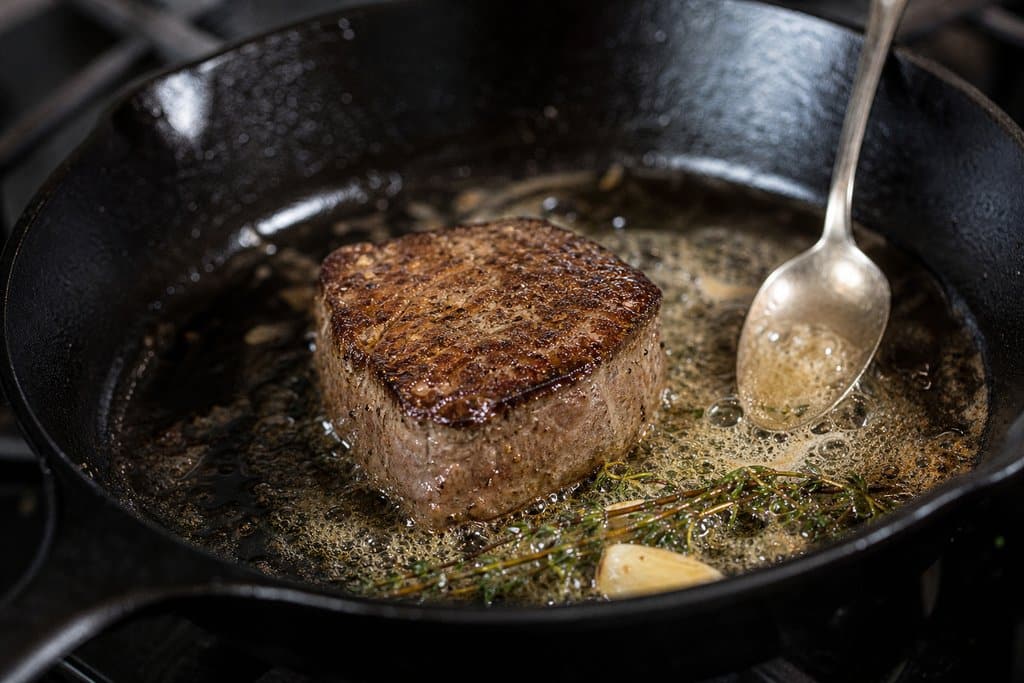
You’ll need a heavy-bottomed skillet or sauté pan that can tolerate high heat for this recipe. A cast-iron skillet works great.
For the best crust, salt the filet ahead of time if you can: at least 40 minutes before cooking, or up to a day in advance, uncovered on a rack in the refrigerator. The salt pulls moisture to the surface and then gets reabsorbed, which seasons the steak more deeply and leaves the outside drier so it sears better.
Pat your filet steak dry and season with salt and pepper. You don’t need any fancy seasoning blend – filet steak has a delicate flavor that can be easily overpowered.
Heat your pan over medium-high until a drop of water evaporates immediately upon contact. Add a high-smoke-point oil, such as canola or vegetable oil, and swirl to coat. Lay the filet steak in the pan and cook without disturbing until well-seared on one side, 3 to 4 minutes.
Flip the filet steak and cook until well-seared on the second side, another 3 to 4 minutes.
If your steak has a fat cap around the edges, use tongs to hold the filet steak on its side and sear the fat cap until browned.
Lower the heat to medium and add 2 to 3 tablespoons of butter, a few sprigs of thyme or rosemary, and a couple of smashed garlic cloves. Tilt the pan and spoon the foaming butter over the steak again and again until it reaches your target temperature.
Check the temperature with an instant-read thermometer inserted into the thickest part of the filet, and take it out of the pan at:
- Rare: 120°F
- Medium-rare: 125°F
- Medium: 135°F
The temperature will rise a few degrees while the steak rests.
Transfer the filet to a warm plate and spoon a little of the herb butter from the pan over the top.
Rest the Filet Before Serving
Filet steak should rest for a few minutes after cooking. This allows the proteins to relax so that when you slice into the filet steak, it will be tender and juicy instead of dry.
While the filet steak rests, you can finish your sauce and get your sides ready to plate.
Build a Sauce Around the Filet
Filet steak is mild-flavored, so you can play around with different sauces and flavors to dress it up. You can make a pan sauce with the fond left behind in the pan after you’ve cooked the filet steak, or use a different sauce entirely.
Pan sauce: After removing the filet steak from the pan, pour off all but 1 tablespoon of the fat. Add a small splash of wine, stock, or another flavorful liquid and scrape up the fond. Reduce, then whisk in a pat of butter.
Peppercorn sauce: This steakhouse classic is creamy, rich, and peppery. Toast coarsely cracked black peppercorns in the pan for a few seconds, add a splash of brandy or beef stock, then stir in heavy cream and simmer until it coats the back of a spoon.
Mushroom sauce: Savory and earthy, this is another steakhouse classic that pairs well with filet steak. Brown sliced mushrooms and a minced shallot in the pan drippings, add a splash of red wine, and finish with a pat of butter or a little cream.
If you’re serving up a bright herb sauce, consider a creamier, richer side like potato purée to balance it out. Or if your sauce is on the creamy side, opt for a brighter veggie to bring acidity to the table.
Match the Sides to the Sauce
Steakhouse sides are rich, decadent, and comforting. If your filet steak sauce is creamy or buttery, opt for veggie sides that are on the crisp and bright side. But if your sauce is on the acidic side, like an herb vinaigrette, you could serve up a creamier, comforting side.
Some steakhouse-style sides:
- Crispy Roasted Potatoes
- Charred Broccolini with Lemon
- Potatoes Au Gratin
- Garlic Butter Mushrooms
- Potato Purée
- Wedge Salad
Plate the Filet Without Hiding the Crust
If you’re going for a fancy presentation, you can slice the filet steak before plating. If not, you can serve it whole. Either way, don’t pile your sauce on top of the filet steak – spoon some around it instead so you can still taste that beautiful crust you created.
Make sure everything is properly seasoned, then serve up your filet steak immediately.
Common Mistakes to Avoid
- Moving the steak too soon: leave it alone while it sears so the crust can form.
- Crowding the pan: cook no more than two or three filets at a time in a 12-inch skillet, or the pan will cool down and the steaks will steam.
- Skipping the thermometer: filet is lean, so an extra minute or two can take it well past medium.
- Cutting in right away: give it at least 5 minutes to rest so the juices stay in the steak.