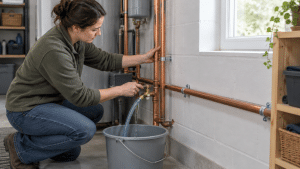


Draining a plumbing system sounds straightforward: turn off the water, open a tap, and wait for the pipes to empty. In a simple sense, that is the basic idea. In practice, though, the process can involve more than many homeowners expect.
Whether you are replacing a radiator, repairing a leaking pipe, fitting a new tap, leaving a property empty during winter, or carrying out bathroom work, knowing what needs to be drained — and what should be left alone — can prevent avoidable damage. Water systems are interconnected, and a mistake in one part of the house can create problems elsewhere, from airlocks to leaks to an improperly repressurised heating system.
The key is to identify the system you are dealing with before opening a drain valve.
Start by Understanding Which System You Have
Most homes have several water-related systems operating independently. Your cold-water supply, hot-water supply, and central-heating circuit may all need different treatment.
A mains-fed cold-water system is generally the simplest. Turning off the internal stopcock stops incoming water, while opening the lowest cold tap allows the remaining water to run out. However, homes with cold-water storage tanks — still common in older properties — may have separate pipework feeding bathrooms or hot-water cylinders. Turning off the mains may not stop water stored in a loft tank.
The hot-water side can be more complicated. A combi boiler heats water directly from the mains, whereas a traditional vented cylinder stores hot water and is often supplied by a cold-water tank. Then there are unvented cylinders, which operate under mains pressure and should not be treated as a routine DIY drainage job. Their safety controls and discharge arrangements require specialist knowledge.
Central heating is different again. Radiators and boiler pipework form a sealed loop containing treated water, often held at pressure. Draining this circuit is not the same as draining your domestic taps. Once work is complete, the system must be refilled, vented, checked for leaks, and brought back to the correct pressure.
Know Why You Are Draining It
The reason for draining the system determines how much work is actually necessary. It is easy to drain more pipework than needed, creating a larger job when it comes time to refill.
For instance, replacing a kitchen tap may only require isolating valves beneath the sink. A small repair on one radiator might only call for isolating that radiator and removing its water carefully. By contrast, replacing a downstairs section of pipework may require draining the cold-water system down to the lowest point.
Before doing anything, establish three things:
- Which pipes need to be empty?
- Where is the lowest suitable outlet or drain point?
- How will you restore water safely once the work is finished?
This short planning stage often separates a manageable home repair from an afternoon of confusion. It also reduces the chance of discovering, too late, that a stopcock is seized or a drain valve has not been opened for years.
Locate the Essential Valves Before You Need Them
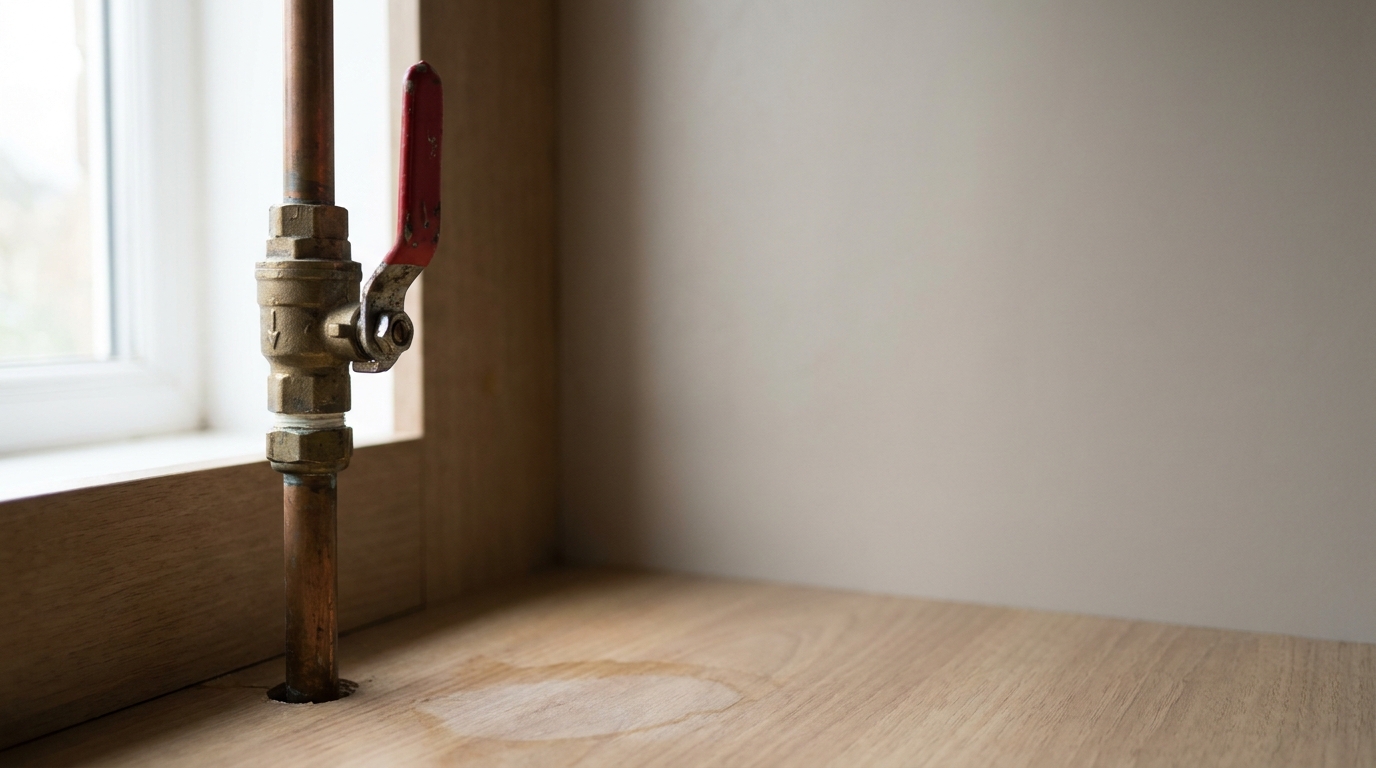
Every homeowner should know the location of the internal stopcock. It is often beneath the kitchen sink, near the water meter, in a utility room, or where the mains supply enters the property. In flats, the arrangement may be less obvious, particularly where services are shared or meters are housed in communal areas.
Test the stopcock gently from time to time. If it will not turn, do not force it. Older valves can seize, and applying too much pressure may cause a leak at the spindle or pipe connection. A plumber can replace a faulty stopcock before it becomes an emergency.
You should also identify radiator valves, appliance isolation valves, boiler filling loops, and any drain-off valves on the heating circuit. If you need a practical walkthrough of the sequence involved, you can read more about draining a plumbing system before starting work.
Draining Is Only Half the Job
Water does not always leave a system as quickly or completely as expected. Air needs to enter the pipework to replace the water leaving it, which is why taps are usually opened during drainage. In homes with multiple floors, opening taps upstairs as well as downstairs can help the system empty more freely.
Even then, some water will remain in low sections of pipework, radiators, valves, and appliance connections. This matters when pipes are being cut or disconnected. Keep towels, a bucket, and suitable containers nearby, and assume there will be residual water even after the flow appears to have stopped.
Avoiding Airlocks During Refill
Refilling is where many homeowners run into trouble. Introducing water too quickly can trap air in pipes, leaving a tap sputtering or stopping the flow entirely. In more severe cases, an airlock may affect a shower, mixer tap, or hot-water outlet.
Refill slowly where possible. Start by closing drain points, then turn the mains supply back on gradually. Open taps one at a time, beginning with the lowest outlets and working upwards. Let each tap run until the flow is steady before moving on.
For central-heating systems, radiators may need bleeding once the boiler circuit has been repressurised. Check the manufacturer’s guidance for the correct pressure range; many systems sit around 1 to 1.5 bar when cold, but the exact figure depends on the installation.
Be Careful Around Boilers and Hot-Water Cylinders
Boilers, immersion heaters, and hot-water cylinders deserve additional caution. Switch off electrical supplies to immersion heaters before draining a cylinder. If an immersion element is left energised without water around it, it can overheat and fail.
Similarly, allow hot water to cool before beginning. Draining a cylinder or opening a radiator valve when the system is hot raises the risk of scalding. It is sensible to switch off the boiler and give the system time to cool, particularly before working on central-heating components.
Unvented hot-water cylinders should be left to qualified engineers. These are pressurised systems with specific safety devices, and improper work can compromise their operation. The same applies if you are unsure whether a pipe forms part of a heating circuit, hot-water system, or discharge line.
When It Makes Sense to Call a Professional
DIY drainage can be reasonable for basic, well-understood jobs. But a professional is the safer option if you are dealing with an unvented cylinder, a boiler fault, persistent airlocks, badly corroded valves, or pipework that is difficult to identify.
It is also worth seeking help if your property will be vacant in freezing weather. Simply turning off the water is not always enough to protect vulnerable pipes; a proper winterisation plan may be needed.
The best approach is measured rather than ambitious. Drain only what the job requires, take time to understand the layout, and treat refilling as carefully as draining. Water may be easy to turn off, but restoring a plumbing system to normal operation is where preparation pays off.