


Dinner is over, most of the dishes have been cleared, and there is still more to talk about. This is the moment when a little dessert can change the pace of the evening. You do not need an elaborate cake or a tray filled with homemade treats.
A few thoughtfully chosen bites, something good to drink, and time to enjoy them are enough.
Planning dessert for two means thinking of it as an experience to share. A piece of chocolate, some fruit, and a buttery cookie can become a small tasting menu, opening the door to comparisons, memories, and unexpected favorites.
The idea works for an anniversary, a weekend dinner, or an ordinary evening. The starting point is always the same: choose something you both enjoy and leave plenty of room for conversation.
Plan a Small Tasting
After a full dinner, dessert should feel like a comfortable finishing touch. Start with three small selections that offer different textures and flavors.
Something creamy, something crisp, and something fruity provide an interesting mix. Think of a small serving of pudding made from a reliable recipe, a few cookies, and sliced pears. Another option is a little ice cream, some chocolate, and fresh berries.
Your choices can also reflect what came before. After a richly flavored meal, a simple dessert may be more appealing than something with multiple fillings and toppings. If dinner was light, you might give the dessert course a little more attention.
You do not have to make everything yourself. A well-chosen bakery treat, thoughtfully plated and paired with fresh fruit, lets you spend more time enjoying the evening and less time preparing for it.
Look for Three Contrasts on the Plate
The first contrast is texture. A smooth pudding feels different alongside a crisp cookie, while fruit offers another experience entirely compared with a piece of chocolate. Serving the elements separately lets each person try the combinations they prefer.
The second contrast is sweetness and freshness. A sugary dessert does not necessarily need an equally sweet sauce. Fruit, chosen for its ripeness and your preferences, can offer a refreshing change between bites.
The third contrast is familiarity and discovery. Alongside a favorite flavor, introduce one small surprise: a different kind of chocolate, a cookie you have never tried, or a fruit you rarely buy. One new element is enough to make things interesting without pushing either person beyond what they enjoy.
Choose Chocolate With Curiosity
Chocolate is a versatile starting point, but choosing it should not become a competition over who prefers the highest cocoa percentage. A more bitter flavor is not automatically a better fit, especially if one of you prefers something sweeter and milder.
The Smithsonian Institution’s guide to cocoa and chocolate explains that cacao beans are the foundation for making cocoa and chocolate. Knowing a little about that starting ingredient can add another layer of interest as you compare your selections.
For a tasting at home, two kinds of chocolate may be plenty. Start by noticing the color and aroma, then move on to texture and flavor.
You do not need technical tasting terms. Saying that one piece tastes sweeter, stronger, or leaves a longer finish already gives you something to discuss.
Always read the ingredient lists. Fillings, nuts, and other additions can make two seemingly similar products quite different, including whether they meet someone’s dietary needs.
Let Fruit and Cookies Complete the Tasting
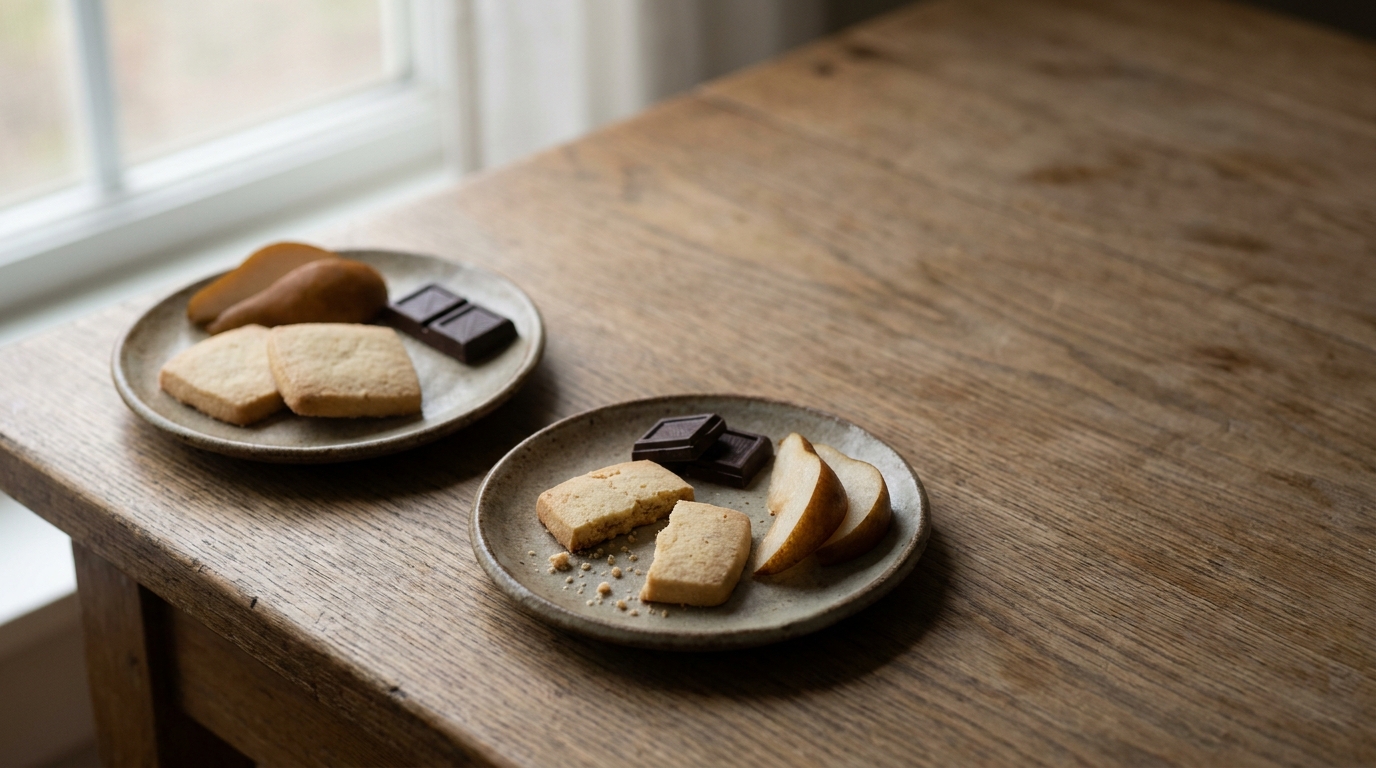
Fruit can take center stage without becoming a recipe. A ripe pear sliced just before serving, citrus segments, or a few strawberries add color without elaborate decoration. Choose whatever looks good and fits the flavors you have planned.
Serve cookies whole or break them into smaller pieces. A simple shortbread leaves room for the other flavors, while a strongly flavored cookie can become the main attraction. In that case, keep its accompaniments more understated.
For an easy combination, try a piece of shortbread with a little chocolate and a slice of pear. Taste each ingredient separately first, then notice how the combination changes what you enjoy about it.
Avoid assembling everything too early. Keeping crisp ingredients separate from moist ones helps preserve the contrast until you are ready to eat. Each person can then build a bite on their own plate.
Keep the Table for Two Simple
You do not need a different set of dishes to make dessert feel like a break from the usual routine. A clear surface, two small plates, suitable utensils, and clean napkins are a good foundation.
A shared tray can hold cookies and chocolate, while pudding and other spoonable desserts work well in individual bowls. Make sure everything is easy to reach without constantly moving glasses or decorations.
A flower or a colorful table runner can add a personal touch. Keep the lighting bright enough to see the food comfortably and any background music quiet enough for an easy conversation.
TheColdLady’s guide to dessert tasting ideas for couples offers suggestions for organizing the food, presentation, and atmosphere. The connection between those elements is practical: manageable preparation gives you more time to enjoy what you have chosen.
Give the Drinks Some Thought, Too
Water works throughout the tasting, and there is no need to replace it with a more elaborate pairing. You can also offer coffee, tea, or a caffeine-free drink, depending on what you both enjoy.
If coffee already features in the dessert, consider whether you want it in your cup as well. Anyone who prefers to avoid caffeine in the evening can choose an alternative that suits them.
For a cozy option, serve a small cup of decaf coffee with cookies or a favorite herbal tea alongside fruit. Choose a drink you already like rather than feeling obligated to find a technically perfect pairing.
Alcohol is not necessary to make the table feel special. Even serving an everyday drink in your favorite cups and preparing it at the right moment can make the gesture feel thoughtful.
Compare Favorites Without Keeping Score
Exploring flavors can become a simple game. Each person can choose the combination they liked best, the one that surprised them most, and the one they would want to try again.
Easy questions often work better than a formal scorecard:
- Does this remind you of anything?
- Which would you serve after your favorite meal?
- What would you add or change next time?
- Which combination would you choose for me?
A flavor might bring back a vacation, a childhood snack, or a particularly memorable dinner. Give those stories room to unfold instead of rushing to the next selection.
You do not need to agree on a ranking. Different preferences make the conversation more interesting and offer ideas for next time. Neither person should feel the need to defend their taste as though there were a correct answer.
Add One Detail That Feels Personal
A dessert tasting becomes more memorable when something on the table reflects your shared history. That might be a cookie from a bakery you visited together or the ice cream flavor you ordered on an early date.
You could also let each person choose one item without revealing it until dessert. Keep ingredients and dietary needs clear, even when the selection itself is a surprise.
A handwritten note can explain why you picked a particular treat. It does not need to be elaborate. “This reminded me of our weekend at the beach” gives an ordinary purchase a personal connection.
These details work best when they feel natural. There is no need to turn a relaxed evening into a performance or expect a particular reaction.
Prepare Ahead so You Can Relax Later
A little preparation helps prevent constant interruptions. Set out the utensils, water, and plates ahead of time. Foods that need refrigeration should stay properly stored until you are ready to serve them.
Check ingredients, allergens, and package instructions in advance. For pudding, cream-based desserts, and other perishable foods, follow the recipe’s storage guidance and the instructions for the products you use. Bring out only the portions you plan to serve.
Sharing the tasks also keeps all the preparation and cleanup from falling on one person. One partner might choose the food while the other handles the table and drinks. Agree on cleanup, too, so both people can enjoy the evening.
If you have a busy schedule, choose a plan that takes only a few minutes to put together. A dessert tasting should fit comfortably into your evening rather than become another unfinished project.
Small Flavors Can Leave Lasting Memories
Dessert for two does not have to be impressive to be enjoyable. Everyday ingredients work beautifully when they are chosen with care and served at a time when you both want to slow down.
A small selection invites you to taste, compare, and talk at your own pace. The most memorable detail might be a cookie bought with your partner in mind, a combination discovered by chance, or a story inspired by a familiar aroma.
What makes the table special is often the opportunity to linger over something good together.