


A takeaway stir-fry has a smoky, glossy finish that is hard to copy in a home kitchen. Restaurant woks sit over huge burners that most of us will never own. The good news is that heat is only part of the story. Most soggy, flat home stir-fries go wrong for reasons you can fix tonight.
Why Home Stir-Fries Turn Soggy
The usual culprit is too much food in the pan at once. A big pile of cold vegetables and meat drops the temperature straight away, and everything starts to steam instead of fry. Water collects at the bottom, the sauce thins out and the colour disappears.
Wet ingredients make it worse. Vegetables that go in straight from the colander bring a lot of water with them. So does meat that comes straight out of a marinade without a quick pat with kitchen paper.
How Do You Stop a Stir-Fry Going Soggy?
You stop a stir-fry going soggy by cooking in small batches, drying your ingredients well and keeping everything moving. Cook the meat first, lift it out, then cook the vegetables in one or two rounds. Bring it all back together for the last minute with the sauce.
Cut everything to a similar size so it cooks at the same pace. Thin slices of carrot, small broccoli florets and strips of pepper all finish in a few minutes. Harder vegetables can have a short head start before the softer ones go in.
Keep the sauce simple and add it late. A splash of soy sauce, a little sugar, some garlic and ginger, plus a spoon of cornflour mixed with water, gives you a glossy coating. Pour it in too early and it will boil away or turn sticky.
Prep Before the Pan Gets Hot
Stir-frying is fast, and that is exactly why the prep matters. Once the pan is hot, there is no time to chop an onion or hunt for the sesame oil. Line everything up in small bowls by the hob before you start.
Rice and noodles need a plan, too. Day-old rice from the fridge fries far better than fresh rice, because it has had time to dry out. Noodles should be cooked, drained and tossed with a little oil so they don’t clump together in the wok.
Which Wok Works Best on a Home Hob?
A flat-bottomed wok works best on most home hobs, because it sits flat on an electric or induction surface and makes full contact with the heat. Round-bottomed woks are lovely over a gas flame with a wok ring, but they wobble on a flat hob.
Material matters as much as shape. Carbon steel is the classic choice in Chinese kitchens. It heats quickly and builds a natural seasoning over time, but it needs drying and oiling after each wash or it will rust. Stainless steel is low maintenance but sticks more easily. Coated nonstick woks are easy at first, yet the coating wears with metal tools and very high heat.
A Note on Titanium Woks
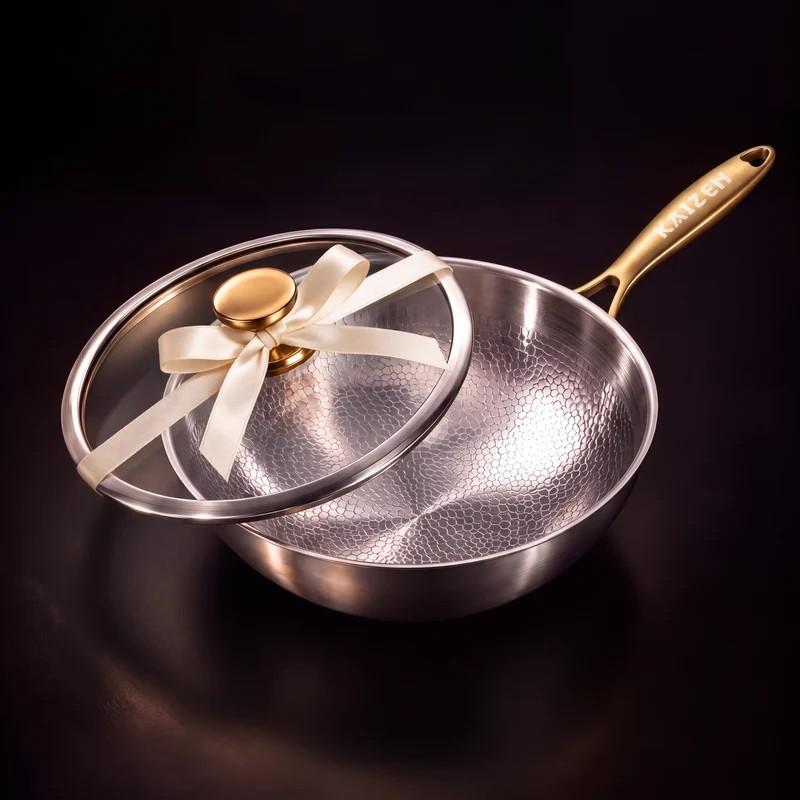
Titanium is a newer option that sits somewhere in between. If you’re after a wok with no coating and no seasoning routine, Kaizen Cookware makes a pure titanium wok pan that is worth a look. The brand describes five bonded layers with titanium on the cooking surface, a flat base that works on induction, and no coating that could burn off.
It does need a slightly different technique to the classic wok method. The maker recommends preheating on a medium heat for a couple of minutes, then adding a thin layer of oil once the pan is ready. It also says to avoid high heat, which it names as the main cause of sticking. In practice, that fits the small-batch approach above very well.
The brand also says the wok is fine with metal utensils and can go in the dishwasher. That makes it a practical choice for a busy weeknight, when you want your dinner on the table rather than a careful wok care routine afterwards.
Finishing Touches That Make It Taste Like a Takeaway
A few small things lift a home stir-fry. Spring onions and fresh coriander added right at the end bring colour and freshness. A few drops of toasted sesame oil, stirred in off the heat, add that nutty smell you get from a good takeaway.
Taste before you serve. A squeeze of lime can wake up a heavy sauce, and a pinch of chilli flakes adds warmth without hiding the other flavours. Serve straight away, because a stir-fry is at its best in the first few minutes.
Get the batches, the prep and the sauce right, and the wok you choose becomes the easy part. Your next stir-fry should come out crisp, glossy and full of colour, even on an ordinary home hob.