

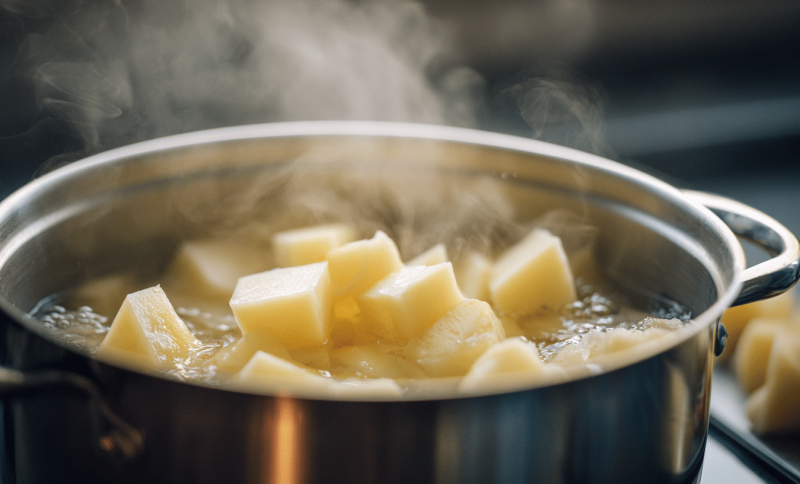
How long to boil potatoes? In most home kitchens, the answer falls between 10 and 25 minutes, depending on the size of the potatoes and whether they are left whole or cut into pieces.
Small diced potatoes cook quickly, while large whole potatoes need more time for the heat to reach the center.
In my experience, size matters more than the type of potato, and starting the timer too early is the most common mistake people make.
Boiling potatoes sounds simple, but small details like cold water starts, steady simmering, and proper testing decide whether they turn tender or fall apart.
You’ll find the exact boiling times I use, plus practical fixes I’ve learned from regular home cooking.
Understanding Boiled Potatoes: Time, Size, Type & Preparation
Several factors influence the time it takes for your potatoes to boil. The size matters most – small cubed potatoes cook much faster than whole large ones.
Cutting potatoes into uniform pieces ensures they all finish cooking at the same time. The type of potato also plays a role, as waxy varieties like red potatoes may cook differently than starchy russets or creamy Yukon Golds.
Peeled potatoes tend to cook slightly quicker than unpeeled ones since the skin acts as a barrier. Finally, make sure your water covers the potatoes by about one inch.
This allows even heat distribution and prevents uneven cooking or burning.
How Long to Boil Potatoes? It Depends on the Type You’re Using
Different potato varieties have unique textures and starch levels that influence their cooking times. Knowing which type you’re using helps you achieve perfect results every time.
1. Starchy (Russet)

Russet potatoes are high in starch and low in moisture, making them ideal for mashing and baking. Cubed russets take about 10 to 15 minutes to boil, while whole medium russets need 20 to 25 minutes.
These potatoes absorb water easily and become fluffy when cooked. They’re perfect for creamy mashed potatoes but can fall apart if overcooked, so watch them closely.
What I’ve Noticed: Cubed russet potatoes boil in 10-15 minutes, while whole medium ones take 20-25 minutes. In my testing, russets overcook fast, so I check early and drain as soon as they’re tender.
2. Waxy (Red, New, Fingerling)

Waxy potatoes have less starch and hold their shape beautifully when boiled. Small whole red or new potatoes take 15 to 20 minutes to cook, while fingerlings require about 10 to 15 minutes.
Their firm, creamy texture makes them excellent for potato salads, roasting, or serving whole. They won’t break down during cooking, which is why they’re preferred for dishes where you want distinct potato pieces.
What I’ve Noticed: Small whole red or new potatoes boil in 15–20 minutes, and fingerlings cook in 10–15 minutes. I’ve found these potatoes are forgiving and hold their shape well, especially when boiled with the skins on.
3. All-Purpose (Yukon Gold)

Yukon Gold potatoes fall between starchy and waxy varieties, offering versatility for almost any recipe. Cubed Yukons boil in 12 to 15 minutes, while whole medium ones take 18 to 22 minutes.
Their naturally buttery flavor and smooth texture work wonderfully in mashed potatoes, soups, and gratins. They hold their shape reasonably well but become creamy when mashed, making them a kitchen favorite.
What I’ve Noticed: Cubed Yukon Gold potatoes cook in 12-15 minutes, whole medium in 18-22 minutes. In my experience, they cook evenly and are the most forgiving everyday option.
Quick Reference for Boiling Times
If you just need a quick answer, this table shows exactly how long to boil potatoes based on size and whether they are whole or cut.
| Potato Size & Cut | Boiling Time |
|---|---|
| Small cubed potatoes | 10–12 minutes |
| Medium cubed potatoes | 12–15 minutes |
| Small whole potatoes | 15–20 minutes |
| Medium whole potatoes | 20–25 minutes |
| Large whole potatoes | 25–30 minutes |
Timing Tip: Start counting once the water reaches a gentle boil, not when the potatoes the added.
How to Boil Potatoes Perfectly
Boiling potatoes might seem straightforward, but following the right steps ensures they cook evenly and turn out perfect every time. These simple steps help you control the boiling time and achieve the exact texture you want.
- Step 1: Wash your potatoes thoroughly, peel if desired, and cut them into uniform pieces for even cooking.
- Step 2: Place potatoes in a large pot, cover with cold water by one inch, and add a generous pinch of salt.
- Step 3: Bring the water to a boil over high heat, then reduce the heat to medium for a steady simmer.
- Step 4: Cook according to size and type; small cubes need 10 to 15 minutes, whole medium potatoes take 18 to 25 minutes.
- Step 5: Test doneness by piercing with a fork – it should slide in easily without resistance.
Using these steps gives you better control over the time it takes to boil your potatoes and prevents undercooking or mushiness. With practice, you’ll know exactly when your potatoes reach that perfect tender consistency.
Should You Boil Potatoes With the Lid On or Off?
Many cooks wonder whether to keep the lid on or off when boiling potatoes. The best approach depends on the cooking stage. Using the right method saves time and helps control texture and doneness.
| LID USE | PROS | CONS | BEST PRACTICE |
|---|---|---|---|
| Lid On | Retains heat and steam, bringing water to a boil faster | Can cause water to boil over, may soften potatoes too quickly | Use the lid to bring the water to a full boil |
| Lid Off | Allows steam to escape, better temperature control | Longer time to boil, more heat loss | Remove the lid after boiling starts to simmer potatoes gently |
| Overall Recommendation | Start with the lid on for quick boiling, then the lid off to simmer | Balances heat retention and controlled cooking | Lid on to boil, lid off to simmer |
This simple technique gives you the best of both worlds. You’ll reach boiling temperature faster and then maintain gentle, even cooking for perfectly tender potatoes every time.
How to Check If Your Potatoes Are Done?
To check if your potatoes are done, use the fork or knife test. Simply poke a fork or knife into the potato.
If it goes in easily and slides out without resistance, the potato is soft and cooked through. If you feel firmness or resistance, the potato needs more time to cook.
It’s essential to start testing a few minutes before the expected boiling time is up to prevent overcooking, which can cause potatoes to become mushy.
Regularly checking helps ensure you get potatoes that are perfectly tender without being too soft or undercooked. This simple test is the most effective way to assess readiness every time.
Troubleshooting Common Potato Boiling Problems
Even when you know how long to boil potatoes, small mistakes can affect the final texture and flavor. These quick fixes address the most common problems people encounter when boiling potatoes at home.
- Mushy Potatoes: Overcooked or left in hot water too long. Drain immediately and let steam escape.
- Firm Centers: Started in hot water or cut unevenly. Always begin with cold water and uniform pieces.
- Bland Flavor: Water wasn’t salted enough. Season the water before boiling, not after.
- Potatoes Falling Apart: Boiled too aggressively or cooked too long. Reduce to a gentle simmer and check early.
- Potatoes Sticking to the Pot: Not stirred early. One quick stir after boiling begins prevents this.
Fixing these small issues makes boiling potatoes far more predictable. Once you adjust your method, you’ll get tender, evenly cooked potatoes without guessing or overcooking during everyday cooking.
Tips to Store Boiled Potatoes Properly
Properly storing boiled potatoes is just as important as cooking them right. When stored the right way, they stay fresh, tasty, and ready to use in your favorite recipes without losing their texture or flavor.
- Let the boiled potatoes cool completely before putting them away. This prevents moisture buildup.
- Use airtight containers or sealed plastic bags to keep air and moisture out.
- Store them in the refrigerator, where they can stay fresh for up to 3 to 4 days.
- Avoid wrapping boiled potatoes in foil, as it traps moisture and can cause them to become soggy.
By following these simple storage tips, you’ll keep your boiled potatoes at their best for several days. This means you can enjoy them later in salads, soups, or as a quick side dish without worrying about spoilage or sogginess.
Final Thoughts
When it comes to how long to boil potatoes, I’ve learned that attention matters more than exact minutes.
I always start checking a few minutes early, especially with starchy potatoes, because once they pass the tender stage, there’s no fixing the texture.
Draining immediately and letting steam escape has made a noticeable difference for me, preventing that soggy, waterlogged finish. I also avoid aggressive boiling and stick to a gentle simmer, which cooks potatoes more evenly from edge to center.
Over time, these small habits have made figuring out how long to boil potatoes predictable instead of frustrating, even when I’m cooking in a hurry or working with uneven cuts.




One Response
You might mention where you live because boiling potatoes at higher altitudes takes much longer.