

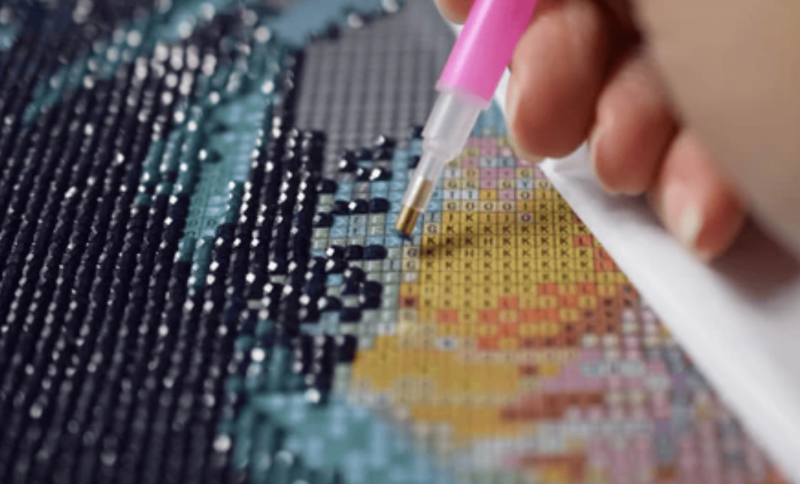
Keeping a diamond painting canvas smooth while working on each section can feel like a challenge, especially once the protective sheet starts to peel back. Creases, dust, or uneven pressure can quickly affect the surface.
To keep the canvas flat and smooth, they should lay it on a clean, firm surface, cover unused areas, and press lightly as they place each diamond.
A well-prepared canvas sets the foundation for clean, even results. By flattening the canvas before starting and storing it flat between sessions, they prevent warping or rippling. Simple tools such as a roller, heavy books, or a cloth under low heat can remove wrinkles before any diamonds touch the adhesive.
Working in sections makes the project more manageable, but it also demands care. Each area must stay free from dust or debris, and the adhesive must remain tacky. Careful sectioning helps control the workspace while keeping the rest of the design protected until it is ready to shine.
Preparing and Flattening Your Diamond Painting Canvas
A smooth, flat canvas allows diamonds to stick evenly and keeps lines straight. Proper preparation also prevents creases, dust, and air bubbles from ruining the adhesive surface.
Tools and Supplies for a Smooth Canvas
Every painter benefits from a few simple tools that make setup easier. A ruler, light pad, soft cloth, and clean flat surface create a stable foundation. Heavy books, craft weights, or a flat wooden board help reduce small waves in the canvas.
Many kits already include a rolled canvas, so it may need flattening before work starts. A relaxing diamond painting kit often contains a pre-cut protective sheet, which keeps dust away from the adhesive. Using clean tweezers helps prevent loose debris from sticking to the glue areas.
Keeping supplies nearby supports smooth progress. Small storage boxes or zip bags prevent the mixing of drills. It also helps to wipe the workspace with a dry cloth before arranging diamonds to avoid static or dirt transfer.
Methods to Flatten a Wrinkled or Curled Canvas
Several safe methods can make a curled canvas smooth again. Reverse rolling works well for mild curves. The painter rolls the canvas in the opposite direction of how it arrived, fixes it with elastic bands, and leaves it for at least an hour.
Placing heavy objects such as books over the back of the canvas overnight gives more even pressure. A clean cloth should cover the surface to protect the glue.
If wrinkles remain, light heat can help. Using a warm iron (never hot) on the back with parchment paper prevents glue damage.
Another quick solution uses painter’s tape. Taping the corners of the sheet onto a flat work surface keeps it stretched and prevents new folds. For those using light pads, the heat and flatness of the pad itself also help keep the canvas smooth during work.
Setting Up an Organised and Flat Workspace
A tidy workspace reduces movement, dust, and mistakes. The surface should be wide enough for the whole canvas or at least the current section. Flat desks or smooth boards work best.
Good lighting reduces eye strain and helps with colour accuracy.
A light pad or bright desk lamp makes symbols clearer and easier to see. The chair should support an upright posture so the painter does not lean too much over the canvas.
Spacing tools and containers by frequency of use keeps the area easy to manage. Keeping drills in labelled trays or organisers saves time and keeps colours neat. As a result, each section of the project stays clean, flat, and ready for precise placement.
Section-by-Section Techniques to Keep Your Canvas Smooth
A diamond painting canvas stays smooth through steady, neat work and careful handling. Each stage of the project benefits from controlled peeling, well-marked rows, precise drill placement, and gentle upkeep of the surface.
Peeling and Protecting the Adhesive Surface
The protective film on a diamond painting canvas shields the sticky area from dust and lint. To protect the adhesive, peel back only a small part of the cover at a time, around the size of one section.
This limits air contact and prevents the glue from drying out or catching dirt.
Keep the unused area covered while working. Fold the film away neatly or cut it into manageable strips, then replace it as each section is finished. Using parchment paper or release paper also helps, since these materials resist sticking and protect the surface.
If debris gets trapped, lift it gently with tweezers and smooth the spot again with clean fingers. Avoid moving hands across the open adhesive. Light pressure keeps the area flat without pressing wrinkles into the film.
These habits prevent uneven surfaces and preserve canvas quality during each stage of the project.
Dividing and Marking Rows for Efficient Progress
Working in sections keeps the canvas smooth and helps the crafter stay focused. Most prefer marking out areas with washi tape or a fine-point marker directly over the protective sheet.
Equal squares, such as 4×4 or 5×5 centimetres, create manageable zones while reducing strain from reaching too far across the canvas.
Clear boundaries make it easier to track progress in large custom diamond paintings. They also prevent the film from lifting or curling. Label sections by number or letter so completed areas remain easy to follow.
A flat work surface is important throughout. Any lump under the canvas may press unwanted creases. Placing the canvas on a smooth board or table allows even pressure as tools move across the area.
This straightforward step keeps both the adhesive layer and printed symbols unblemished through each marked section.
Best Practices for Placing Diamond Drills in Sections
A steady method with consistent tool use helps maintain a flat surface. The diamond painting pen and multi-placer tool both suit this work, depending on the section size. Dip the pen lightly into wax before each use to maintain grip and accuracy.
Crafters should place diamond drills neatly within the printed squares. Pressing too hard risks dents in the adhesive or shifts in neighbouring drills. Instead, use light, firm pressure until each piece adheres.
Work from the top corner downward so the wrist rests on the covered part of the canvas rather than the exposed adhesive. This prevents accidental marks or loose drills.
Aligning drills in rows produces cleaner lines and a balanced sparkle. Smooth, patient placement keeps the overall painting flat and professional once complete.
Maintaining a Neat Canvas Throughout the Project
Regular care during work keeps a diamond painting free from wrinkles or dust. Always check zones before starting a new section. Wipe the surface gently with a microfiber cloth to remove stray static or dirt particles.
If a fold appears, press the back of the canvas lightly with warm hands or place a flat weight, such as a book, on the area for several hours. This relaxes the material without damaging the adhesive.
Store the unfinished piece flat under light pressure rather than rolled or folded. Cover it with clean sheets of release paper to block moisture and fibres.
Simple upkeep habits like these safeguard the smoothness of the canvas, producing a polished finish across the entire painting with diamonds.
Conclusion
Keeping a diamond canvas smooth depends on careful habits and steady attention to detail. Working one section at a time helps reduce creases and keeps the adhesive clean. Each small step adds clarity and structure to the project.
They should always work on a flat, clean surface to avoid dust and lint. Light pressure on each drill helps it settle firmly into place without disturbing nearby areas. Regular checks across the canvas help spot loose sections early.
Simple tools such as washi tape, tweezers, and storage containers help maintain order. These small details create a smoother, more controlled process and lead to neater results.
With patience and consistent technique, they can keep the canvas flat, clean, and ready for display. This method allows the artwork to stay neat while progress remains visible and steady.


