A slick tile floor and a dropped spoon can turn dinner prep into a rough moment. Many seniors still cook most days, even with slower steps and a weaker grip. Small changes can lower risk without changing favorite meals. A safe kitchen still looks normal, it just has fewer traps.
The plan usually comes down to steadier movement and quick help if something goes wrong. Medical alert systems like Life Assure can add support if a fall or burn happens without warning. That backup pairs well with a room that is easier to move through. When the setup feels right, cooking stays relaxed and familiar.
Start With Floors, Lighting, And Clear Paths
Falls often start with one rushed step around a chair leg or an open cabinet door. A clear route matters, especially if a cane or walker is part of the day. The busiest path is often fridge to sink to stove, so it helps when that line stays open.
Lighting changes how steady the room feels. Brighter bulbs help near the sink and stove, and under cabinet lights help on cutting boards. Night lights along the hall route help with late water trips. If glare is annoying, a softer bulb and a simple shade can calm it down.
Floor traction does quiet work around the sink and dishwasher. Thin backed mats that grip the floor can help, as long as they lie flat. Curled rugs tend to cause stumbles, so many homes switch to a low profile runner. Small spills are common, so quick wipe ups keep one splash from turning into a slip. Kitchen falls connect to a wider pattern that rises with age, and the CDC lists clear home steps for prevention.
Set Up Storage That Matches Strength And Reach
Reaching high or lifting low can strain shoulders and throw off balance. Items used daily tend to belong between hip and shoulder height, because that range feels steady. When plates, mugs, and pans sit where hands naturally land, the kitchen stops feeling like a stretch.
Step stools look harmless, yet they add risk when balance is already shaky. Many families move the most used items down a shelf and call it done. Heavy pots feel safer when they live near the stove, because carry distance stays short. Lids also behave better when stored separately, since stacks can slide.
Hand comfort matters because grip problems lead to awkward cutting and rushed movement. A board with rubber feet stays put, and thicker knife handles feel kinder on sore joints. Jar opener pads and easy grip can openers help on days when fingers do not cooperate. If chopping feels tough, pre chopped produce can keep meals on track.
It helps when tools do some of the work during repetitive tasks. Lightweight pans with a wide base feel steadier during stirring. Mixing bowls with non slip bottoms stay in place, which cuts mess and frustration. A phone kept nearby helps, and an alert button worn during prep keeps help close.
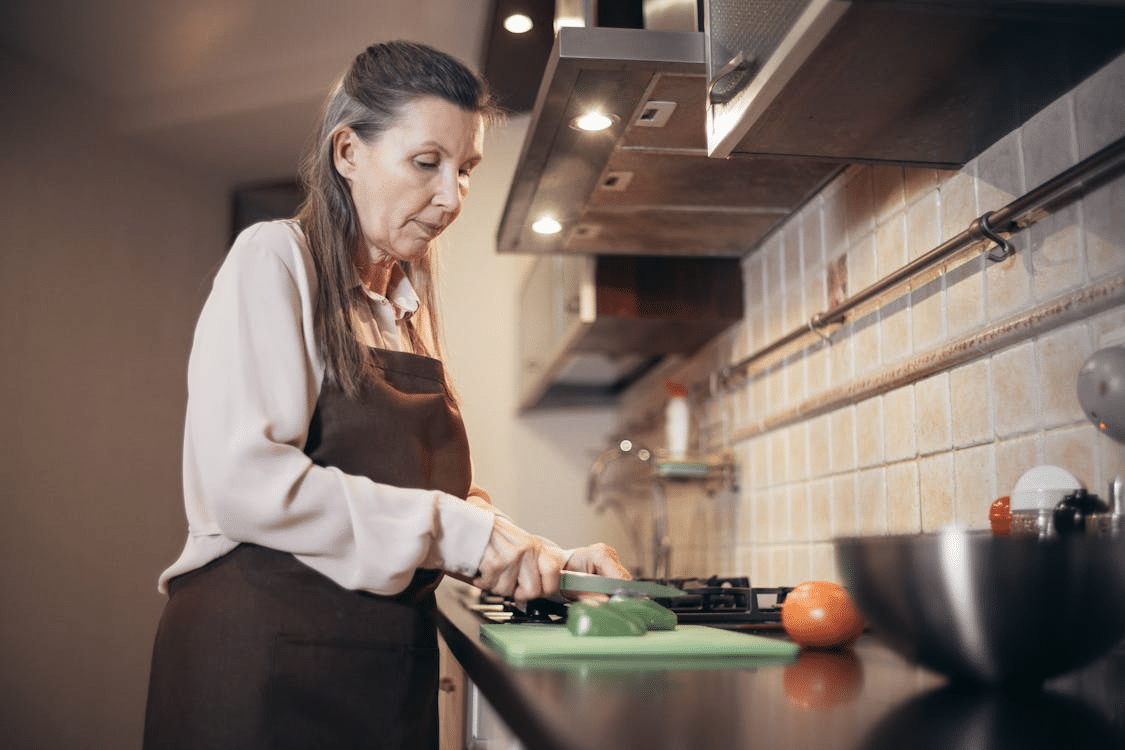

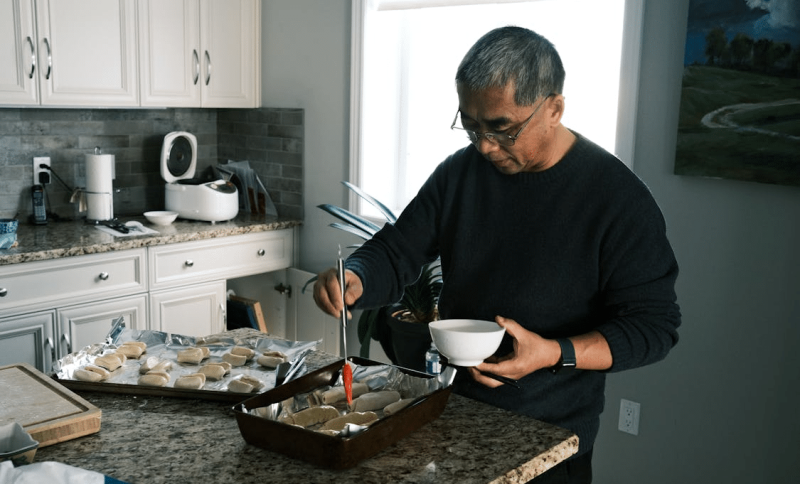
Photo by Mikhail Nilov
Reduce Heat, Water, And Fire Risks Near The Stove
Burns happen fast during turning, draining, or lifting a heavy pan. Pot handles turned inward reduce sleeve snags and hip bumps. Many cooks prefer back burners when they can, since there is less contact with open heat. If a walker is in use, the oven door swing matters too.
Water can make a clean kitchen slippery in seconds. Absorbent towels near the sink help with quick wipe ups. A single lever faucet helps because it needs less twisting strength. If grip is limited, a simple lever extender can make the handle easier to use.
Timers help because distraction is normal, even on quiet nights. A loud counter timer plus the oven timer can cut the odds of smoke and rushed movement. Some people prefer vibration or a bright flashing timer when hearing is limited. Keeping the timer in the same spot makes it easier to remember.
Fire safety feels simpler when the steps stay easy. A nearby pan lid can smother a small grease flare up, and it is quick to grab. A kitchen rated fire extinguisher works best when it is visible. Smoke alarms also matter, and a twice a year battery schedule is easier than guessing.
The National Institute on Aging shares practical home safety guidance that fits kitchens well. Here is the resource:. The page covers burn risks, smoke alarms, and routines that reduce mishaps at home.
Add Seating, Grip Support, And Easy Prep Options
Long prep sessions can tire legs, and fatigue often shows up near the end. A sturdy chair or a back supported stool at the counter gives the body a break. Sitting for peeling and chopping saves energy for the hot parts of cooking. When the chair tucks in neatly, it stays helpful without blocking the path.
Grip support often comes down to small details that add up over time. Drawer pulls that are easy to hold feel kinder than tiny knobs that force a pinch grip. Non slip pads under cutting boards and small appliances can prevent sudden slides. If tremor is an issue, a high sided bowl can keep spills contained.
Menus can also match safer movements while still tasting familiar. Sheet pan meals reduce transfers between pots and pans. Slow cooker meals cut time near steam and open heat. Pre chopped vegetables help on flare up days, and they still fit home cooking.

Photo by Gustavo Fring
Build A Simple Routine For Checks And Emergency Readiness
Even a well set kitchen can surprise you during a normal meal. A small slip, a cut, or sudden dizziness can feel bigger when someone is alone. A basic backup plan brings peace of mind without changing the room.
A charged phone within reach helps, though it stays safer away from the sink and stove. Many people like a wearable button because it stays close during cooking and cleanup. A short emergency note inside a cabinet door can help too, especially in large, clear print. With a few basics in place, cooking stays comfortable and the kitchen feels friendly again.