







You are trying to download a new app, or maybe you are just trying to take a quick video, and there it is: the dreaded “Storage Almost Full” warning. You dutifully open your settings to delete a few old apps, but when you look at the colorful storage bar chart, you freeze.
Your photos take up 10 GB. Your apps take up 15 GB. But sitting right there at the end of the chart is a massive, ominous grey block labeled System Data, and it is hoarding 30 gigabytes of your precious storage.
You tap it, hoping for a “Delete” button, but there is nothing. It is just a static menu mocking you.
If this has happened to you, take a deep breath. You are not going crazy, and you do not necessarily need to factory reset your phone. The bloated “System Data” issue is one of the most notorious bugs in modern iOS. It is frustrating, but it is entirely fixable. Here is a deep dive into what this ghost data actually is, why it multiplies like a virus, and how you can force your iPhone to cough up that stolen space without losing your personal files.
What Exactly is “System Data”?
To defeat the enemy, you have to understand it. Apple categorizes your storage into neat buckets: Apps, Photos, Media, iOS (the operating system itself), and finally, System Data.
In a perfectly functioning iPhone, System Data should hover somewhere between 5 GB and 8 GB. It is the designated dumping ground for essential background items. This includes Siri voices, offline translation dictionaries, system fonts, local keychain data, and—most importantly—cache and log files.
Cache is temporary data your phone downloads so it does not have to download it again later. When you scroll through TikTok, stream a movie on Netflix, or browse heavily on Safari, your phone saves thumbnails, video fragments, and website assets into the System Data folder.
Why Does It Explode in Size?
Here is where the bug comes into play. iOS is supposed to be smart. It is programmed to automatically purge these temporary cache files the moment your phone starts running low on storage.
However, sometimes the iOS “janitor” falls asleep on the job.
Instead of deleting old TikTok caches or Safari logs, it just keeps stacking them. Furthermore, if an over-the-air iOS update fails or gets interrupted, the corrupted installation files get dumped into System Data and left there forever. The same happens with diagnostic crash logs. If an app is silently crashing in the background over and over, iOS generates a text log for every single crash. Over months, these tiny text files can snowball into a 20 GB nightmare.
How to Slay the System Data Monster
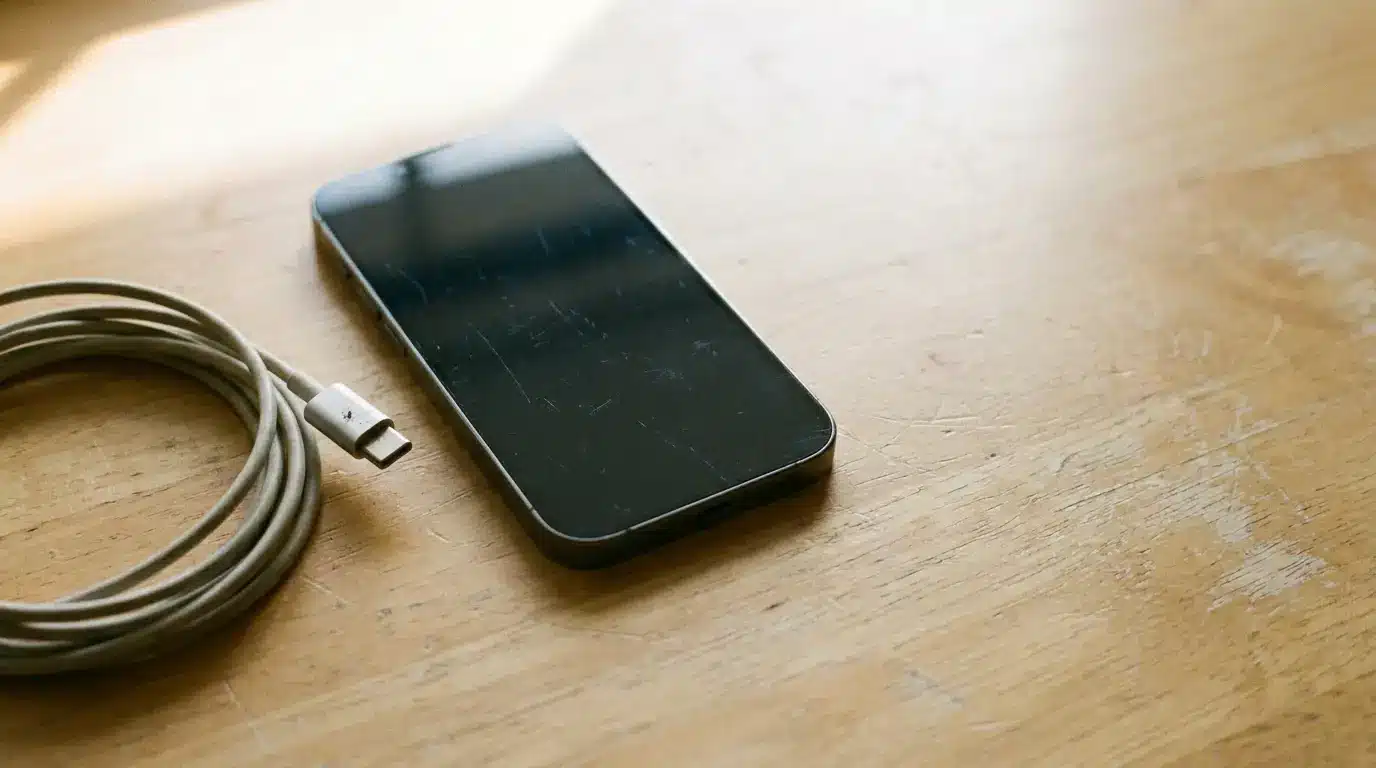
Since Apple refuses to give us a simple “Clear Cache” button for the whole system, we have to use a few backdoor tricks to force iOS into doing its job. Here is your step-by-step extraction plan.
1. The “Log Dump” Force Restart
Turning your phone off and on again is a classic IT joke, but in this case, it actually works. However, a standard restart is not enough. You need to do a Force Restart, which physically cuts the power cycle and forces the operating system to dump its temporary RAM and diagnostic logs upon booting back up.
- For iPhone 8 and newer (including FaceID models): Quickly press and release the Volume Up button. Then, quickly press and release the Volume Down button. Finally, press and hold the Side Power Button.
- Do not slide the “power off” slider when it appears. Keep holding the side button until the screen goes completely black and the white Apple logo appears. Then let go.
Check your storage again after the phone boots up. You might immediately see a 5 GB drop in System Data.
2. The Safari and Messages Purge
Safari is one of the worst offenders for hoarding cached data, and the Messages app is right behind it, secretly indexing thousands of old texts. Let’s clear them out.
- Clear Safari: Go to Settings > Safari. Scroll down and tap Clear History and Website Data. Make sure to select “All History” and hit confirm. Note: This will log you out of most websites, but it will incinerate a massive chunk of ghost data.
- Cap Messages: Go to Settings > Messages. Scroll down to Keep Messages. By default, this is set to “Forever.” Change it to 1 Year or 30 Days. Your phone will delete old, cached message data, instantly shrinking the system indexing file.
3. Offload the Heavy Lifters
Social media and streaming apps dump their caches directly into System Data. If you use Telegram, TikTok, Spotify, or Netflix heavily, they are the culprits.
While managing this bug is a crucial step, sometimes the grey bar isn’t your only enemy. If you are looking for a comprehensive strategy to free up storage on iphone, attacking bloated apps is your next best move.
Instead of deleting your apps (which wipes your login info), you should Offload them.
- Go to Settings > General > iPhone Storage.
- Tap on a heavy app, like TikTok.
- Tap Offload App.
This deletes the core app bundle and flushes its connected system cache, but leaves your personal data intact. Just tap the app icon on your home screen to reinstall it. It will come back much lighter.
4. The Secret Weapon: The Mac/PC Sync Trick
If you have done all the above and that System Data bar is still sitting at 20 GB, it is time for the ultimate trick. It sounds bizarre, but it works flawlessly.
When you plug your iPhone into a computer and open Finder (on Mac) or iTunes (on Windows), the computer immediately tries to sync with the device. During this initial handshake, the computer essentially tells the iPhone: “Hey, give me all your diagnostic crash logs so I can send them to Apple.” The iPhone dutifully offloads gigabytes of cached logs onto the computer, deleting them from the phone’s internal storage in the process.
- Plug your iPhone into your computer using a data cable.
- Open Finder (Mac) or iTunes (PC).
- Unlock your iPhone and tap “Trust This Computer” if prompted.
- Let the phone sit connected for about 10 to 15 minutes. You do not actually have to click “Sync” or back up anything. Just let the devices communicate.
- Unplug the phone, restart it normally, and check your storage. You should see a massive reduction in the grey bar.
The Bottom Line
The expanding System Data bug is an annoying quirk of iOS, but it does not have to be a permanent headache. By routinely clearing your Safari cache, offloading cache-heavy apps, and occasionally plugging your phone into a computer to dump diagnostic logs, you can keep the ghost data at bay.
Remember, your iPhone is basically a high-powered computer in your pocket. Sometimes, it just needs you to step in and force it to take out the trash.