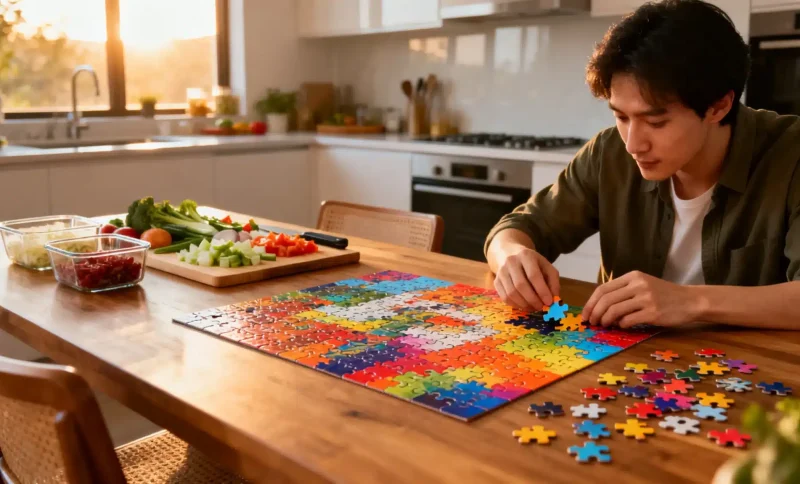
Never thought I’d be a puzzle person.
But March of last year, I literally burned a whole batch of cookies because I got sucked into my phone between recipe steps, and I remember thinking I needed something that would calm me down without staring at another glowing rectangle.
So I grabbed jigsaw puzzles from a closet shelf. Did one.
Eight months later and I’ve knocked out something like 47 different puzzles, and honestly my whole kitchen routine got better in ways I didn’t see coming.
How Puzzles Changed My Cooking Game
Between testing new recipes, I started spending around 20 minutes working on whatever puzzle I had going instead of scrolling through food drama and getting weirdly invested in strangers arguing about whether carbonara needs cream.
My brain felt different after. Clearer, I guess?
I noticed my hands were steadier when I went back to chopping vegetables or measuring out flour—my mind wasn’t racing through 12 competing thoughts simultaneously, so I could actually pay attention to whether the onions were diced uniformly or if the sauce needed more salt.
The Connection Nobody Talks About
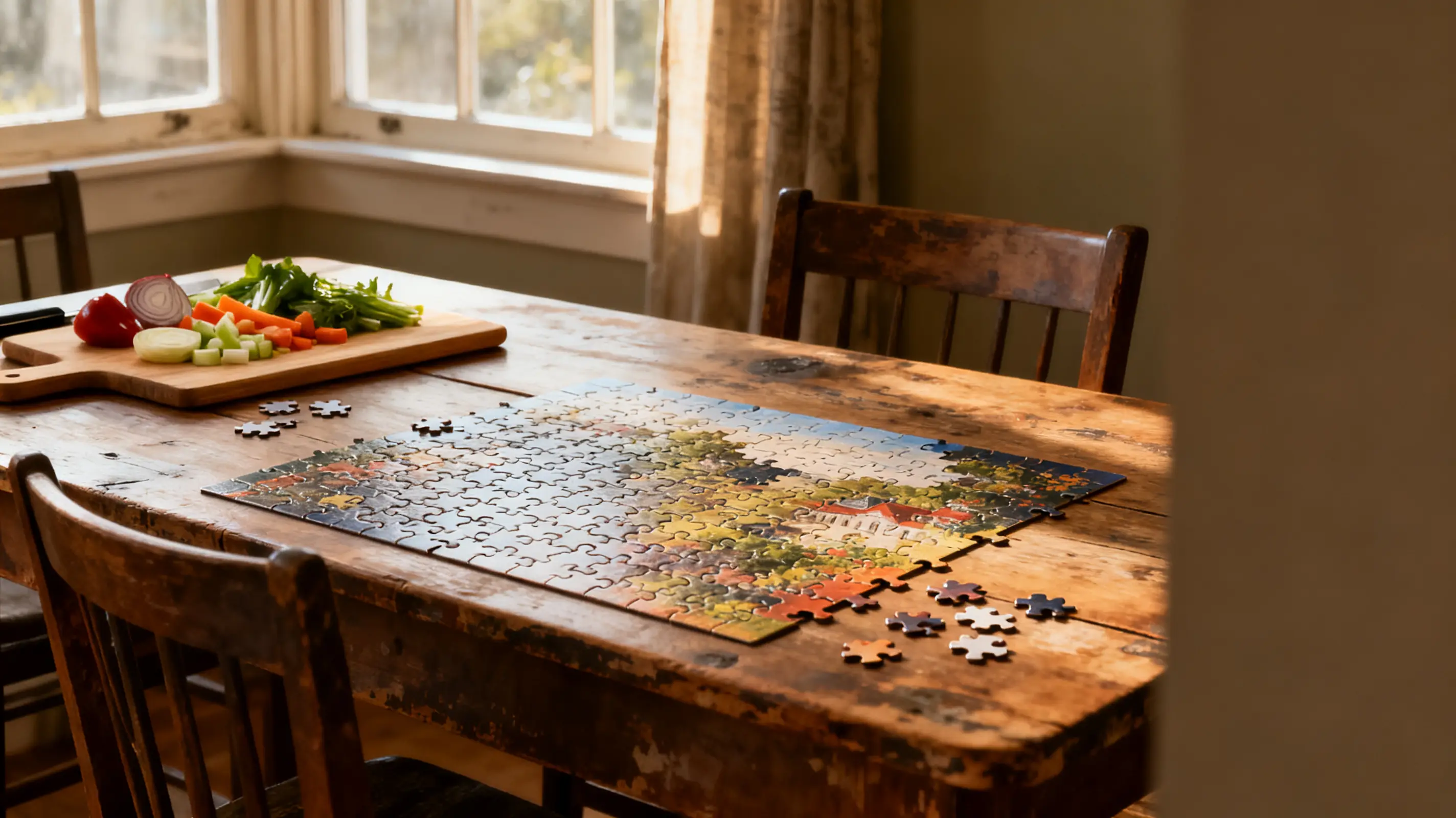
Cooking and puzzle-solving share this pretty specific thing most people don’t think about. Both activities force you to understand how individual components create something complete. You can’t randomly toss ingredients into a pot and expect magic.
Working through a 300-piece landscape puzzle uses identical mental muscles as planning a three-course dinner party. You’re constantly evaluating what goes where, what connects to what, does this shade of blue match that section over there.
Last Thursday I spent 43 minutes finishing a cottage garden puzzle before diving into weekly meal prep, and I managed to assemble 5 containers of overnight oats, chop vegetables for 3 different dinners, and get chicken marinating in probably 2 hours total. Normally that process takes closer to 3 hours because I keep losing focus.
Finding Your Own Rhythm
You don’t need to become some puzzle fanatic who has six going at once. But I’d recommend adding these small brain breaks between cooking tasks because they actually work.
Some mornings I’ll work on puzzles with my coffee before I even consider breakfast. Other days it happens late evening after I’ve cleaned up dinner dishes.
What actually matters is giving your brain something engaging that isn’t stressful or tied to some deadline. Cooking already has plenty of that pressure, especially when you’re experimenting with unfamiliar recipes or dealing with hungry family members who keep wandering into the kitchen asking when food will be ready.
I keep a puzzle going on my dining table pretty much constantly now. When I’m waiting for bread dough to rise or a pot roast to finish in the oven, I’ll place maybe 6 or 7 pieces. Then I head back to the kitchen. It’s become this rhythm that flows through my day in a way I never expected to need but actually really value now.
My cooking has gotten more experimental and creative, and I stress way less about recipe failures, which still happen regularly because that’s just how cooking works.