Somewhere in the back of almost every professional kitchen and food production facility, there is a spice that should have been replaced months ago. It is still in the container, still labelled correctly, still technically within its best-before window. But open it, and the smell that comes back is flat. Dusty. The faintest suggestion of what the spice used to be. And if you cook with it, the food tells you. Not dramatically, not in a way you can always put your finger on immediately, but in the cumulative dullness of a dish that is missing something it should have.
This is a supplier problem more often than it is a storage problem. And it is more common than the food industry tends to openly acknowledge, partly because the documentation usually looks fine, partly because the gap between a fresh spice and a degraded one is qualitative rather than quantitative and harder to put on a specification sheet, and partly because once you are in a supplier relationship, the friction of switching makes it easier to keep ordering and hoping the next batch is better.
Choosing the right Wholefood Merchants and spice supplier before you are locked into the wrong one is considerably easier than fixing the problem after the fact. Here is what actually matters in that decision.
The Real Mechanism of Freshness
Spice quality lives in volatile oils. These are the aromatic compounds responsible for flavour and fragrance, and they do exactly what the name suggests. They evaporate. They degrade. They react with oxygen, heat, and light in ways that steadily reduce their concentration from the moment the spice is harvested and processed.
A best-before date does not measure volatile oil content. It measures elapsed time under assumed storage conditions. Two spices with identical best-before dates can have dramatically different volatile oil concentrations depending on what happened to them before the date was printed. The harvest timing relative to peak essential oil development. The drying method and temperature. The storage conditions at origin, in transit, and at every intermediate point in the supply chain. The number of times the product changed hands and how long it sat at each stop.
High heat during processing drives off volatile oils quickly and permanently. Prolonged storage in warm or humid conditions accelerates degradation continuously. A spice that travelled through multiple intermediaries, sitting in uncontrolled storage at each stage, has been losing what made it valuable at every step,p regardless of what its documentation says.
This is the gap between a supplier who is genuinely engaged with their supply chain and one who is buying product from whoever is selling the cheapest this month and reselling it. The first type can tell you something meaningful about origin timing and processing conditions. The second type can tell you what the moisture content was on the certificate of analysis.
What to Ask and What the Answers Tell You
The quickest way to separate spice suppliers worth working with from those that are not is to ask specific questions about where their product comes from and pay attention to what happens next.
A supplier with genuine supply chain knowledge answers with specifics. The growing region, not just the country. The harvest season, not just the year. Something about the processing approach and why it matters for the specific spice being discussed. These answers exist in their organization because people there actually know, because they are connected to their supply rather than disconnected from it by layers of intermediaries.
A supplier operating on price in spot markets answers differently. The country is easy. The region becomes vague. The harvest timing is unknown or irrelevant to how they purchase. The processing details are whatever was on the documentation from the broker they bought from.
Neither type of supplier is necessarily selling an unsafe product. But the first type has the foundation for meaningful quality management, and the second does not. When problems arise downstream, the first type has a supply chain they can trace and a relationship they can use to investigate and correct. The second type has a paper trail that points back to a broker who points back to another broker.
For commercial food production where consistency, traceability, and the ability to respond to quality issues matter, this difference is not a minor consideration.
Adulteration Is a Real Problem That Traceability Addresses
The global spice trade has a documented adulteration history that is worth taking seriously rather than treating as a historical footnote.
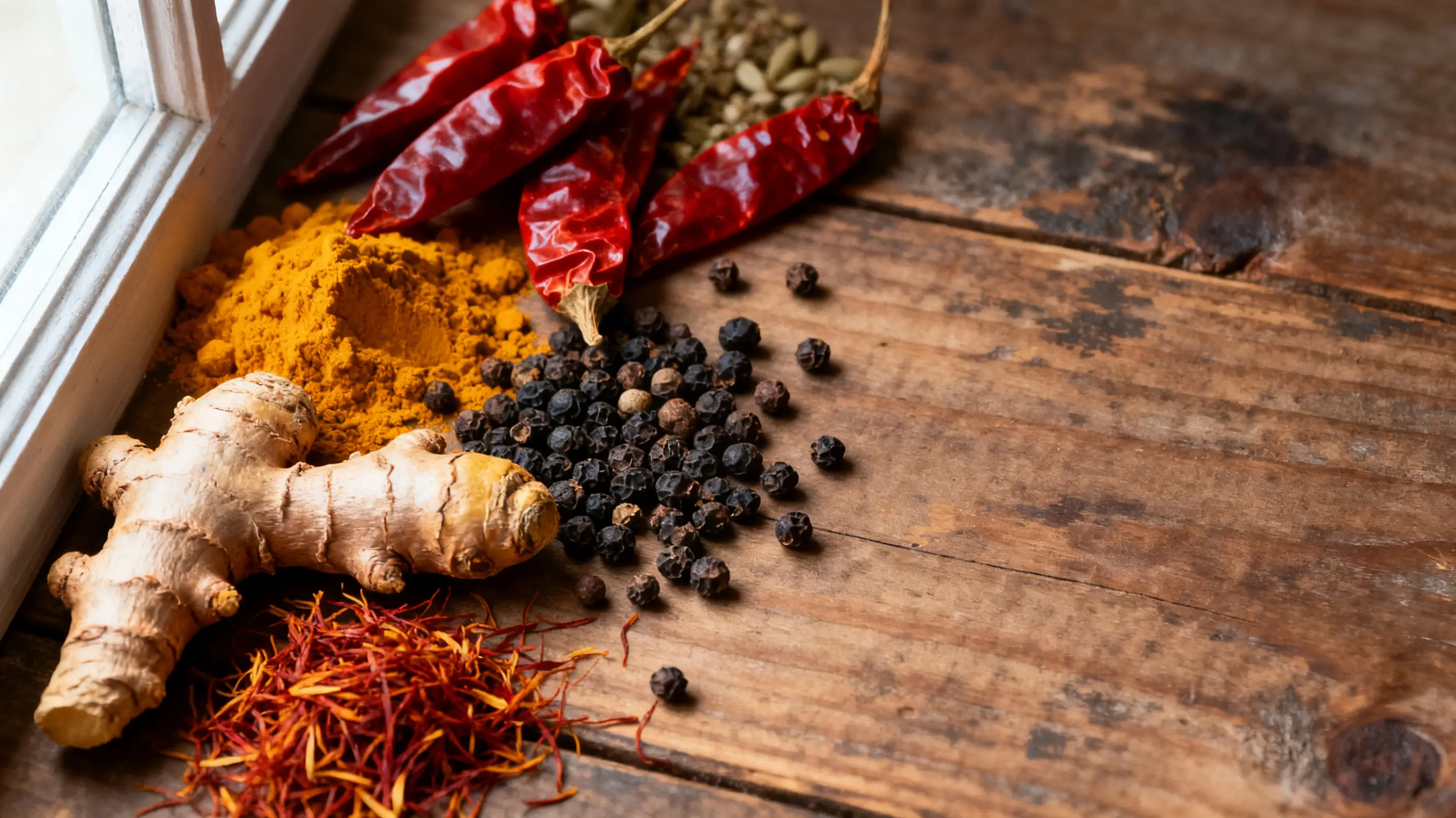
Turmeric adulterated with lead chromate for colour. Paprika is cut with cheaper chilli or artificial colourants. Black pepper mixed with papaya seeds. Chilli powder extended with brick dust is documented in cases from producing regions. Saffron, the most valuable spice by weight, is adulterated with safflower, marigold petals, and coloured fibres with enough frequency that testing protocols for saffron authenticity have become an entire subspecialty.
The conditions that enable adulteration are the conditions that exist when supply chains are opaque and when purchasing decisions are made primarily on price. Suppliers who cannot trace their product beyond the most recent intermediary have limited ability to make meaningful claims about what they are selling. Testing helps but has limits, particularly when the adulterants used are chosen specifically to pass the tests commonly applied.
Genuine traceability is the structural defence against adulteration risk. A supplier who knows where their product was grown, how it was processed, and who handled it between origin and delivery has the information base that makes meaningful quality assurance possible. One who does not is making quality claims that rest on trust in a supply chain they cannot actually see.
Testing Programs and What Distinguishes a Real One
Every serious commercial spice supplier tests their product. The question is what the testing covers and whether it is conducted by independent third parties or internally.
Safety testing is the floor, not the differentiator. Microbiological testing covering total plate count, yeast and mould, and pathogens, including Salmonella and E. coli, should be routine practice for any supplier providing product to food manufacturers or professional foodservice operations. A supplier presenting Salmonella testing as evidence of elevated quality commitment has set the bar incorrectly.
Essential oil content testing is where programs begin to differentiate meaningfully. Volatile oil percentage measured by standardized methods provides a quantitative measure of flavour potency that connects directly to how the spice performs in actual use. A supplier whose quality program includes essential oil testing by lot and who can provide those figures alongside other certificate data is doing something that many suppliers do not, because it creates accountability for the quality dimension that matters most.
Pesticide residue panels, heavy metal screening, and microbiological pathogen testing beyond the basics represent additional tiers that matter based on the end application and regulatory environment. What matters most is that testing is conducted by accredited third-party laboratories rather than only internally, that certificates of analysis are available for every supplied lot rather than on selective request, and that the supplier treats this documentation as routine rather than as something that requires a special process to produce.
Any established spice suppliers operation with a genuine quality commitment produces these certificates without friction. The ones who make it difficult to get current third-party documentation are telling you something about the gap between their quality claims and their quality infrastructure.
Consistency Over Time Is the Real Test
Initial sample quality and ongoing supply quality are not the same thing, and treating them as if they are is how buyers end up in supplier relationships they regret.
Spice quality varies naturally between growing seasons, between regions in the same origin country, and between processing batches. A supplier who manages these variations to deliver a consistent product across multiple supply lots is doing something that requires genuine infrastructure and active management. They are maintaining relationships with known growers or processing facilities, monitoring crop quality before purchase, and managing inventory across sources to maintain specifications rather than just buying whatever is available.
A supplier operating purely on price buys what is cheapest each time. Sometimes that coincides with good quality. Often enough that it does not make consistency a real problem over time.
The way to assess this before committing is to ask specifically how the supplier manages batch-to-batch consistency, what their process is when a new lot comes in that differs from previous lots, and how they communicate changes to customers. A supplier who has thought about this and has a real answer is operating differently from one who treats the question as novel.
Sensory Evaluation Still Matters
All of the traceability, testing, and operational assessment described above are worth doing. And then you still need to smell the product and cook with it.
Quantitative testing captures certain quality dimensions well and misses others. The sensory experience of a genuinely fresh, high-quality spice, the complexity and intensity of aroma, the way it transforms when heat is applied, and the contribution it makes to the finished dish or product is not fully captured in a certificate of analysis.
Requesting physical samples from multiple potential suppliers for direct comparative evaluation, assessed by someone with genuine culinary or product development experience in the relevant category, provides quality information that documentation review alone does not. It is also the most direct and honest way to assess whether a supplier’s product is actually as good as their paperwork suggests.