







Planning a wedding is overwhelming. There’s the venue, the guest list, the flowers, the photographer—and somewhere in all that chaos, you’ve got to figure out how to feed everyone.
This is where BBQ tends to enter the conversation for Dallas couples.
Not because it’s trendy (though it is), or because it’s “budget-friendly” (it can be, but that’s not the whole story). BBQ works for Dallas weddings because it’s honest food that makes people happy. Jim Carrol over at Meat & Greet BBQ Catering LLC says “It scales whether you’re feeding 75 people or 300. It works indoors or outdoors. And it doesn’t require your wedding to feel formal to still feel special.”
If you’re considering BBQ for your big day, here’s what actually matters.
Why Couples Choose BBQ for Dallas Weddings
There are a few reasons BBQ keeps showing up at Dallas weddings, and it’s not just because we live in Texas.
Flexibility is huge. You can serve BBQ under a tent in someone’s backyard, in a rustic barn venue, or in a sleek downtown loft with exposed brick. The food adapts. It doesn’t demand a specific aesthetic—it fits into yours.
Large guest counts don’t intimidate BBQ caterers. Wedding guest lists grow (your mom’s book club, your partner’s softball team, cousins you haven’t seen since 2015). BBQ scales in a way that plated chicken dishes don’t. Quality caterers can feed 200 people without the food suffering.
It’s comfort food, but intentional. When BBQ is done right at a wedding, it becomes the thing people remember. Not in a fancy way—in a “that brisket was incredible” way. Your guests feel welcomed and well-fed, which is kind of the point.
And in Dallas, where BBQ culture runs deep, your guests have opinions. They know what good brisket tastes like. Serving quality BBQ is a statement—it says you care about details without needing white tablecloths to prove it.
Choosing the Right BBQ Wedding Caterer
Not all BBQ caterers operate the same way, and this is where couples sometimes stumble early on.
Full-service vs. drop-off is the first decision. Drop-off means food shows up in trays, you handle setup and cleanup, and the caterer leaves. It’s cheaper—but on your wedding day? Probably not the move. Full-service means staff comes to serve guests, manage the buffet, and clean up afterward. You focus on getting married.
On-site vs. off-site prep matters. Some caterers smoke everything off-site and reheat at your venue. Others bring smokers on-site. On-site smoking adds authenticity and aroma—guests smell the mesquite during cocktail hour. Off-site prep is cleaner and easier for venues with strict rules. Neither is wrong, but ask which approach your caterer uses.
Staffing, rentals, and cleanup realities. A good caterer will tell you exactly what’s included. Are tables, chairs, and linens part of the package? Who’s setting up? How many staff members will be on-site? Who breaks everything down? These aren’t fun questions, but they prevent surprises two weeks before your wedding.
Building the Perfect BBQ Wedding Menu
This is the fun part. Also where you can overthink yourself into a corner.
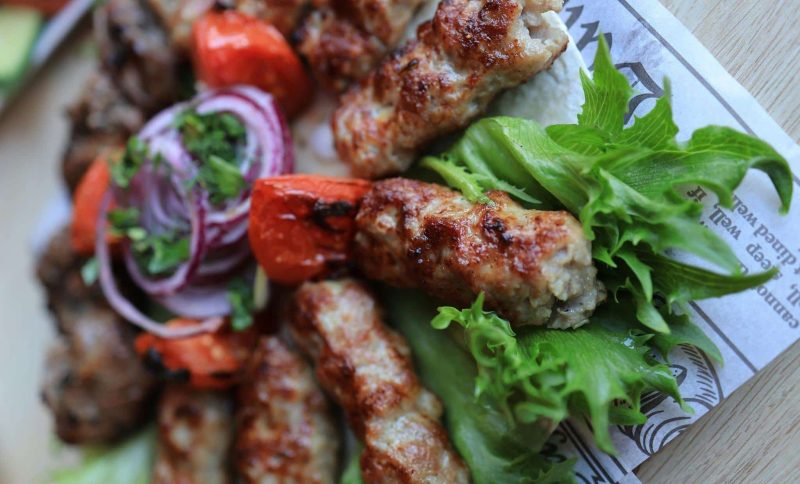
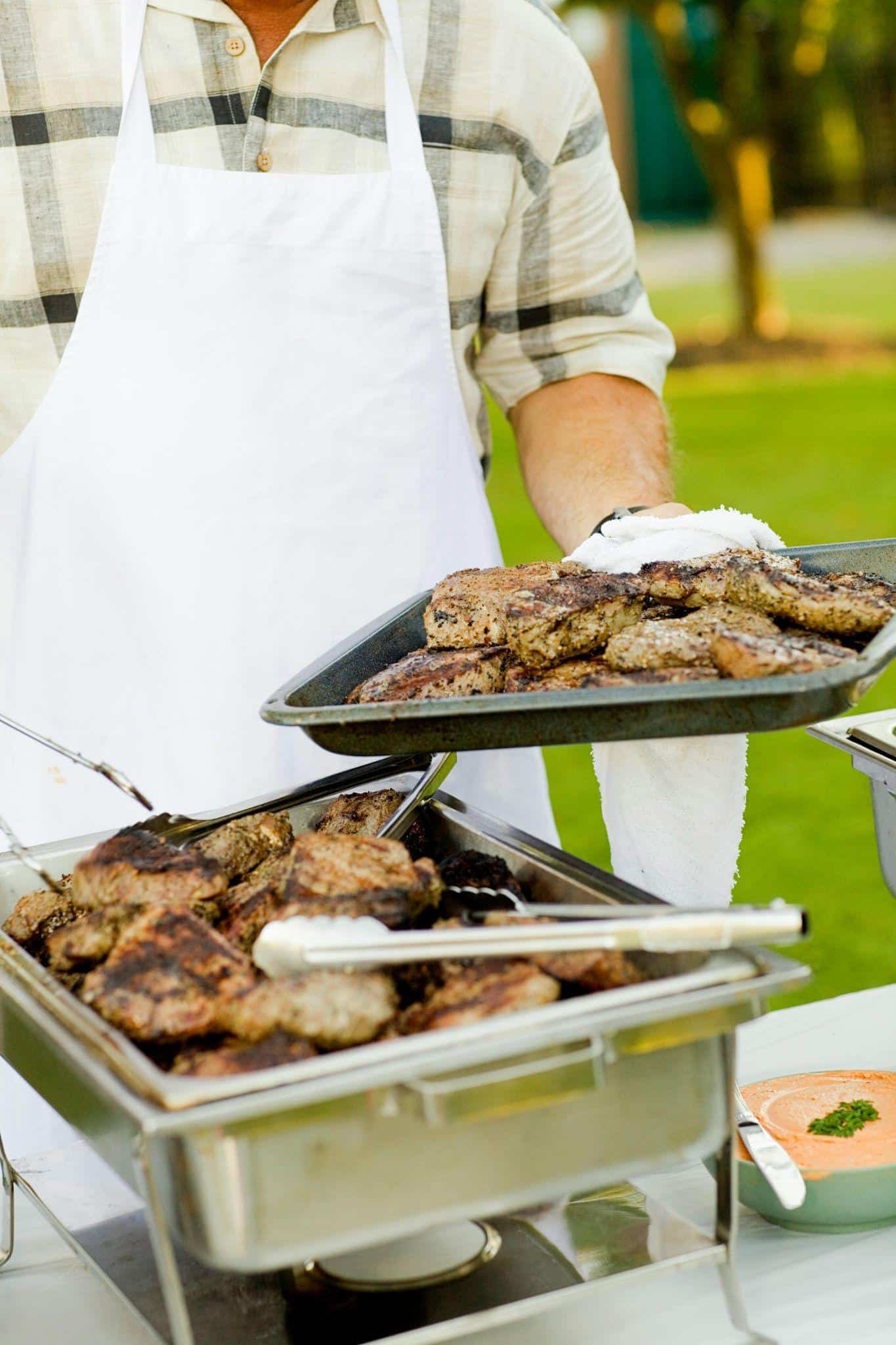
Start with proteins. Brisket is the star—it’s what people expect, and when it’s done right, it’s what they’ll rave about. Pulled pork is lighter, easier for people who don’t want a heavy plate. Ribs feel celebratory (and photograph well). Smoked chicken is the reliable crowd-pleaser.
Most couples do two or three proteins. Brisket + pulled pork is classic. Add ribs if budget allows. Industry standard is typically 1/3 to 1/2 pound of meat per person when serving multiple proteins.
Sides actually matter. Mac and cheese is nearly non-negotiable (creamy, rich, second-scoop worthy). Coleslaw adds freshness and cuts through the richness. Baked beans are traditional. And you’ll want at least one green vegetable so people don’t feel like they’re eating only brown food.
You can get creative—jalapeño cornbread, smoked corn salad, potato salad with bacon, Brussels sprouts with balsamic. Sides are where personality shows up.
Sauces and regional flavor. Texas BBQ is traditionally light on sauce—the meat should stand alone. But weddings bring guests from everywhere, so most caterers offer two or three: a Texas-style mop sauce, something tangy (vinegar-based), and something sweeter for Kansas City fans. People like options.
Vegetarian and non-BBQ options aren’t optional. You will have vegetarian guests. Someone who doesn’t eat pork. Maybe a vegan or someone with allergies. Good caterers build these into the menu from the start—smoked portobello mushrooms, grilled vegetable platters, black bean burgers. Your vegetarian cousin shouldn’t spend your wedding eating only sides.
Buffet, Stations, or Plated Service?
Buffet is most common for BBQ weddings. It’s casual, lets guests control portions, and keeps things relaxed. The downside? Lines get long without strategic setup. For weddings over 150 people, dual-sided buffets or multiple stations help.
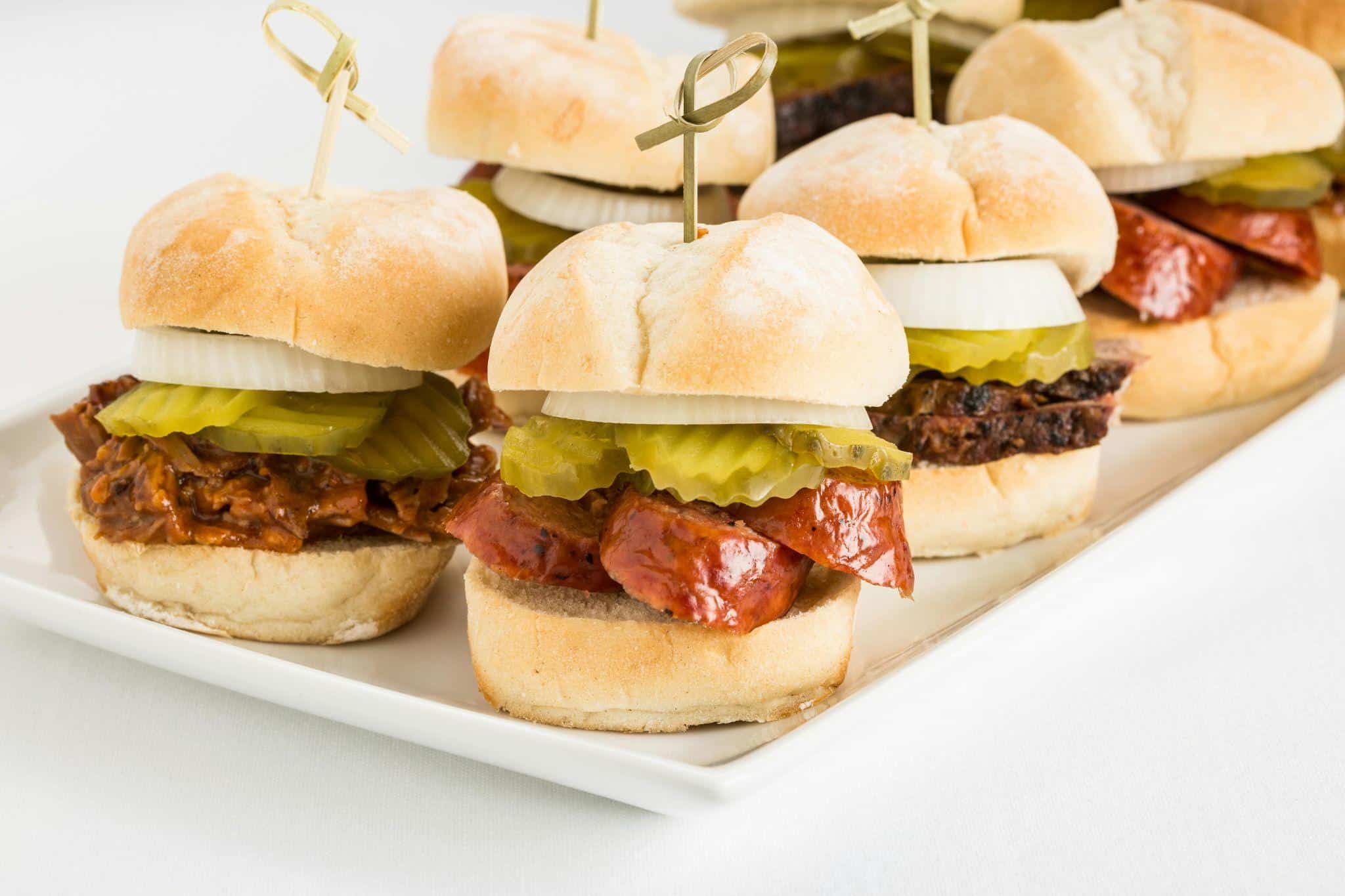
Food stations are a step up—a brisket carving station, taco bar with smoked meats, slider station. Stations encourage movement and create interaction. They’re also pricier and need more space and staffing.
Plated BBQ service is rare but possible. Some couples want formal sit-down dinner vibes but still want BBQ. It requires more staff and coordination, and honestly, it’s unusual. But if you’re set on it, it can work.
Cost differences are real. Buffet is most cost-effective. Stations add 15-25% depending on elaborateness. Plated service costs most because of labor. Your budget helps decide, but so does vibe. Plated service in a barn with string lights might feel off.
How Much BBQ Wedding Catering Costs in Dallas
Let’s talk numbers.
You’re looking at $25 to $60 per person for BBQ catering in Dallas, depending on what’s included. Basic drop-off with two meats and two sides? Closer to $25-30. Full-service with three meats, four sides, staff, rentals, and dessert? You’re in the $45-60 range.
For context, average wedding catering in Texas is around $70 per person. BBQ tends to come in lower, but “lower” doesn’t mean cheap—it means solid value for quality food.
What drives price up? Staffing. Rentals (tables, chairs, linens, serving ware). Premium proteins (beef ribs cost more than pulled pork). Complexity (three stations need more equipment than one buffet). Distance (venues 90 minutes outside Dallas mean travel costs).
What couples forget to ask about: Service fees (usually 18-20% on top of food cost). Delivery fees. Setup and breakdown charges. Overtime if your reception runs long. Cake cutting fees. These aren’t hidden, but they’re easy to miss if you’re just looking at per-person pricing.
Get everything in writing. Ask for itemized quotes.
Planning for Guest Count, Timing, and Venue
Portion planning is part art, part science. Most caterers plan for 1/3 to 1/2 pound of meat per person with multiple proteins. Sides are about 4-6 ounces per person per side. Sounds like a lot? People are hungry at weddings, especially if there’s dancing.
Order for 10% more than your headcount. RSVPs aren’t always accurate, plus-ones appear, and vendors (photographer, DJ) often eat too.
Dinner vs. late-night food changes the math. If BBQ is your main meal, you’re feeding full portions. If it’s late-night food after lighter dinner, you can scale back—sliders, mini brisket sandwiches, taco stations. Late-night BBQ hits different at 10 PM.
Outdoor heat and indoor logistics both matter. Dallas summers are brutal. Outdoor weddings from May through September need shade planning and food safety consideration. Food can’t sit uncovered in 95-degree heat for two hours.
Indoor weddings have their own challenges—mainly kitchen access. Some venues have full kitchens. Some have tiny prep areas with one outlet. Some have nothing. Caterers need to know in advance.
Customization & Dietary Considerations
Vegetarian and gluten-free should be standard. Most BBQ is naturally gluten-free (meat), but sauces, rubs, and sides can hide gluten. If you have guests with celiac or gluten sensitivity, confirm your caterer can provide safe options and avoid cross-contamination.
Kid-friendly menus help. If you’re inviting families, you’ll have kids who don’t want brisket. Simple options work—sliders, plain chicken, mac and cheese, fruit.
Cultural fusion happens. BBQ weddings with Korean-inspired sides, Mexican street corn, Asian slaws, even BBQ tacos with traditional Mexican toppings. If you or your partner have cultural food traditions to honor, talk to your caterer. Good BBQ is flexible.
Common BBQ Wedding Catering Mistakes to Avoid
Under-ordering is the biggest mistake. Couples try saving money by cutting portions or guest count estimates. Running out of brisket halfway through dinner is a disaster. Always round up.
Skipping tastings is wild. You wouldn’t book a photographer without seeing their work. Same with catering. Taste the brisket, the sides, the sauces. Make sure you like the food before signing. If a caterer won’t offer a tasting, that’s a red flag.
Ignoring venue rules will cost you. Some venues have preferred caterer lists. Some require insurance proof and health permits. Some have noise ordinances or fire codes affecting cooking equipment. Check early and confirm your caterer can work within those constraints.
When to Book Your BBQ Wedding Caterer
Book 6-12 months out, especially for peak season (April through October in Dallas). Popular caterers book fast. Wait until three months before your wedding and your options shrink significantly.
Dallas wedding season is competitive. Spring and fall are busiest. Saturdays book first. If you’re flexible (Friday or Sunday weddings are gaining popularity), you’ll have more availability and potentially better pricing.
If you’re getting married in May or October, book your caterer when you book your venue.
Why Local Dallas BBQ Matters
You’re getting married in Dallas. Your guests expect Texas BBQ to taste like Texas BBQ.
Freshness matters. Local caterers source locally when possible, smoke fresh (not frozen and reheated), and understand regional style. They’re not shipping pre-cooked brisket from out of state.
Reputation follows caterers in the Dallas BBQ scene. Dallas has strong BBQ culture—people know the difference between good brisket and mediocre brisket. Don’t underestimate that.
Guest expectations are high here. BBQ isn’t just food in Dallas—it’s a point of pride. Choose a caterer who gets that.
Final Tips for a Smooth BBQ Wedding Experience
Do the tasting. Taste the food, ask questions, see how the caterer communicates. If they’re dismissive during the tasting, they’ll be the same on your wedding day.
Communicate clearly. Give your caterer final headcount at least two weeks before the wedding. Confirm timing, setup details, dietary restrictions, last-minute changes. Over-communication beats assumptions.
Timeline coordination is crucial. Your caterer, venue, and planner all need to be aligned. When does cocktail hour start? When’s dinner? When does everything clear for dancing? Lock this in well before the day.
And trust your caterer. If they suggest dual buffet lines or recommend specific serving times, listen. They’ve done this before.
What Really Matters
BBQ wedding catering in Dallas isn’t just about feeding people—it’s about creating a moment. The smell of mesquite smoke drifting through your reception. Perfectly smoked brisket on the buffet. The sound of your guests genuinely enjoying their meal.
That’s what good BBQ does at a wedding. It makes people feel taken care of without requiring formality or pretense. It lets you be yourself while still throwing a celebration your guests will remember.
And in Dallas? That feels exactly right.