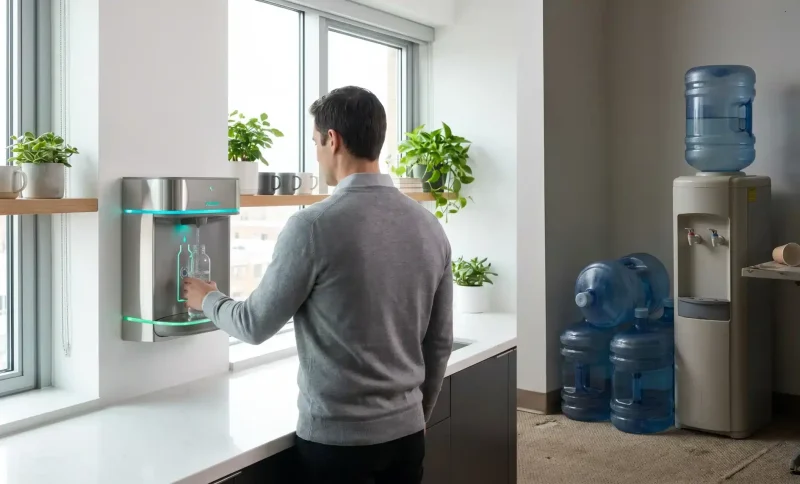
Office kitchens have changed a lot in the last few years. The coffee machine is better, snacks are more thoughtful, and workers expect shared spaces to feel clean, simple, and easy to use. One thing that has not aged as well is the old five-gallon water jug sitting in the corner.
Traditional jugs once felt like the easy choice. A delivery truck dropped them off, someone stacked them in a closet, and the cooler worked until the next refill. That setup still works for some small spaces, but many offices now see the downsides more clearly. Jugs are heavy, storage takes up room, deliveries can be missed, and empty bottles pile up fast.
Why the Old Jug Cooler Is Losing Its Place
The old jug system comes with hidden work. Someone has to track inventory, move full bottles, clean up spills, and reorder before supplies run out. A full five-gallon jug weighs more than 40 pounds, making it awkward for many employees to change. In a busy office, that means the cooler may sit empty while everyone waits for someone else to replace it.
Storage is another issue. A workplace with steady foot traffic may need several bottles on hand at once. Those bottles often end up in supply rooms, hallways, or kitchen corners. That can make a neat office feel cluttered, especially in smaller suites or shared workspaces.
Plastic waste adds to the problem. The U.S. Environmental Protection Agency reported that plastic generation reached 35.7 million tons in 2018, while the overall plastic recycling rate was 8.7 percent. For businesses monitoring their environmental footprint, relying on repeated use of plastic bottles can feel out of step with everyday sustainability goals.
This is where abottleless water cooler office setup starts to make sense. Instead of swapping heavy jugs, the dispenser connects to an existing water line and filters water on demand. Employees still get cold, fresh-tasting water, but the office avoids regular bottle deliveries and storage hassles.
What Makes Bottleless Systems So Appealing
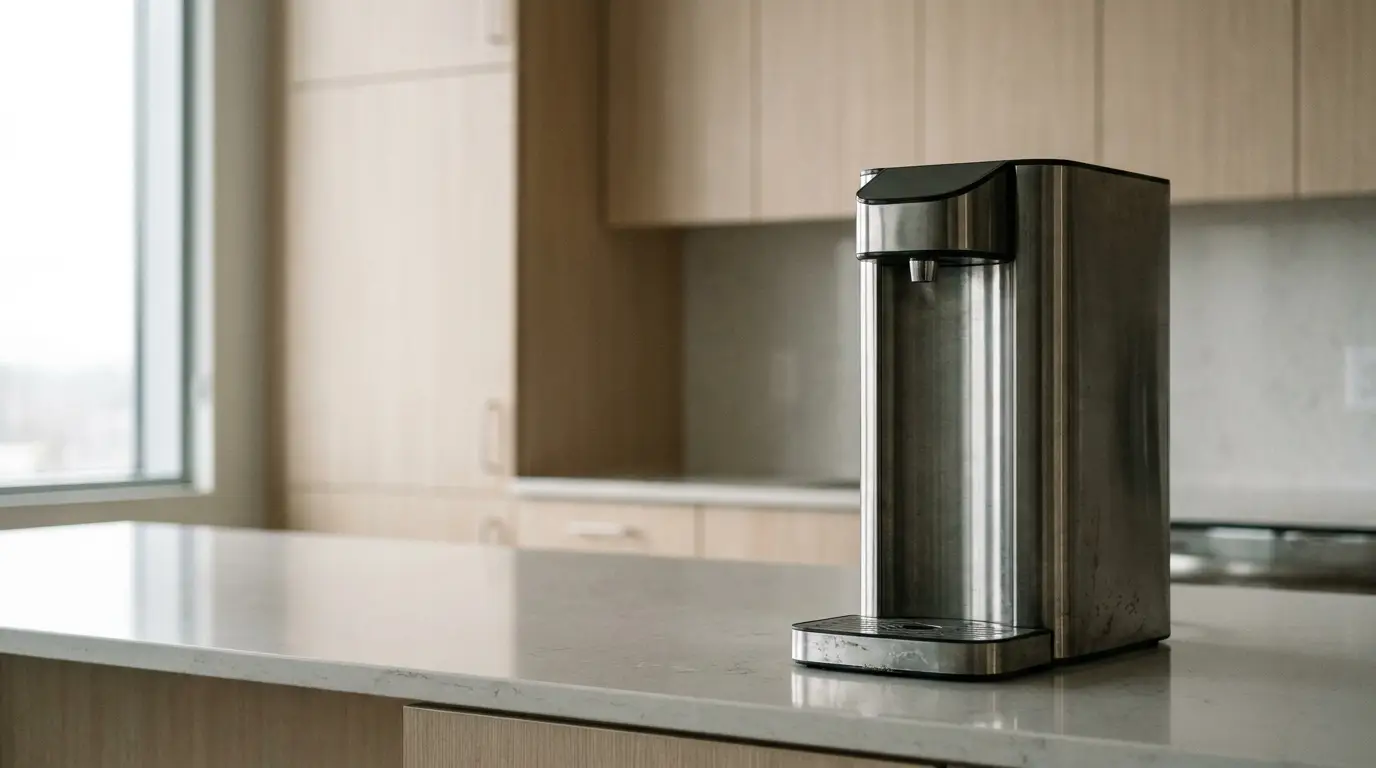
The biggest advantage is convenience. Once installed, a bottleless dispenser can serve employees throughout the day without the need for a reorder cycle. There are no full jugs to lift, no empty bottles to return, and fewer interruptions when supplies run low.
Clean design also matters. Many newer offices are built around open kitchens, shared lounges, and flexible work zones. A modern water dispenser can fit into that environment better than a plastic jug cooler. For client-facing spaces, even small details can shape how professional the office feels.
There is also a practical health and wellness angle. The National Academies set adequate total water intake levels at 3.7 liters per day for adult men and 2.7 liters per day for adult women, including water from food and drinks. Office workers do not need a perfect hydration plan to benefit from easier access to water. They simply need a visible, convenient place to refill a bottle or cup.
That matters in everyday ways. When water is easy to grab, people are less likely to rely only on soda, coffee, or packaged drinks. A good dispenser in the right spot can support better habits without turning wellness into a big program.
For office managers, maintenance is often the deciding factor. Bottleless systems usually need filter changes and routine service, but that can be easier to manage than tracking jug inventory week after week. The best choice depends on the office’s size, water usage, plumbing access, and the building’s service options.
A few questions can help guide the decision:
- Is the office large enough that jug storage feels annoying?
- Are employees regularly refilling bottles during the day?
- Does the team want to reduce single-use packaging?
- Is there a good location near a water line?
- Would fewer deliveries make office operations simpler?
For many workplaces, the answer to at least a few of these questions is yes.
A Cleaner Office Upgrade That People Actually Use
Some workplace upgrades sound nice, but do not change daily routines. A better water system is different. People notice it every time they fill a bottle before a meeting, grab water after lunch, or make tea in the afternoon.
That small daily value helps explain why bottleless systems are appearing in offices, gyms, clinics, schools, coworking spaces, and hospitality venues. They solve a simple problem in a way that fits how people live now. Reusable bottles are common, employees care more about sustainability, and businesses want amenities that are easy to maintain.
The shift is not only about replacing one cooler with another. It reflects a bigger move toward offices that feel more intentional. A good workplace kitchen should be useful, tidy, and welcoming. Removing stacks of water jugs can make the space feel less like a storage area and more like a place people enjoy using.
Cost can also play a role, though every office should compare its own numbers. Jug delivery may look simple at first, but monthly delivery fees, bottle deposits, storage space, and staff time can add up. Bottleless systems may involve installation and service costs, yet they can offer more predictable use once the setup is in place.
The best fit is usually the one that matches the office’s real habits. A small team with light water use may not need a high-capacity system. A larger office with frequent visitors, multiple departments, or a busy break room may see the benefits much faster.
The Future of Office Water Looks Less Cluttered
The traditional jug cooler is not disappearing overnight, but its place in the modern office is shrinking. Businesses want cleaner kitchens, simpler operations, and fewer plastic bottles moving through the workplace. Employees want water that is easy to access and pleasant to drink.
A bottleless water cooler office solution checks those boxes in a way that feels practical rather than flashy. It reduces lifting, storage, deliveries, and waste while giving people a better everyday experience. For many workplaces, that makes it less of a luxury and more of a smart office upgrade.