

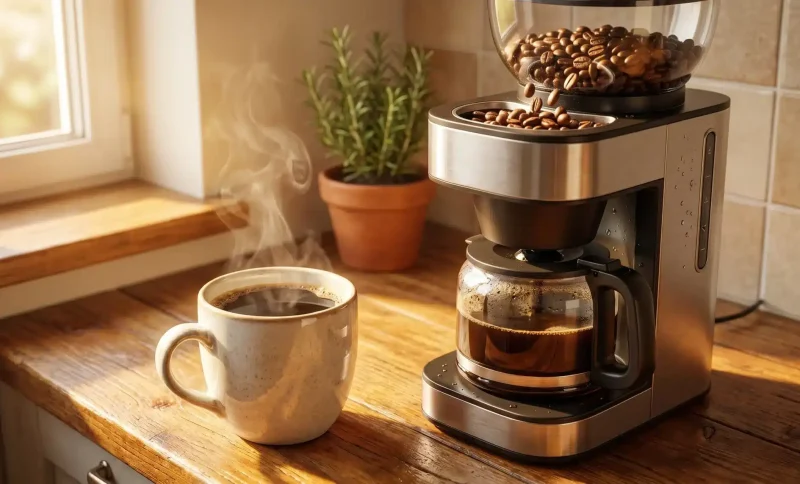
For tons of people brewing that first cup of coffee in the morning is the one thing that actually gets them out of bed. When you’re looking at home setups, upgrading to an automatic coffee maker is a complete game-changer. Everyone loves them because you get that super fresh, big mug of filter-style coffee without having to mess around with scoops, scales, or paper filters. It’s basically plug-and-play.
But here is the catch. Even with all that fancy engineering under the hood, most people completely waste the potential of their machine. They just plug it in, leave it on the factory default settings, and never touch a dial. Making a modern drip coffee maker actually taste good is pretty simple: it just comes down to knowing a few basic things about your beans, how the grinder behaves, and tweaking the water settings. Once you figure it out, your morning cup will taste ten times cleaner and way more flavorful.
Fresh Beans Revolution
The absolute best part of having a machine with a grinder built right into it is that you completely cut out the dead time between crushing the beans and brewing the drink.
Whole beans are super sensitive. The very second air hits them, they start going stale through oxidation. This happens at hyper-speed if you buy those bags of pre-ground coffee from the grocery store shelf. Crushing the beans creates way more surface area for oxygen to absolutely destroy the flavor.
An automatic machine grinds the coffee literally seconds before the hot water drops. That traps the essential oils – that’s to say the stuff that actually makes coffee smell and taste rich – right inside your mug instead of letting them vanish into the kitchen air. If you want to make this work for you, always buy excellent whole beans and keep them in the machine’s airtight hopper. It’s important not to park your drip coffee maker right next to a hot oven or stove, because high heat ruins the natural oils in the beans before they even touch the grinder.
Fixing Your Grind and Letting the Machine Do the Math
On these bean-to-cup setups, how you adjust the internal grinding burrs changes everything. It’s the main dial that controls whether your coffee tastes great or like battery acid.
Even though the machine uses sensors to figure out how much coffee to drop for whatever size cup you push, you still have to set the coarseness yourself. For a solid drip style, you need to find a sweet spot so you don’t hit the two extremes that ruin your morning.
If your grind is way too fine, the water is going to get totally stuck trying to force its way through the packed coffee. That extra contact time causes over-extraction. You wind up with an incredibly bitter, woody cup that leaves your mouth feeling completely dry. On the flip side, if the grind is too coarse, the water just blasts right through it like an open pipe. Your coffee ends up tasting thin, watery, and so sour it’ll make you wince. Find that middle ground – something that looks a bit like coarse sand – and the machine handles the rest.
Tap Water Is Killing Your Flavor
Since a giant mug of black coffee is basically 98 percent water, whatever comes out of your tap is going to make or break the final taste.
If your city water is full of chlorine or heavy mineral buildup, it acts like a wall on your tongue. It completely blocks you from tasting the subtle, fruity notes of the actual coffee beans. Just using filtered water completely flips the script. It lets the good flavor compounds in the coffee actually bind with the water molecules.
Temperature matters just as much. Good automatic machines use high-efficiency heating blocks to keep the water strictly between 92 and 96 degrees Celsius (around 197 to 205 Fahrenheit). If the water is too cold, it won’t pull the oils out of the coffee. If it’s too hot, it scorches the grounds and makes everything taste burnt. Keeping the internal pipes clean of lime scale with regular cleaning cycles ensures that temperature stays rock-solid for a long time.
No More Eyeballing the Ratios
One of the biggest headaches with old-school manual coffee pots is getting the math right every single morning. The software inside an automatic machine removes all that guesswork.
With manual setups, you’re usually just guessing with random kitchen spoons. One day your coffee is thick as mud, and the next day it looks like tea. Automation fixes that inconsistency completely. When you choose your cup size on the front panel, the machine calculates the exact amount of whole beans to grind to keep the flavor profile identical.
This means you can switch things up whenever you want. You can fill up a huge insulated travel mug for work, or just brew a small cup for a quick afternoon break, and the body of the coffee stays perfectly balanced. The internal computer adjusts the grind time and water flow on the fly so it never tastes watered down.
Keeping the Innards Clean
Going filter-free and skipping the plastic pods is awesome for the environment, but it does mean you actually have to clean the thing every once in a while.
The absolute heart of these machines is the internal brew group. It’s the mechanical piece inside that catches the fresh powder from the grinder, presses it into a tight puck, runs the hot water through it, and then shoots the waste into the dregs bin.
While this keeps you from having to do any manual scooping, coffee oils love to stick to metal and plastic walls over time. If you leave that brew group unwashed, those old oils turn totally rancid. It will make even the most expensive specialty beans taste sour and gross. To keep your morning cup tasting clean, just follow the regular maintenance prompts. Empty the waste drawer before mold starts growing, rinse the removable parts under the sink, and pop a cleaning tablet in when the light flashes. Taking care of the machine is the only real secret to making sure every single cup tastes brand new.


