There is a particular pleasure in handing someone a box of things you made yourself. Shortbread, fudge, peanut brittle, a jar of granola, a batch of caramels wrapped one by one. The trouble is that homemade treats often arrive looking homemade in the wrong way, loose in a cookie tin with a square of foil over the top, when a little packaging would have made them feel like a proper present.
You do not need a cupboard full of ribbon or a drawer of stamps to fix that. Two things do most of the work, which are a food-safe paper to wrap or line with and a small box that fits the treat. Both are inexpensive, both are made from paper rather than foam or film, and both can be printed with a name, a date or a simple pattern if you are making enough to justify it. Here is how to use them for the treats that give the best gift, and what to look for when you buy.
Start With Treats That Travel
Not everything that tastes wonderful at home survives a car journey or two days in the post. The treats that give well share a few traits. They are firm enough to stack, they keep for at least a week at room temperature, and they do not weep, melt or go soggy when wrapped. Shortbread, biscotti, fudge, toffee, brittle, hard caramels, chocolate bark and dense fruit loaves all qualify. Soft cookies, anything with a cream filling and most frosted cakes do not, unless they are being handed over the same day.
Bake or cook a day ahead so everything is fully cooled and set before it goes anywhere near a box. Warm sugar work in particular will fog a window and stick to paper.
Wrapping Individual Pieces in Wax Paper
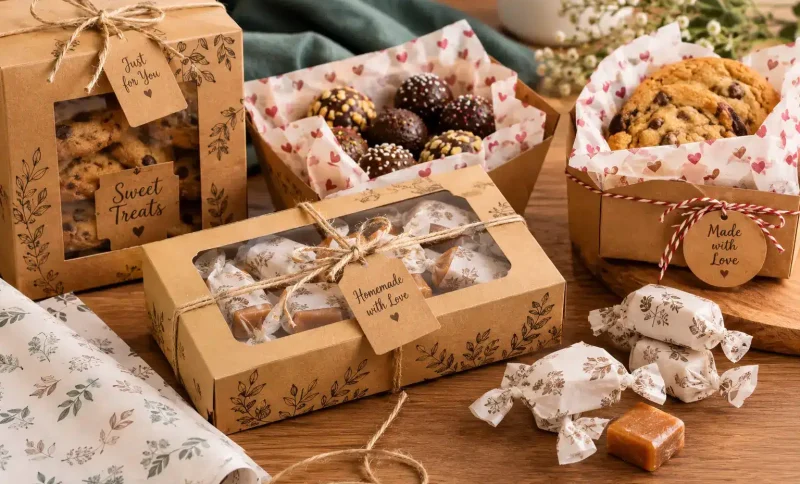
The oldest trick is still the best one. A square of wax paper twisted at both ends around a caramel or a piece of fudge keeps each piece separate, stops them sticking together in a warm room and makes the box look full of little presents rather than one slab. The same paper, cut to size, lines the bottom of a box so butter from shortbread does not mark the board.
If you make treats in any quantity, for a market stall, a school fundraiser or a long holiday gift list, it is worth ordering printed waxed paper with a name or a simple repeat pattern. Suppliers sell it in sheets and rolls, in white or kraft, with a single color or full color print, and the grease-resistant coating holds up to butter, oil and the steam off something still slightly warm. Minimums start at a few hundred sheets and production is typically seven to ten working days from artwork approval, so it is an easy thing to plan a month before the season.
Choosing a Box That Fits the Treat
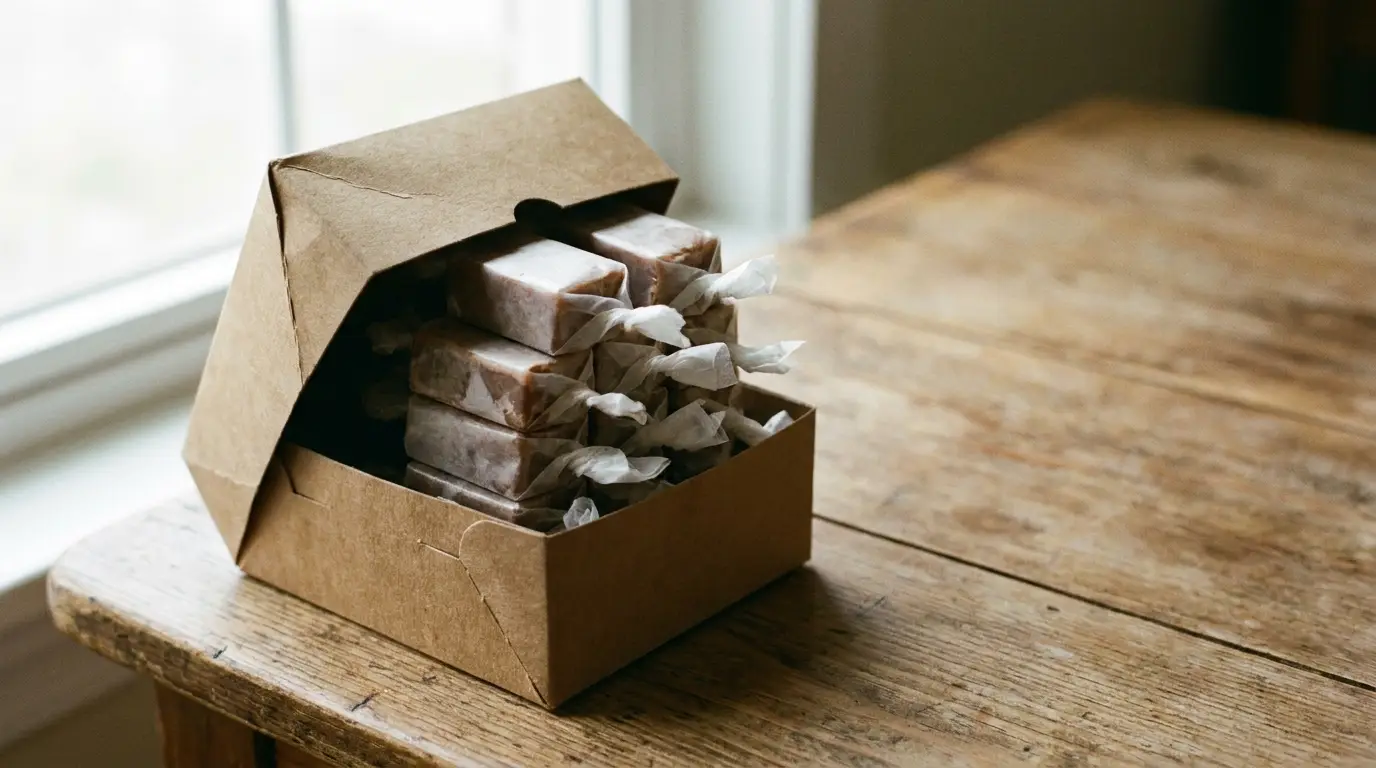
A box that is too big is the most common mistake. The treats slide, the corners break and the whole thing rattles. The right box is snug enough that nothing moves and shallow enough that there is only one layer, or two at most with a sheet of paper between them.
Kraft board is the natural choice for homemade food because the brown fibre looks honest and warms whatever color is printed on it. Makers of custom kraft candy boxes cut them to the contents rather than to a stock size, add a window where the sweets sell on appearance, and build in a partition where two kinds of treats need to stay apart. One point they make that is easy to overlook is that chocolate and anything high in cocoa butter will stain plain board over a few weeks, so a box meant for chocolate needs a barrier or a liner, while hard sugar sweets mainly need to be kept dry.
Matching the Box to the Confection
|
Treat |
Best wrap or liner |
Box that suits it |
|
Fudge, caramels, toffee |
Individual wax paper twists |
Small kraft box with a window |
|
Shortbread, biscotti |
Wax paper liner and a sheet between layers |
Shallow kraft box, one or two layers deep |
|
Chocolate bark, truffles |
Glassine or wax liner, kept cool |
Lined box with a lid, no window in warm weather |
|
Brittle, bark shards |
Wax paper liner |
Deeper kraft box, pieces stood on edge |
The table is a starting point rather than a rule. The test is simple. Pack one box, close it, carry it around the house for an hour and open it. If anything has moved or marked the board, change the liner or the size before you make twenty more.
Adding a Homemade Candle to the Box
A small hand-poured candle sits very well beside a box of treats, and many people who bake also pour. The one thing to get right is that a candle travels differently from a biscuit. Glass or tin needs to be held still, the label must not rub, and the scent should not be sitting against the food.
That is why a candle gets its own container inside the gift rather than sharing the treat box. Makers of custom candle gift box packaging use 12 to 14 pt cardstock, kraft or rigid board, with inserts cut to hold a jar or tin steady, and offer window, magnetic-closure and drawer styles so the candle shows without being handled. A plain kraft candle box next to a matching kraft treat box, both tied with the same twine, reads as a set and keeps the scent and the shortbread apart.
Labels and Small Finishing Touches
A gift of food should say what it is and when it was made. A small sticker or a stamped tag with the name of the treat, the date and any allergens, nuts especially, is both kind and practical. If you have printed wax paper, the pattern does the decorating, so keep the label plain. If the paper is plain, a single color label or a stamp gives the box its character.
Twine, a paper band or a folded card does the rest. Ribbon is lovely but hard to recycle and tends to crush soft boxes in transit, so for anything going by post a paper band is the better choice.
Packing for the Post
Treats that are being mailed need the box inside another box. Fill the gap with crumpled kraft paper rather than foam, keep the inner box level, and mark the outer carton as fragile and perishable. Choose treats from the travel list, pack chocolate only in cool months, and post early in the week so nothing sits in a depot over a weekend.
A gift of something you made, wrapped in paper that stays clean and boxed so it arrives whole, says more than almost anything from a shop. The packaging only has to do two jobs, keep the food as good as it was when it left your kitchen and make it look as cared for as it is.