





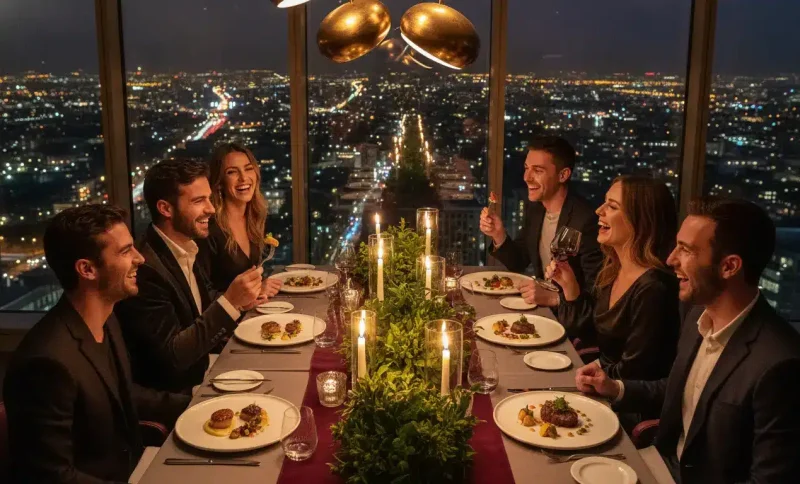
In 2024, U.S. consumers allocated more funds to restaurant meals than supermarket purchases, marking a historic first. This one figure reveals just how dramatically our connection to cuisine has evolved. Dining away from home isn’t merely about avoiding meal prep anymore. It represents an evening deserving of stepping outside.
Securing a table now parallels booking concert seats, getaways revolve around particular eateries, and simple weekend lunches can transform into extended gatherings featuring live music and unlimited beverages. Cuisine has encompassed all surrounding elements.
And data support this observation. Spending patterns on experiences indicate shoppers favor activities such as eating out over acquiring tangible goods. For millennial and Gen Z buyers, this inclination runs even deeper. A restaurant visit is no longer a basic exchange. It functions as entertainment, a social gathering place, and increasingly as a signal of how individuals choose to invest their leisure time and finances.
The Research Habit That Shapes Every Decision
Because dining out now carries so much weight, people have become far more careful about where they book. Almost nobody walks into a restaurant blind anymore. Before committing to a table, the average diner scrolls through photos, scans recent reviews, checks the menu prices, and watches a few short clips of the interior.
Ask anyone around, and the conclusion is that listings with video content see more engagement than those with photos alone. The Infatuation, Eater, and Google Reviews have become essential planning tools, not afterthoughts.
And the reality on the ground is that the same pattern shows up across lifestyle and entertainment choices. When someone plans a full evening, dinner plus a show or drinks and live music, they cross-reference multiple sources to make sure every piece fits. Trust matters, and dedicated review platforms that aggregate real customer experiences have stepped in to fill that need.
For broader entertainment planning, especially in cities with dense nightlife, comparison sites serve a similar function. They also look for a reliable spot with fast internet to manage their plans.
Planning a night in a place like Vegas means more than choosing one activity. It is about connecting dinner, a show, and maybe a casino visit into one smooth evening. A careful visitor might use OpenTable to reserve a table and Ticketmaster to get event tickets. For some online casino entertainment in your room or when lazing around, sites like Casino.com help you filter out the best choices.
Particular Metropolises Are Pioneering the Transition
This fusion of cuisine and amusement isn’t occurring uniformly across all locations. Several urban centers have emerged as testing sites for a fresh approach. Austin’s East Austin district currently hosts numerous immersive eating concepts.
Nashville’s Assembly Food Hall attracts millions of guests each year, bringing together local chefs, artisan cocktails, and an elevated platform for nightly live acts. In Miami, the Design District has turned shopping into a food-centric activity, with restaurants like L’Atelier de Joël Robuchon anchoring luxury retail visits.
Las Vegas continues as the most pronounced illustration. Over the last 10 years, the Strip has reinvented itself as a gastronomic hub. Between 30 and 50 celebrity chef eateries now function along Las Vegas Boulevard.
Venues such as the Cosmopolitan and Wynn Las Vegas promote their dining rosters as vigorously as their gambling areas. Guests secure bookings months ahead for chef’s counters at é by José Andrés at The Cosmopolitan or omakase at Nobu within Caesars Palace. The gambling floor frequently takes a backseat. The dining experience becomes the journey’s purpose.
The dining evolution has produced a shopper who behaves like a travel reviewer even on an ordinary Saturday evening. Each location, from a local pizzeria to an upscale tasting menu, gets evaluated against rising standards of excellence, atmosphere, and social-media readiness.
Digital Platforms Have Elevated Expectations
The image-focused character of contemporary food culture isn’t coincidental. Instagram and TikTok have converted eateries into content creation hubs. A plate that captures well can produce thousands of dollars in unpaid promotion.
Eatery designers now factor in illumination positioning expressly for smartphone lenses. Menus appear in typefaces selected for readability on small displays. Certain kitchens have even modified presentation methods, incorporating elevation or shiny coatings to help plates stand out in brief video segments.
However, this may carry drawbacks. The demand to appear camera-ready can lead to establishments that emphasize visuals over flavor. Yet it has also propelled the sector ahead. Cooks who may have previously concentrated solely on taste now weigh the complete sensory journey — the room’s appearance, noise volume, climate, service rhythm. The outcome is a more considered, comprehensive hospitality strategy that rewards patrons who are prepared to see beyond the lens.
Emerging chefs increasingly state they weigh a plate’s visual impact equally with its flavor when crafting new offerings. Such thinking would have seemed impossible one generation prior. Currently, it mirrors the truth of a dining environment where the lens consumes before the diner.