

An outdoor lunch can mean bright light bouncing off a tablecloth or nearby water. If you wear glasses, taking them off to put on nonprescription sunglasses may leave you struggling to see your plate or the people across the table.
Corrective sun lenses combine vision correction with tinted lenses. Before choosing a pair, check UV protection, confirm that the frame works with your prescription, and try the movements you make while eating. Consider polarization separately if reflected glare makes your usual picnic spot uncomfortable.
Start With Sun Protection
Check UV protection before choosing a style or tint. Cleveland Clinic recommends making it the priority, and the label gives you a starting point.
Check the label. The FDA advises looking for a UV400 rating or the words “100% UV protection” on the sticker, tag or product listing. If neither appears, ask the seller to confirm the protection before buying. This applies wherever you shop, whether at an optician, a pharmacy or an online retailer.
Separate darkness from protection. A very dark lens may feel comfortable in bright light, but the FDA warns that a dark tint is not evidence of UV protection. Don’t use lens color or darkness as a substitute for checking the UV label.
Decide whether glare is a problem. Polarization is a separate feature. Cleveland Clinic explains that it reduces glare reflected from surfaces such as water and roads, and that polarized lenses still need their own UV protection. If your family eats beside a lake or on a bright pool deck, polarized lenses may make the surroundings more comfortable to look at. For a shaded backyard lunch, glare reduction may be less of a priority.
If you can try the pair before buying, look at your phone through the lenses. Cleveland Clinic notes that some LCD screens can be harder to read through polarized lenses. Check whether yours stays readable at the angles you normally use.
Choose a Pair That Fits Your Vision and Face
Once you’ve checked protection, focus on clear vision and a frame that stays comfortable while you lean over your plate, turn to talk and reach for food.
Start with a current prescription. Cleveland Clinic notes that you’ll need a valid, current prescription to order glasses online, and the same goes for corrective sun lenses. If your current glasses no longer give you clear vision, speak to an eye-care professional before ordering. They can also help you understand any prescription requirements that affect your lens choices.
Confirm the frame works with your lenses. Lens availability can depend on prescription strength, lens type and frame style. Before settling on a frame, ask whether it can accommodate the lenses you need. A frame’s appearance alone won’t tell you whether it’s suitable for your prescription.
Try the movements you make at lunch. The National Eye Institute recommends sunglasses that feel good, stay in place and cover the skin around your eyes. Look down at a plate and check whether the frame slides. Turn your head as if you’re talking to someone beside you. Put on your usual hat and check that the frame’s arms and the brim don’t press against each other. If the glasses slip or pinch during these movements, try another frame.
Compare the complete order. Ask whether the quoted total includes the frame, corrective lenses and any options you’ve chosen, such as polarization. Compare complete totals rather than frame prices alone, using the same lens requirements for each pair.
If you are comparing places to browse prescription sunglasses, EZContacts is one online option; confirm the chosen frame’s prescription compatibility and UV protection details before ordering.
Pack a Small Eye-Care Kit
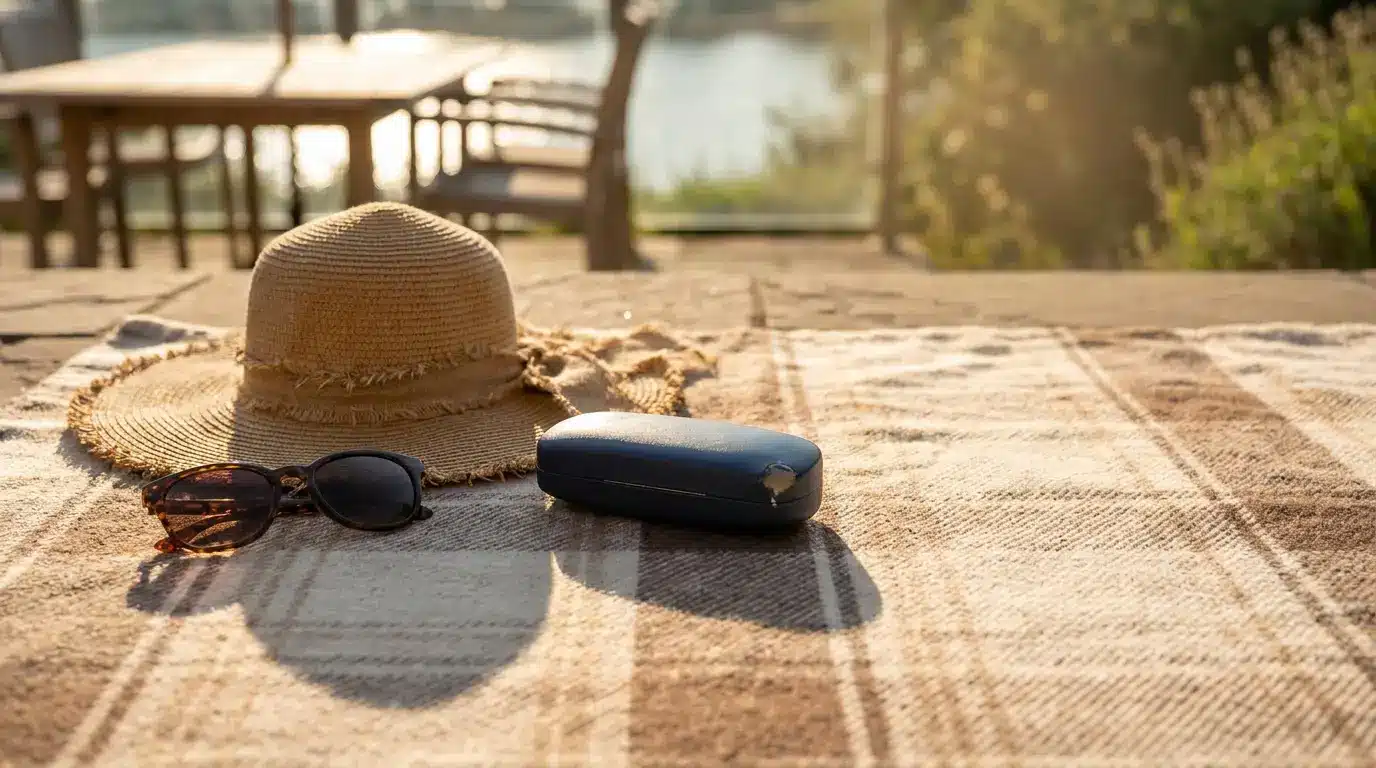
A case and cleaning cloth give your glasses a place in the picnic bag. Keep them accessible so you can put the pair away when you move into the shade or switch back to your regular glasses.
Give the lenses a safe place. Cleveland Clinic recommends storing glasses in a hard-shell case when you aren’t wearing them. In a picnic bag, the case separates your glasses from water bottles, utensils and food containers. Keep it near the top so you don’t have to unpack lunch to find it.
Bring the right cloth. Cleveland Clinic recommends a microfiber towel or another lint-free cloth for cleaning lenses. Keep one in the case rather than relying on a shirt hem or picnic napkin. Follow the lens manufacturer’s cleaning directions.
Add shade. Cleveland Clinic recommends a wide-brimmed hat for another layer of shade while wearing sunglasses. Try the hat and glasses together before packing them. For children, choose sunglasses that fit rather than handing over an adult pair that slides down the nose. The National Eye Institute notes that sunglasses are available in kids’ sizes.
Finish the lunch checklist. Add these items to your family picnic essentials, along with the food and serving supplies, so nothing gets left behind:
- Hard-shell case and microfiber cloth
- Wide-brimmed hats
- Water for everyone
- Blanket or tablecloth
- Plates, cups, utensils and a serving spoon
- Trash bag and wipes for cleanup
- A cooler with ice or frozen gel packs for cold food, as the FDA recommends
For a dessert that travels well, our Strawberry Crack Salad can be portioned into individual cups or mason jars. Pack the crunchy topping separately and stir it in just before serving.
Conclusion
Before heading out, check the UV rating, make sure the frame suits your prescription and face, and pack a hard case and cleaning cloth. Those small checks can help keep your attention on the meal and the company around the table.
FAQs
Does a darker tint mean better sun protection?
No. The FDA warns against mistaking dark-tinted sunglasses for UV-protected ones. Tint affects how much visible light reaches your eyes. Check for UV400 or 100% UV protection regardless of how dark the lenses look.
Are polarized lenses necessary for every outdoor meal?
No. Polarization reduces reflected glare, which can be useful beside water or bright pavement, but it doesn’t add UV protection. If glare bothers you, try polarized lenses and check your phone through them, since some LCD screens can be harder to read.
Can I use my current glasses prescription for sunglasses?
Sunglasses can be made with your prescription built in, but availability depends on lens type, prescription strength and frame style. Use a valid, current prescription and confirm compatibility with the seller. Ask your eye-care professional if you’re unsure which lenses you need.
What should I bring to protect my glasses in the picnic bag?
Bring a hard-shell case and a microfiber or other lint-free cloth. Store the glasses in the case whenever you take them off, and follow the lens manufacturer’s cleaning directions.