If you’ve ever cooked pork chops that looked promising in the pan and then chewed like a shoe sole at dinner, you’re not alone. Pork chops have a strange talent for going from tender to tough in what feels like 14 seconds. The good news is that you can avoid that mess. With a few smart techniques, you can make pork chops that stay juicy, flavorful, and actually worth getting excited about.
Start With the Right Cut
Not all pork chops are built the same, and your results depend heavily on what you buy. Thin boneless chops cook fast, which sounds convenient until they dry out before you’ve even set the table.
If you want better texture, go for thick-cut chops, ideally at least 1 to 1.5 inches thick. Bone-in chops usually hold moisture better and bring a little extra flavor. Center-cut loin chops are easy to find, but rib chops often come out more tender.
Look for chops with some visible fat around the edges and decent marbling. Super-lean pork might sound healthier, but it can taste flat and dry. Fat is flavor, and in this case, it’s also insurance.
When shopping, keep these points in mind:
- Choose thick-cut chops when possible
- Bone-in often cooks more evenly
- Avoid pale, ultra-lean pieces with no marbling
- Buy similar sizes so they cook at the same rate
Season Earlier Than You Think
Pork chops need more than a last-second shake of salt right before they hit the pan. If you season them earlier, the salt has time to work its way into the meat instead of just sitting on top pretending to help.
A simple dry brine works beautifully. Sprinkle both sides with kosher salt and let the chops rest uncovered in the fridge for at least 30 minutes. A few hours is even better. This improves flavor and helps the meat retain moisture.
You can keep the seasoning basic or add extra layers. Black pepper, garlic powder, smoked paprika, and a little brown sugar all play well with pork. Fresh herbs like rosemary and thyme also fit naturally.
If you want a more precise method with consistent results, a good sous vide pork chops recipe can help you lock in juiciness before finishing with a quick sear.
Don’t Overcook Them
This is the part where most pork chops go off the rails. People still cook pork like it’s 1987 and every dinner requires maximum caution. Modern pork is safe at lower temperatures than many home cooks realize.
The USDA recommends cooking pork to 145°F, followed by a three-minute rest. That temperature gives you juicy meat with a faint blush of pink in the center. Push it to 160°F or beyond, and you’re entering dry, chalky territory.
A meat thermometer makes a huge difference here. Not a vague poke test. Not a guess based on vibes. An actual thermometer. Insert it into the thickest part without touching the bone.
Keep in mind that carryover cooking adds a few degrees after the chops leave the heat. Pull them off slightly early and let them finish resting.
Smart temperature habits include:
- Cook to 145°F for the best balance of safety and tenderness
- Check temperature in the thickest section
- Remove chops a little early to allow carryover cooking
- Let them rest before slicing
Use a Cooking Method That Matches the Chop
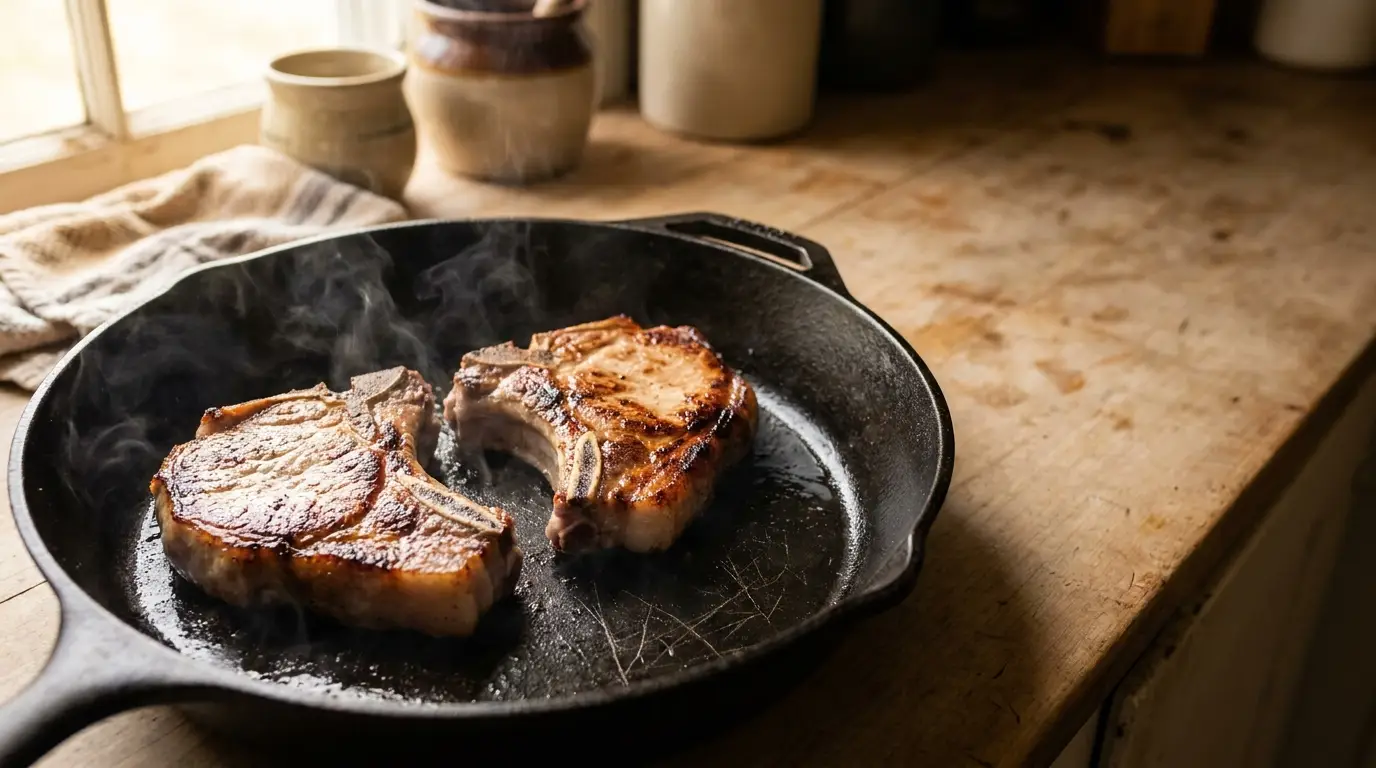
A thick pork chop and a thin pork chop should not be treated like identical twins. They need different approaches.
For thin chops, fast high-heat cooking works best. A quick pan sear or grill session keeps them from spending too much time drying out. You want color on the outside and just enough time to cook through.
For thicker chops, you have more options. Pan-searing followed by oven finishing works well. Grilling is solid too, especially if you use two-zone heat so the exterior doesn’t burn before the center catches up.
Then there’s sous vide, which has become popular for a reason. It gives you exact temperature control and takes most of the stress out of cooking lean meat. You can bring the chop to the perfect doneness edge to edge, then finish with a quick sear for texture.
Each method has a job:
- Thin chops: quick pan sear or hot grill
- Thick chops: sear and finish in oven
- Very thick chops: reverse sear or sous vide
- Busy weeknight cooking: choose methods with less guesswork
Build Flavor With the Finish
Juicy pork chops are great. Juicy pork chops with a proper finish are a different league.
Once the chops are nearly done, think about what you can add in the final minute or two. Butter, smashed garlic, and herbs in the pan can give you that glossy, restaurant-style finish without much effort. Spoon the melted butter over the chops while they rest in the pan for extra flavor.
A quick sauce also helps. Pork loves ingredients that balance richness with brightness. Mustard cream sauce, pan gravy, apple cider reduction, or a rosemary-garlic butter sauce can all work beautifully.
You don’t need a culinary school résumé for this. Even deglazing the pan with a splash of broth or white wine and whisking in a little butter can make dinner feel far less ordinary.
Easy finishing ideas:
- Baste with butter, garlic, and thyme
- Add a squeeze of lemon for brightness
- Make a quick pan sauce from browned bits
- Pair with apples, mustard, or fresh herbs
Avoid the Small Mistakes That Ruin Good Pork
Sometimes the problem isn’t your recipe. It’s the little things that stack up and sabotage the final result.
Putting cold chops straight from the fridge into a screaming-hot pan can lead to uneven cooking. Patting them dry before searing matters too, because moisture on the surface creates steam instead of browning. And crowding the pan is a classic mistake. If the chops are too close together, they won’t sear properly.
Resting also matters more than people think. If you slice into the chop right away, the juices run out onto the plate instead of staying in the meat where they belong.
Watch out for these common issues:
- Skipping the meat thermometer
- Using chops that are too thin
- Forgetting to dry the surface before searing
- Crowding the pan
- Cutting too soon after cooking
Good pork chops aren’t about luck. They come from choosing the right cut, seasoning with intention, cooking to the right temperature, and finishing with a little care. Once you dial in those basics, you stop hoping dinner turns out well and start expecting it to.