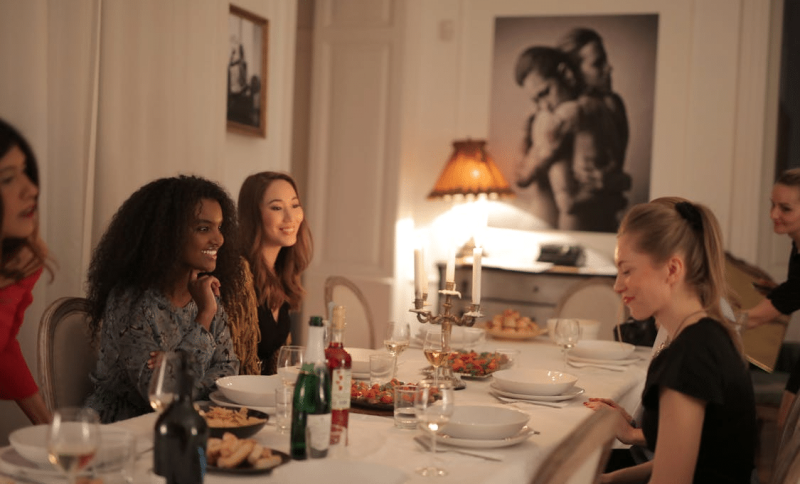
There is something about eating at a really good restaurant that is hard to replicate at home. The food might actually be better in your own kitchen. The wine might be cheaper. You are definitely more comfortable in your own clothes. And yet somehow the whole thing still feels different, and not always in your favor.
The reason is not usually the cooking. It is everything around the cooking. The best restaurants understand that a meal is an experience, and the experience is made up of a dozen small details that most of us do not consciously notice until they are missing. The good news is that almost all of them are things you can recreate at home without a big budget or a lot of extra effort.
Here is what actually makes the difference.
Start with the table, not the food
The most common mistake home entertainers make is pouring all their energy into what is coming out of the kitchen and leaving the table as an afterthought. In a restaurant, the table is set before anyone arrives. It signals that something intentional is about to happen.
You do not need fancy china or a florist on speed dial. What you need is a table that looks like someone thought about it. A simple cloth or placemats, real napkins instead of paper ones, candles, and glasses that match all go a long way. Clear the clutter off the table completely before anyone sits down. The visual calm this creates changes the whole feel of the meal before the first course arrives.
Get the lighting right
Restaurants know that overhead lighting is the enemy of atmosphere. Bright, flat light makes a room feel like a cafeteria. Soft, warm light makes it feel like somewhere worth lingering.
At home, the simplest fix is to turn off the overhead lights entirely and use lamps, candles, or both. If you have a dimmer switch in your dining room, use it. Even in a small apartment, a handful of candles on the table and a lamp in the corner can completely transform the feel of a meal. It takes about thirty seconds and costs nothing.
Think about the soundtrack
This is the detail that almost nobody plans for at home, and it is one of the things restaurants get most right.
Good restaurant music is not random. It is chosen to fit the energy of the evening and adjusted as the night moves on. The vibe at 7pm when people are settling in should feel different from the vibe at 9pm when everyone is on their second bottle. Tempo and energy matter. So does volume: loud enough to fill the room and cover the sound of the kitchen, but quiet enough that conversation always wins.
What does this mean for a dinner party? Make a playlist in advance rather than hitting shuffle on whatever you were listening to that afternoon. Think about the arc of the evening. Start with something low-key and build from there. Keep the volume low enough that people have to lean in slightly to hear it, which is exactly the right level. If you want to understand how seriously good restaurants approach this, it is worth looking at how dedicated music for restaurants works as a concept. The level of intentionality is genuinely instructive.
Pace the meal like a restaurant does

One of the things that makes a restaurant feel special is the rhythm of service. There is time between courses. You are not rushed, but you are also never sitting with empty plates in front of you for too long. That pacing is what makes a meal feel like an event rather than just dinner.
At home, it is easy to let everything blur together. Try to build in natural pauses. Clear the starter plates before you bring out the main. Give people a few minutes to breathe between courses. If you are hosting solo, prep as much as you can in advance so you are not disappearing into the kitchen for twenty minutes at a stretch. The more present you can be at the table, the more the meal feels like a shared occasion rather than a cooking demonstration.
Offer a welcome drink

Restaurants do not let you walk in and immediately sit down with a glass of water and a menu. There is a moment of arrival, usually at the bar or with a welcome drink, that signals the evening has begun.
Steal this. Have a drink ready for guests when they arrive, even if it is just sparkling water with lemon or a simple spritz. It gives people something to do with their hands while everyone settles in, and it creates a clear beginning to the evening that makes the whole thing feel more like an occasion.
Keep the menu focused
The best restaurant meals are rarely the ones with the longest menus. A focused menu with three or four things done really well beats a sprawling spread that dilutes your attention in every direction.
The same is true at home. Pick one showstopper dish and build simply around it. A beautiful main with one great side and a simple dessert is a better dinner party than five dishes you are equally stressed about. Your guests will remember the thing you did brilliantly far more than the number of dishes on the table.
The secret is attention, not perfection
The reason a great restaurant night feels special is not that everything is flawless. It is that everything feels considered. Someone thought about the table, the light, the music, the pacing. That level of attention is what you are actually recreating when you try to bring the restaurant feeling home.
The food is your territory. You probably already have that covered. It is the surrounding details, the ones that seem small, that close the gap between a nice dinner and a genuinely memorable one.
Set the table properly. Dim the lights. Make a playlist. Pace the courses. Those four things alone will change the whole evening.