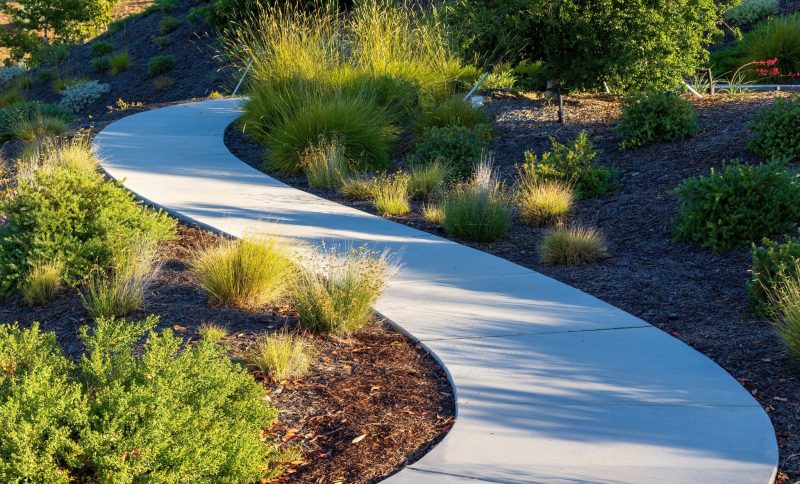
Four inches of concrete is enough for many residential walkways that carry foot traffic only. It is not the right thickness for every location.
Concrete experts at Urban Contractors NYC explain that a walkway requires thicker concrete when it crosses a driveway, carries maintenance equipment, serves a busy commercial property, or is exposed to heavier loads. Ground conditions also matter. Even a thick slab can fail when placed over loose soil or a poorly prepared base.
NYC DOT specifications call for a four-inch concrete sidewalk in standard pedestrian areas. The required thickness increases to seven inches at driveway crossings and corner quadrants. The concrete must also be installed over a six-inch foundation unless the project specifications state otherwise.
Why Four Inches Is Common for Walkways
A typical walkway carries people rather than vehicles. These loads are light and spread across the surface. A properly installed four-inch slab can handle this type of use without needing the depth of a driveway or parking area.
Four inches also gives contractors enough depth to place and finish the concrete while creating properly formed joints. It is a practical balance between strength, material use, and installation cost.
The durability of a concrete walkway depends on more than slab depth. Proper drainage, well-placed joints, controlled curing, and skilled installation all affect how well it performs over time.
When Four Inches May Not Be Enough
The Walkway Crosses a Driveway
A walkway does not remain pedestrian-only when vehicles must pass over it.
The section crossing a driveway receives wheel loads. It also experiences pressure from turning and braking. That is why the NYC DOT standard increases sidewalk concrete from four inches to seven inches at driveway crossings.
Using the standard walkway thickness through a driveway can create a weak point. Cracks may form along the wheel path. The edges may also break where the thinner section meets the heavier pavement.
Heavy Equipment Will Use the Path
A walkway may occasionally carry more than people. Lawn tractors, compact loaders, utility carts, dumpsters, and construction equipment can place concentrated loads on the slab.
Occasional heavy use should be considered before the concrete is poured. A good contractor always recommends greater thickness, reinforcement, or a different base design. The decision should be based on the expected load rather than the name given to the surface.
Calling an area a walkway does not make it suitable for equipment.
The Property Has Weak or Disturbed Soil
Soft soil can move under the concrete. Filled ground may also settle if it was not compacted correctly.
Adding concrete thickness can improve load capacity, but it does not correct unstable soil by itself. Weak material needs to be removed. The remaining subgrade must then be prepared before the base and concrete are installed.
NYC DOT specifications require the earth subgrade under public sidewalks to be compacted to at least 95 percent of Standard Proctor Maximum Density. Unsuitable wet, frozen, or unstable material must be removed and replaced.
The Walkway Serves a Busy Entrance
Commercial entrances and shared pedestrian routes receive constant traffic. They also support hand trucks, cleaning equipment, and large deliveries.
Four inches may still be suitable in some locations. However, the designer should review the actual use of the space. A walkway at a quiet home and one outside a busy apartment building do not face the same conditions.
The Edges Lack Support
Walkway edges are vulnerable when soil washes away or landscaping leaves part of the slab exposed. An unsupported edge can crack under a load that the center of the slab would carry without trouble.
Good grading and proper backfilling help protect these areas. The concrete should not be expected to bridge empty spaces beneath the slab.
The Base Matters as Much as The Concrete
Homeowners often focus on slab thickness because it is easy to measure. The hidden base is just as important.
A well-built base distributes loads and provides even support for the concrete. It also reduces the risk of uneven settlement. Poor support allows parts of the slab to move while other areas remain in place. This often leads to cracking or uneven walkway panels.
Drainage Can Change the Life of a Walkway
Water should not collect beside or beneath a concrete walkway.
Standing water can enter joints and small cracks. During cold weather, freezing water expands. Repeated freeze-and-thaw cycles can place stress on the surface and edges.
Water can also wash fine material out from under the slab. Once support is lost, a section may sink or rock under foot traffic.
The walkway should be graded to direct water away while remaining safe and accessible. NYC DOT specifications also address sidewalk slope. They may require a five-foot-wide pedestrian path with a transverse slope no greater than two percent to meet accessibility needs.
NYC Rules Apply Differently to Public and Private Walkways
It is important to separate a private walkway from the public sidewalk beside a property.
A path inside a front yard may be designed according to the property’s use, approved plans, and applicable building requirements. A public sidewalk falls under NYC DOT standards and permit rules.
- For public sidewalk work in New York City:
- Standard sidewalk concrete is generally four inches thick.
- Driveway areas and corner quadrants require seven inches.
- A six-inch foundation is normally required.
- The contractor must obtain a sidewalk construction permit before work begins.
Sidewalk repair costing more than $200 must be performed by a contractor with the required NYC Home Improvement Contractor license.
These requirements should be confirmed for the specific property. Special conditions may affect the design.
How to Choose the Right Thickness
Before deciding that four inches is enough, consider five questions:
- Will vehicles ever cross the walkway?
- Will equipment travel over it?
- What condition is the soil in?
- Is the area part of the public sidewalk?
- How will water leave the surface?
A qualified concrete and masonry contractor can inspect the site and determine whether the standard thickness is suitable. This is especially important where a walkway meets a driveway, public sidewalk, curb, foundation, or heavily used entrance.
The Final Answer
Four inches is a sound starting point for many pedestrian walkways. It is not a universal rule.
The correct thickness depends on the load, soil, base, drainage, and location. In New York City, four inches is the standard for much of the public sidewalk. Seven inches is required where the sidewalk passes through driveways and corner quadrants.
The goal is not simply to pour more concrete. It is to build the right slab over the right foundation for the way the walkway will actually be used.