

Introduction
If you want to understand the future of retail, you don’t need to look at what’s trending—you need to look at what’s already working. And few places demonstrate this better than Japan.
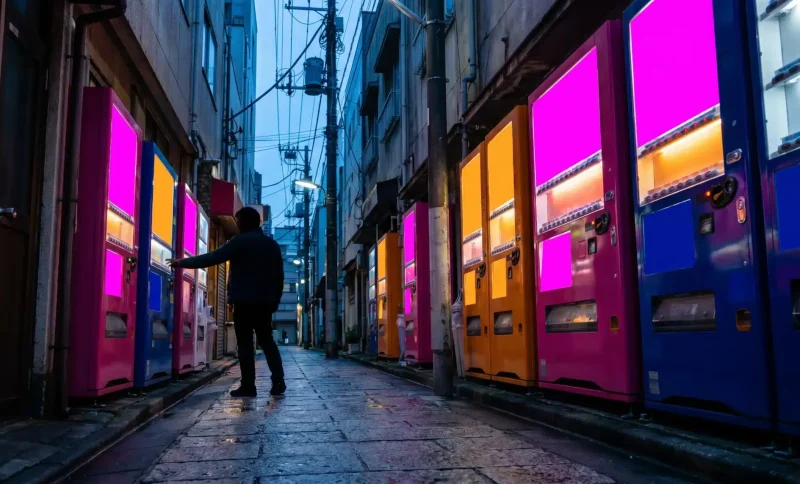
Walk through any street in Tokyo, Osaka, or even a quiet suburban neighborhood, and you’ll encounter something remarkable. Vending machines are everywhere. Not tucked away in corners or treated as an afterthought, but integrated seamlessly into daily life. They are trusted, relied upon, and—most importantly—profitable.
This isn’t accidental.
Japan has spent decades refining the vending model into something far more powerful than simple convenience. It has turned vending into a high-performance retail channel, capable of generating consistent revenue with minimal friction. While other markets are only beginning to explore its potential, Japan has already proven what’s possible.
The lesson is clear: vending is not a novelty. It is a system. And for venues that choose to ignore it, the cost is not just missed opportunity—it is lost profit.
A Culture That Embraced Convenience Early
To understand why vending thrives in Japan, you must first understand the cultural context. Efficiency, reliability, and convenience are deeply ingrained values. People expect services to work seamlessly, without unnecessary complexity or delay.
Vending machines align perfectly with these expectations.
They provide instant access to products without requiring interaction. They are available around the clock. They deliver exactly what is promised, every time. This consistency builds trust, and that trust drives usage.
But what makes Japan unique is not just the presence of vending machines—it is their evolution.
Over time, vending has expanded beyond beverages and snacks into a wide range of categories. From hot meals to umbrellas, from electronics to collectibles, vending machines have become versatile retail platforms. They are not limited by traditional constraints, and this flexibility has allowed them to adapt to changing consumer needs.
From Utility to Experience
One of the most important lessons from Japan is that vending is not just about utility—it is about experience.
Modern vending machines are designed to capture attention. They are visually appealing, often featuring bright displays, creative branding, and interactive elements. They turn a simple transaction into a moment of engagement.
This is particularly evident in the rise of collectible vending formats, such as capsule toy machines. These machines tap into the psychology of surprise and reward, creating an experience that goes beyond the product itself.
NekoDrop vending machines are a perfect example of this evolution. They combine the appeal of collectible toys with a carefully curated product selection, creating a sense of anticipation with every purchase. Customers are not just buying an item—they are participating in an experience.
This shift from utility to experience is a key driver of profitability.
When customers feel engaged, they are more likely to make repeat purchases. They are more likely to share their experience with others. And they are more likely to view the machine as a destination rather than a convenience.
The Power of Strategic Placement
Another factor that contributes to Japan’s vending success is placement.
Machines are not installed randomly. They are positioned in locations where demand is highest, and accessibility is optimal. Train stations, office districts, residential areas, and tourist hotspots all serve as prime locations.
This strategic placement ensures consistent foot traffic.
But it also does something more subtle. It integrates vending into the daily routine. When a machine is always within reach, it becomes part of the environment. It becomes a natural choice rather than a deliberate decision.
For venues outside Japan, this is a critical insight.
The success of vending is not just about the machine itself—it is about where and how it is deployed. A well-placed machine can outperform a poorly positioned one, regardless of product quality.
Why Other Markets Are Catching Up
While Japan has long been a leader in vending, other regions are beginning to recognize its potential.
Changing consumer behavior is a major factor. People are increasingly seeking convenience, speed, and autonomy. They want access to products without friction.
At the same time, advances in technology have made vending more accessible and scalable. Payment systems, connectivity, and machine design have all improved, making it easier to implement and manage vending solutions.
This convergence of demand and capability is driving adoption.
However, there is still a gap between those who understand the potential of vending and those who do not. This gap represents an opportunity.
The Cost of Inaction
Despite the clear benefits, some venues remain hesitant to adopt vending.
They may view it as outdated, limited, or irrelevant to their business model. They may underestimate its potential or overestimate the complexity of implementation.
But in doing so, they overlook a critical reality.
Every day, customers are making purchasing decisions based on convenience and accessibility. If a venue does not provide an easy way to meet those needs, customers will find alternatives.
And those alternatives often include competitors who have embraced vending.
In this sense, ignoring vending is not a neutral choice. It is a missed opportunity to capture revenue that already exists.
A Blueprint for Modern Profitability
Japan’s success with vending offers a blueprint for other markets.
It demonstrates that profitability is not just about scale—it is about efficiency. It shows that convenience can be a powerful driver of demand. And it highlights the importance of aligning retail strategies with consumer behavior.
For venues looking to stay competitive, these lessons are invaluable.
By adopting a strategic approach to vending, businesses can unlock new revenue streams, enhance customer experience, and position themselves for long-term success.
Conclusion
Japan has already answered a question that many businesses are still asking: can vending be a serious driver of profit?
The answer is yes.
But the real insight goes deeper than that. It is not just about vending—it is about understanding what customers value and delivering it in the most efficient way possible.
Convenience, speed, and engagement are no longer optional. They are expectations.
NekoDrop vending machines and similar innovations show how these expectations can be met while creating unique and memorable experiences. They represent the evolution of vending from a simple utility to a dynamic retail channel.
For venues willing to embrace this model, the opportunity is significant. For those who choose to ignore it, the cost is equally clear.
Because in today’s market, profit does not always come from doing more. Sometimes, it comes from doing things differently.
And as Japan has already proven, vending is one of the most effective ways to do exactly that.


